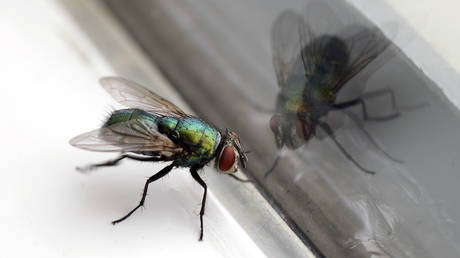
Researchers have finally mapped and digitized the neural architecture of a complex organism, a feat being hailed as the first "virtual brain upload." While headlines scream about immortality and the end of biological decay, the reality is far more grounded and significantly more disturbing. This is not a human mind living in a computer. It is a high-fidelity mathematical simulation of a fruit fly's central nervous system, and the distance between this achievement and human consciousness is not a gap but a canyon.
The project, a massive collaboration involving hundreds of scientists and years of processing power, successfully converted the physical connectome—the map of every neuron and synapse—into a functional digital model. When given virtual stimuli, the digital brain reacted exactly as the physical one would. It "saw" light and "moved" toward it in a simulated environment. We have crossed the threshold from mapping the brain to executing it as software. But before you plan your digital afterlife, you need to understand the structural walls this technology just hit.
The Connectome is Not the Mind
The prevailing myth in Silicon Valley is that we are the sum of our wiring. If you map the 100,000 neurons of a Drosophila melanogaster, you have the fly. This assumes the brain is a static circuit board. It isn’t.
Biological intelligence relies on more than just the physical junctions between cells. We are dealing with a "wetware" system where chemical soups—neurotransmitters, hormones, and neuromodulators—bathe the entire structure. These chemicals change the "weight" of a connection in milliseconds. Current upload methods capture the hardware but struggle to replicate the fluid software of the endocrine system. Mapping the wires without accounting for the electricity and the chemicals is like trying to understand a conversation by looking at a photograph of two people talking. You see the participants, but you have no idea what is being said or the emotional weight of the words.
The fruit fly model works because its behaviors are largely reflexive and hardcoded. Human cognition is an entirely different beast. We rely on synaptic plasticity, the ability of the brain to physically rewire itself based on experience. A "captured" digital brain is a snapshot in time. To truly upload a mind, the simulation must be able to change its own code as it runs, a feat that requires a level of computational fluidity we haven't even begun to engineer.
The High Cost of Digital Existence
The energy requirements for this "minor" upload are staggering. Simulating the brain of a fly—which is smaller than a grain of salt—required a supercomputing cluster that consumes enough electricity to power a small neighborhood.
If we scale this up to the human brain, which contains roughly 86 billion neurons and trillions of synapses, the math stops working. To simulate a single human brain at the same level of fidelity as this fly model, we would need a data center the size of a city. We are currently limited by the Landauer Principle, which defines the minimum energy required to erase one bit of information. Unless we move toward neuromorphic computing—chips that mimic biological architecture rather than standard binary logic—the "virtual upload" of a human will remains a logistical impossibility.
The Identity Paradox
There is a darker, philosophical friction that the scientific community is largely ignoring in favor of celebratory press releases. Even if we achieve a perfect, atom-for-atom digital replica of your brain, it isn't you. It is a copy.
In the world of software, when you move a file, you are actually creating a new version and deleting the old one. If you "upload" your brain while your biological body is still alive, there are now two entities claiming to be you. One is made of protein; the other is made of silicon. The digital version might have your memories and your personality, but your subjective stream of consciousness remains trapped in your skull. This isn't a transfer of life. It is the creation of a digital twin.
For the tech industry, this is a feature, not a bug. A digital twin that can work 24/7, solve complex engineering problems, and never require sleep is a corporate asset. This brings us to the inevitable intersection of labor and digital ethics. If a company owns the server where your "upload" resides, do they own your thoughts? Do they have the right to pause your existence to save on electricity costs? These aren't science fiction tropes; they are the immediate legal questions following this fruit fly breakthrough.
The Physicality of Thought
One of the biggest oversights in the current "upload" discourse is the role of the body. The brain does not exist in a vacuum. It is constantly receiving feedback from the gut, the skin, and the heart. A significant portion of human "thought" is actually a reaction to physical sensations.
When researchers uploaded the fly brain, they had to create a "virtual body" for it to inhabit. Without that body, the brain began to exhibit "noise"—the digital equivalent of a sensory deprivation breakdown. For a human upload to be functional, we would need to simulate an entire environment and a complex sensory feedback loop. A mind without a body is a mind in a state of permanent, agonizing isolation.
The industry is currently obsessed with the "brain as a computer" metaphor. It’s a convenient lie. A computer processes data linearly; a brain experiences reality holistically. By stripping away the biological context, we aren't uploading a person. We are creating a sophisticated chatbot with a very expensive history file.
The Roadmap to Silicon
If we are to move past the fly and toward more complex organisms, the strategy must shift. The "brute force" method of scanning dead brain tissue and rebuilding it digitally is a dead end. It provides a map of a ghost town.
The next stage of development is focusing on In Vivo Mapping. This involves using nano-sensors to track neural activity in a living subject in real-time. We need to see the "spark" as it happens, not just the ashes it leaves behind. This requires a level of invasive surgery and data bandwidth that currently doesn't exist. We are talking about replacing blood with synthetic sensors or using genetically modified neurons that emit light when they fire.
The ethics of this are a minefield. To get the data needed for a "real" upload, you likely have to destroy the original biological brain during the process. This isn't a surgery you recover from. It is an expensive, high-tech form of assisted suicide with no guarantee that the "you" on the other side will be anything more than a playback of your last thoughts.
The Utility of the Fly
Despite the skepticism, the fruit fly upload is a monumental tool for pharmaceutical research. We can now test the effects of new drugs on a digital nervous system with 100% accuracy, bypassing years of animal testing. We can observe how a "digital" disease spreads through a neural network at a million times the speed of real life.
This is where the real value lies. Not in the narcissistic pursuit of digital immortality, but in the granular understanding of how neurons fail. We are using the "virtual upload" to debug the human machine. If we can find the "code error" that leads to Alzheimer's by running a trillion simulations on a digital brain, the technology justifies itself.
Stop looking at the fly as the first step toward living in a computer. Look at it as the first time we’ve been able to take the brain apart without killing the patient. The breakthrough isn't that we've found a way to leave the body behind. It’s that we finally have a map detailed enough to start fixing the one we have.
Question the next press release that promises you a digital life. Ask about the power consumption. Ask about the neurotransmitter simulation. Ask who owns the server. The technology is here, but it isn't a gateway to the stars; it's a mirror held up to our own biological limitations.