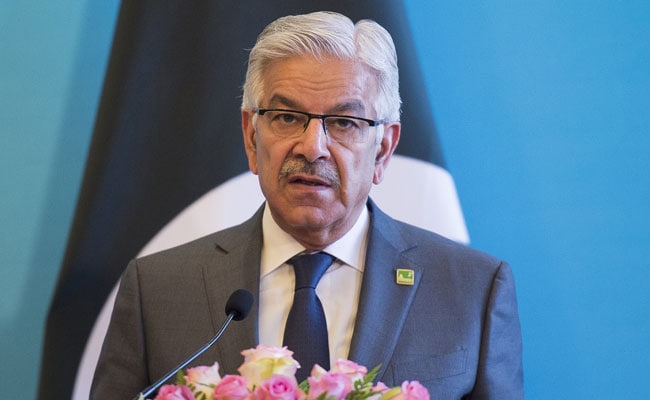
The headlines are screaming about "Blood Libels." Israel is "slamming" Pakistan. Defense Minister Khawaja Asif calls a nation a "cancer." The media cycle treats this like a spontaneous explosion of geopolitical hatred. It isn't. It’s a scripted, symbiotic exchange that serves both domestic agendas while the rest of us play the role of the shocked observer.
If you think this is about a sudden breakdown in international decorum, you’re missing the point. This isn't diplomacy; it's branding.
The Anatomy of the Manufactured Outrage
The "lazy consensus" in mainstream reporting suggests that Asif’s remarks—labeling Israel a "cancer" that needs to be removed—are an unprecedented escalation. That’s a fundamental misunderstanding of the history of the Middle East and South Asia. This rhetoric has been the baseline for decades. What’s different now isn't the sentiment; it's the utility of the noise.
In Pakistan, the government is currently navigating a minefield of economic instability, IMF mandates, and a restless populist movement. Nothing unites a fractured domestic base like a sharp, vitriolic jab at a distant, ideological enemy. It’s the cheapest political currency available. It costs $0 to issue a statement. It pays out in hours of prime-time coverage and a temporary distraction from the price of wheat.
Israel’s response follows the same logic. By framing the rhetoric as a "Blood Libel," the Israeli Ministry of Foreign Affairs (MFA) isn't just defending its honor. It is reinforcing a specific narrative of global isolation and victimhood that justifies its own hardline security policies. They need the villain as much as the villain needs them.
Why the 'Cancer' Metaphor is Lazy Policy
Calling a nation-state a "cancer" isn't just offensive; it’s intellectually bankrupt. It suggests that complex geopolitical realities can be "cured" with a single surgical strike. This is the rhetoric of the 1960s trying to survive in a 2026 reality where trade routes, digital warfare, and covert intelligence-sharing are the actual levers of power.
I have spent enough time in the rooms where these statements are drafted to know that no one expects them to change a single border. When a Defense Minister speaks, you expect him to talk about procurement, troop readiness, or regional deterrence. When he pivots to biological metaphors for foreign states, he has stopped being a military strategist and has started being a social media influencer.
The Myth of the Sudden Slap
The "Israel Slams Pakistan" narrative assumes a level of engagement that doesn't exist. There are no formal diplomatic ties to sever. There is no trade to boycott. There are no ambassadors to recall.
When you "slam" someone you don't even recognize as a legitimate entity, you are shouting at a ghost. The media treats this like a heavyweight bout, but it’s actually two people shadowboxing in different gyms and claiming they won the fight.
The Realities of Realpolitik
Let’s look at the data the "slamming" articles ignore:
- Intelligence Backchannels: History is littered with examples of countries with no diplomatic ties sharing intelligence when it suits their survival. The public "slamming" provides the necessary cover for the private, pragmatic interactions that keep the lights on.
- The Diaspora Factor: Both nations have massive, influential diasporas. These public spats are often signals sent to those communities to ensure continued financial and political support.
- Defense Budgets: Outrage is a great way to justify defense spending. "Look how much they hate us" is the most effective slide in any budget presentation.
The 'Blood Libel' Rebuttal is a Strategy, Not a Defense
The term "Blood Libel" has deep, painful historical roots. Using it in response to a modern political comment about a state's existence is a tactical choice to move the conversation from policy to prejudice.
If the debate is about land or military action, there is room for negotiation. If the debate is framed as a "Blood Libel," negotiation becomes impossible because you’ve shifted the context to an existential, eternal struggle between good and evil. This is how you kill the possibility of a solution—and for certain factions in both governments, "no solution" is the most profitable outcome.
Stop Asking if it’s Offensive
The most common question in the "People Also Ask" section is: "Is Khawaja Asif's comment offensive?"
That is the wrong question. It’s like asking if a fire is hot. Of course it’s offensive. It was designed to be. The real question is: "Why now, and who profits?"
The logic of modern outrage dictates that the more extreme the language, the more "authentic" the leader appears to their most radical supporters. Asif isn't trying to convince an Israeli audience to change their minds; he’s trying to convince a teenager in Lahore that he’s the only one standing up for their values. Conversely, the Israeli MFA isn't trying to change Asif’s mind; they’re showing their own citizens that they won't let any insult go unanswered.
The Cost of the Performance
The danger isn't that these words lead to a war—these two countries are geographically and militarily insulated from each other in any direct sense. The danger is the degradation of language.
When we use words like "cancer" and "libel" to describe every disagreement, we lose the ability to describe actual crises. We are witnessing the inflation of rhetoric. Much like hyperinflation in an economy, when you print too much outrage, the value of a single protest drops to zero.
Imagine a scenario where a genuine, immediate threat emerges between two nuclear-armed states. How do you signal "red alert" when you’ve been screaming at the top of your lungs for three decades about a country 3,000 miles away?
The Industry of Indignation
There is an entire ecosystem that thrives on this.
- Media Outlets: Get millions of clicks from "Israel Slams" or "Pakistan Defies" headlines.
- Think Tanks: Get funding to write "strategic papers" on the deteriorating relationship.
- Social Media Algos: Promote the most vitriolic clips, ensuring they reach the people most likely to be incensed.
I have seen policy advisors high-five each other after a particularly nasty tweet goes viral. They don't care about the geopolitics; they care about the "engagement metrics." We are being played by professionals who know exactly which buttons to push to get us to stop thinking and start reacting.
The Subversion of Logic
The competitor's piece focuses on the "what"—the words said and the reaction given. It ignores the "how."
How does a Defense Minister justify focusing on a foreign "cancer" when his own borders are increasingly porous to militant groups? How does an MFA justify focusing on a verbal insult when its own regional alliances are shifting under its feet?
The status quo is a comfort blanket. It’s easier to hate a distant enemy than to fix a local problem.
The Actionable Truth
If you want to understand the next "outrage" cycle, stop reading the transcripts of the speeches. Start looking at the internal polling of the people giving them.
When a leader reaches for the "cancer" metaphor or the "blood libel" defense, they are admitting they have nothing left in the tank. It is a confession of policy failure. They are out of ideas, out of money, or out of time.
The most "radical" thing you can do is to stop being shocked. Refuse the bait. Recognize the performance for what it is: a desperate attempt to stay relevant in a world that is moving past these 20th-century animosities.
The next time you see a headline about a diplomatic "slam," ask yourself which domestic crisis is being buried on page ten. That’s where the real story is.
Stop watching the stage. Look at the people pulling the curtains.



