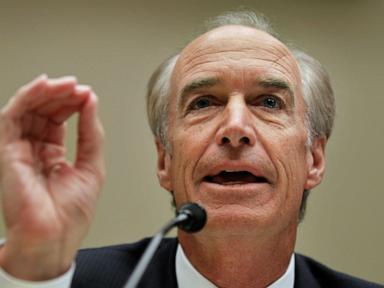
Idaho just lost a giant. Dirk Kempthorne, the man who seemed to collect every high-level political title the state could offer, passed away at 74. If you've lived in Idaho or followed Western politics over the last three decades, his name wasn't just a line on a ballot. It was a fixture. He was the Mayor of Boise, a U.S. Senator, a two-term Governor, and eventually the Secretary of the Interior under George W. Bush.
People often forget how rare that trajectory is. Most politicians find a lane and stay in it. Kempthorne didn't. He jumped from local city management to the national stage and back to state executive leadership without missing a beat. He died at his home in Boise, leaving behind a legacy that defines what Idaho Republicanism used to look like before things got so incredibly polarized. He was a consensus builder in an era that started to hate the very idea of a handshake.
The Mayor Who Rebuilt Boise
Before he was dealing with federal land disputes or international treaties, Kempthorne was the guy trying to figure out how to make Boise a place people actually wanted to live. He served as Mayor from 1986 to 1993. This wasn't a ceremonial role. Boise was at a crossroads back then. It was a sleepy town that could have easily stayed that way.
Kempthorne pushed for the development of the downtown core. He understood that a city is only as strong as its heart. If you walk through the Boise River Greenbelt today or look at the vibrant downtown scene, you’re seeing the DNA of his early career. He had this infectious optimism. It wasn't the fake, polished kind you see on campaign ads. It was a genuine belief that things could get better if you just put the right people in a room together.
He wasn't afraid to spend political capital on long-term projects. That’s a trait that’s basically extinct now. Today’s politicians are so worried about the next primary that they won't even plant a tree they won't see grow. Kempthorne planted the whole forest.
A Senator Who Walked Away
In 1992, he won a seat in the U.S. Senate. Most people get to D.C. and decide they want to stay there until they’re carried out in a pine box. Not Dirk. He served one term. He did his time, focused heavily on unfunded mandates—those annoying federal rules that tell states what to do without giving them the money to do it—and then he came home.
He realized he could do more as Governor. That’s a move you don't see often. It shows a certain level of ego, sure, but also a deep connection to home. He missed the mountains. He missed the people. He missed being the guy who actually executed the laws rather than just debating them in a room full of people who didn't know where Idaho was on a map.
The Governor of Every Corner
When he became Governor in 1999, he didn't just sit in the Statehouse. He traveled. He knew every tiny town from Bonners Ferry down to Montpelier. He was known for his "Generation of the Child" initiative. Critics at the time called it soft or purely PR, but Kempthorne argued that if you don't fix the foundation of the family and education, the rest of the state's economy won't matter.
He took a lot of heat for his stance on the nuclear waste coming into the Idaho National Laboratory. He negotiated the 1995 Idaho Settlement Agreement. It was a massive deal. It basically told the federal government that Idaho wasn't going to be a dumping ground forever. He stood up to the Department of Energy and won concessions that protected Idaho’s aquifer. You might disagree with the specifics, but you can't deny the man had a spine when it came to protecting Idaho’s water.
Managing America’s Backyard at Interior
In 2006, President George W. Bush tapped him to lead the Department of the Interior. This is arguably the toughest job for a Westerner. You’re suddenly in charge of one-fifth of the land in the United States. You're balancing the needs of oil and gas companies, environmentalists, hunters, and Indigenous tribes. It’s a thankless gig.
One of his most significant, and controversial, moves was listing the polar bear as a threatened species under the Endangered Species Act. It was the first time a species was listed specifically because of the loss of sea ice due to climate change. Think about that for a second. A conservative Republican from Idaho made a move that signaled a massive shift in how the federal government viewed the environment. He caught flak from both sides. The left said it didn't go far enough; the right said he was killing the economy. That’s usually the sign of a decision made on merit rather than purely on ideology.
He also worked on the "Cooperative Conservation" model. He hated the idea of "top-down" management from Washington. He wanted local ranchers and local environmentalists to talk to each other. He believed the people living on the land knew more than a bureaucrat in a suit. It’s a philosophy that seems common sense, but it’s surprisingly hard to implement.
Why His Passing Matters Now
We’re in a weird spot in American politics. Everything is a fight. Everything is a "win" or a "loss." Dirk Kempthorne belonged to a different school of thought. He was a partisan, don't get me wrong. He was a proud Republican. But he didn't view the other side as the enemy of the state. He viewed them as neighbors he hadn't convinced yet.
His death marks the end of an era for the Idaho GOP. The party has shifted significantly since his time. The brand of "big tent" Republicanism he practiced is being pushed out by more populist, combative styles. Whether you think that's good or bad is up to you, but there's no denying that the state is different without his influence.
He was a man of deep faith and a family man. He and his wife, Patricia, were a team. They weren't just a political couple; they were part of the fabric of Boise society. When someone like that dies, you don't just lose a former official. You lose a library of institutional knowledge.
What You Should Take Away
If you want to understand Idaho, you have to understand the Kempthorne years. You have to look at the growth of the Treasure Valley, the protection of the Snake River Aquifer, and the way the state handled its relationship with the federal government.
He showed that you could be a conservative and still care deeply about conservation. He showed that you could be a national figure and still care about a small-town parade. Mostly, he showed that public service doesn't have to be a dirty business. It can be a calling.
If you’re looking to honor his legacy, don't just post a tribute on social media. Read up on the Idaho Settlement Agreement. Understand why the Greenbelt matters. Look into how we manage our public lands. The best way to respect a leader is to actually understand the work they did. Idaho is a better place because Dirk Kempthorne decided to stay and lead. It’s on the rest of us to make sure that progress doesn't slide backward.
Go visit a state park this weekend. Look at the land. That's what he was fighting for.