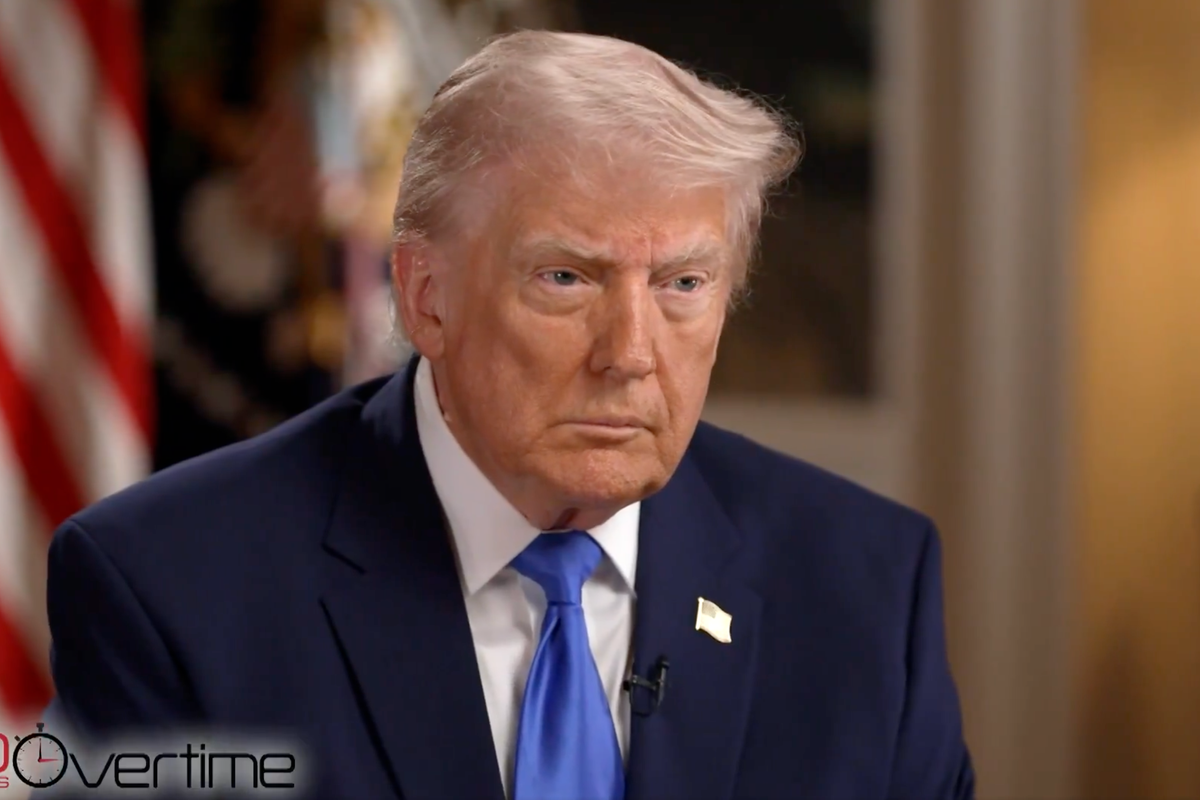
Donald Trump sat down for an interview that felt more like a collision. The exchange on CBS’s 60 Minutes wasn't just a standard political Q&A. It turned into a high-stakes confrontation where the former president found himself defending his character against the heaviest allegations possible. When Scott Pelley pressed him on a shooting suspect’s manifesto and past civil court findings, Trump didn't hold back. He swung for the fences. The headline-grabbing moment came when Trump flatly declared he isn't a rapist, a direct response to questions about the E. Jean Carroll case and the rhetoric surrounding his campaign.
It’s rare to see a candidate for the highest office in the land have to address such blunt accusations on national television. Trump clearly felt backed into a corner. He used the platform to blast what he calls a rigged system and a biased media. If you watched the footage, you saw a man who wasn't just annoyed—he was visibly livid. This wasn't the usual stump speech. This was a defensive crouch turned into an aggressive counterattack.
The Heat Behind the 60 Minutes Exchange
The tension during the interview was thick enough to cut. Scott Pelley is known for a stoic, persistent questioning style. Trump is known for bulldozing through questions he doesn't like. When those two styles met, the result was a masterclass in political friction. The interview touched on a sensitive manifesto from a shooting suspect that allegedly cited Trump’s rhetoric. Trump's reaction was swift. He distanced himself from the shooter while simultaneously accusing the interviewer of trying to pin the actions of a "deranged person" on him.
You have to look at the body language here. Trump leans in. He interrupts. He uses his hands to dismiss Pelley’s premises. He’s not just answering questions; he’s trying to discredit the source of the questions. He wants the audience to believe that the very act of asking about the manifesto is an act of political warfare. It’s a strategy he’s used since 2016, but it felt more urgent in this specific setting.
Breaking Down the E Jean Carroll Defense
The most jarring part of the segment involved the civil case brought by E. Jean Carroll. A jury previously found Trump liable for sexual abuse and defamation. While they didn't find him liable for rape under the specific technical definition in New York law at the time, the judge later clarified that the conduct was effectively what most people consider rape. Trump isn't interested in those legal nuances.
"I’m not a rapist," he told Pelley. He said it with a level of bluntness that stops a conversation dead. He’s betting that his base will see this as him standing up to a "witch hunt." He’s also betting that the average viewer will be so overwhelmed by the back-and-forth that they’ll retreat to their previously held opinions. He didn't offer a complex legal rebuttal. He offered a flat, emotional denial. That’s how he communicates. It’s effective for his supporters and terrifying for his critics.
Why the Manifesto Question Triggered Such a Response
Connecting a political figure to the writings of a mass shooter is a massive escalation in any interview. Pelley brought up the manifesto to ask about the impact of Trump's words on the national psyche. Trump saw this as a trap. He argued that he’s responsible for his own words, not how a "sick mind" interprets them.
The argument over rhetoric is an old one. We’ve seen it with every major political figure over the last decade. But with Trump, the stakes feel higher because his language is so much more visceral. He uses words like "invasion" and "vermin." When those words show up in a shooter's document, the media naturally asks questions. Trump's defense is basically a wall. He refuses to acknowledge any link. He thinks the question itself is "disgraceful."
Political Risk and the 60 Minutes Legacy
CBS has a long history of these "tough" interviews. They did it with Obama, they did it with Bush, and they’ve done it with Trump before. But the environment in 2026 is different. The country is more polarized than ever. An interview like this doesn't change many minds. Instead, it acts as a mirror. If you like Trump, you saw a fighter who refused to be bullied by the "fake news." If you hate him, you saw a man dodging accountability for his influence and his past.
The real risk for Trump in these settings isn't the base. He has the base locked down. The risk is the independent voter in a swing state who’s tired of the chaos. This interview was nothing but chaos. It was loud. It was testy. It was uncomfortable. For some, that discomfort is a sign of a broken political culture. For others, it’s exactly why they want him in office—to break things.
The Media Strategy of Aggressive Denial
Trump’s media strategy has shifted. He doesn't just ignore negative stories anymore. He tries to overwrite them by being louder than the story itself. By saying "I’m not a rapist" on 60 Minutes, he ensures that his denial is the clip that goes viral, not the details of the court case. It’s a bold move. It’s also a risky one. It forces the viewer to confront the allegation head-on.
Most politicians try to pivot. They say, "Let’s talk about the economy" or "I’ve already addressed that." Trump leans into the flame. He wants to talk about it on his terms. He wants to call the accusers liars and the judges partisan. It’s a scorched-earth policy that makes for great television but leaves the truth buried under layers of theater.
What This Means for the Election Cycle
This interview is a preview of the next few months. We’re going to see more of this. More confrontation. More direct attacks on the media. More blunt denials of legal findings. Trump has decided that his best defense is a relentless offense. He isn't going to "pivot" to a more "presidential" tone. That ship sailed years ago.
If you’re trying to make sense of the current political climate, look at the 60 Minutes footage. Look at how Pelley tries to hold the line on facts and how Trump tries to redefine what a fact even is. It’s a struggle for the narrative of the country.
Understanding the Legal Context
To understand why Trump was so agitated, you have to look at the sheer volume of legal pressure he’s under. It’s not just one case. It’s dozens. The 60 Minutes interview was a microcosm of his entire legal life right now. Every question is a potential landmine. Every answer could be used in a different courtroom.
He’s performing for two audiences: the voters and the judges. Sometimes those performances conflict. In this case, the performance was strictly for the voters. He wanted to look strong. He wanted to look like a victim of a coordinated hit job. In his world, being a victim is the ultimate strength because it justifies everything he does in response.
Making Sense of the Noise
When you strip away the shouting and the interruptions, what’s left? You have a candidate who’s being forced to answer for things that would have ended any other political career twenty years ago. The fact that he’s still standing—and still fighting—is the story.
Don't expect a retraction. Don't expect an apology. Trump’s brand is built on never backing down, even when the evidence is stacked against him. He’s betting that the public’s trust in institutions like 60 Minutes is lower than their trust in him. It’s a massive gamble.
If you want to keep up with how these interviews are shaping the polls, stop looking at the national numbers. Look at the focus groups in Pennsylvania and Michigan. Look at how people react when they see these clips on TikTok and X. That’s where the real impact is happening. The long-form interview is dead. It’s been replaced by the ten-second "gotcha" clip. Trump knows this better than anyone. He provides the clips, and his supporters provide the distribution.
Pay attention to the questions that weren't asked. Notice how the conversation never really got to policy. It was all about personality, past deeds, and rhetoric. That’s the state of play. It’s messy, it’s loud, and it’s not going to get any quieter. Watch the full interview if you can find the unedited version. The edits always tell a story, but the raw footage tells the truth about the tension in the room.