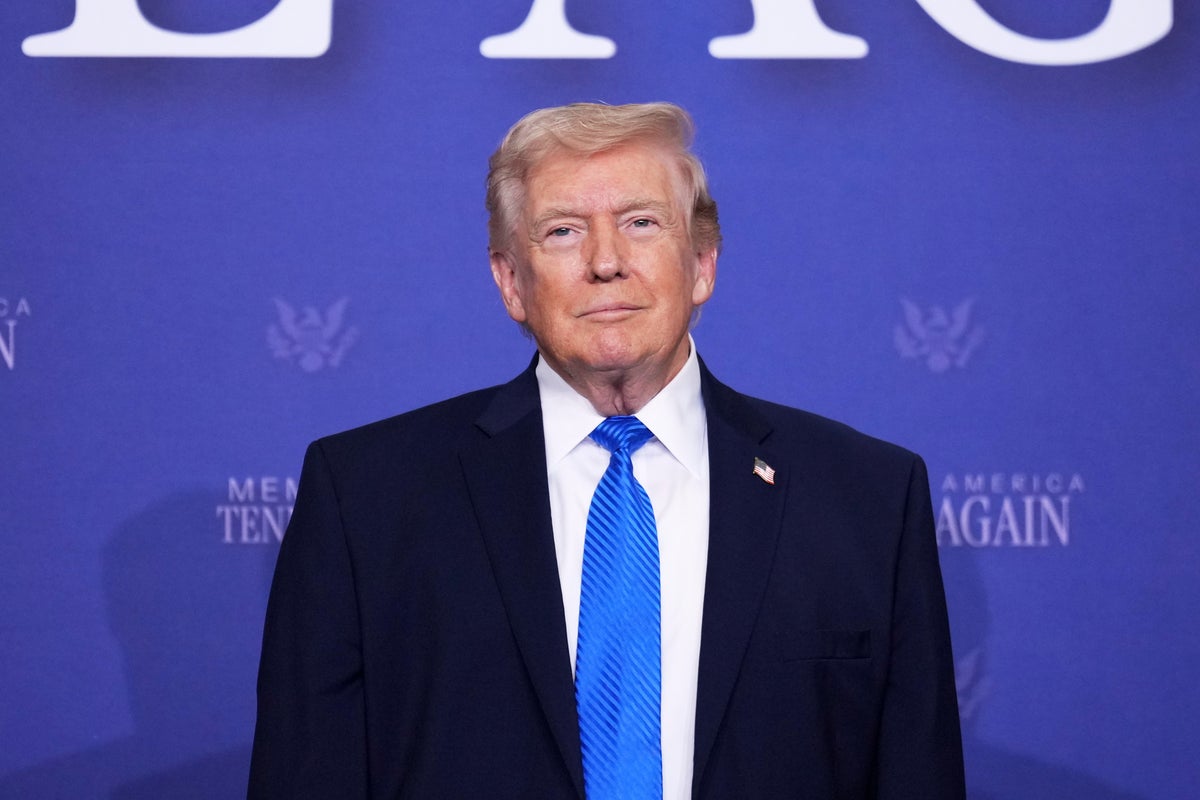
Is the United States actually winning the war with Iran, or are we just being told a really loud story about it? If you ask Bill Grueskind, the former managing editor of the Wall Street Journal, the answer is a grim "neither." He’s compared the current administration's rhetoric to that of Muhammad Saeed al-Sahhaf—better known as "Baghdad Bob"—the Iraqi information minister who famously claimed there were no American tanks in Baghdad while they were literally rolling in behind him.
The comparison isn't just a witty jab from a veteran journalist. It’s a warning about the total decoupling of official government statements from the reality on the ground. When the President of the United States claims to have "totally obliterated" military targets on Kharg Island while simultaneously offering "joint control" of the Strait of Hormuz to an Ayatollah he recently claimed was dead or incapacitated, we’ve moved past standard political spin. We’ve entered the realm of the surreal.
The Baghdad Bob Parallel in Modern Diplomacy
To understand why this comparison matters, you have to look at the specific claims being made during this 2026 conflict. Trump recently took to Truth Social to announce that U.S. forces had destroyed 90% of Iran's military capability on Kharg Island. He followed this up by stating that he chose not to hit the oil infrastructure—a claim that conveniently ignores reports of massive fires and surging global oil prices that suggest otherwise.
Grueskind’s point is that the administration is no longer even trying to be plausible. Like Baghdad Bob, the goal isn't to convince the skeptical; it's to provide a wall of noise that the base can use to ignore inconvenient facts.
- Claim: "We have already won," Trump declared last week.
- Reality: The Pentagon is currently weighing the deployment of 3,000 additional troops to the region, and the U.S. Navy is struggling to keep the Strait of Hormuz open for more than a handful of ships a day.
When the gap between the "Mission Accomplished" rhetoric and the "Send more troops" reality becomes this wide, the credibility of the American presidency on the world stage doesn't just dip—it evaporates.
Shifting Rationale and the Cost of Incoherence
One of the most exhausting aspects of the current Iran strategy is that nobody—not even the people in the room—seems to know why we're actually fighting. In the span of a single month, the administration has offered at least four different justifications for the strikes that began on February 28:
- Preventing an "imminent threat" to U.S. diplomats.
- Destroying Iran's nuclear breakout capacity.
- Pre-empting retaliation for Israeli strikes.
- Standard regime change (as Trump told CNBC).
This incoherence is a feature, not a bug. By constantly shifting the goalposts, the administration makes it impossible to fail. If the nuclear sites aren't destroyed, they can claim the goal was actually just to "send a message." If the regime doesn't collapse, they can pivot back to "protecting the shipping lanes."
But this "Baghdad Bob" style of communication has real-world consequences. Allies like India and the UK are reportedly moving toward direct, independent negotiations with Tehran because they can no longer rely on U.S. briefings for accurate information. If you can’t trust the map the leader is providing, you stop following the leader.
The Kharg Island Narrative vs. Global Markets
The situation at Kharg Island is the perfect case study in this new era of "alternative facts." This island is the lung of the Iranian economy, handling nearly 90% of their oil exports. Trump’s claim that we "obliterated" the military targets but "spared" the oil infrastructure is a masterclass in trying to have it both ways.
If the military assets were truly "obliterated," the collateral damage to the oil piers would be catastrophic. You can’t drop heavy ordnance on a high-security port and expect the pipes next door to stay pristine. The markets know this. Oil prices didn't spike because of a "military-only" strike; they spiked because the world recognizes that the terminal is offline, regardless of what the Truth Social posts say.
Why the Media is Failing the Reality Check
It’s easy to blame the administration for the misinformation, but Grueskind’s critique also hits the media. When a President makes a claim that is demonstrably false, the traditional "both sides" reporting style becomes a tool for the liar.
If the headline is "Trump Claims Victory While Critics Express Doubt," the reader is left thinking the truth is somewhere in the middle. But in a Baghdad Bob scenario, the truth isn't in the middle. The truth is often 180 degrees away from the podium. The press is currently struggling to adapt to a White House that treats the very concept of "verifiable facts" as a partisan grievance.
What This Means for the Next 48 Hours
We are currently in a five-day "deadline" window imposed by the White House. Trump has threatened to "hit and obliterate" Iranian power plants if the Strait of Hormuz isn't fully reopened.
The danger here is that the administration might feel forced to escalate just to prove they aren't bluffing, even if their previous "victories" were exaggerated. When you've spent weeks telling the public the enemy is defeated, but the enemy is still successfully blocking global trade, the only way to maintain the illusion is to use even more force.
Keep a close eye on the following over the next few days:
- Satellite Imagery: Independent firms like Maxar will provide the real "Battle Damage Assessment" that the Pentagon is currently obscuring.
- Insurance Rates: Watch the maritime insurance premiums for the Persian Gulf. If they continue to climb, it means the "safe passage" claims from the White House are being rejected by the people who actually have money on the line.
- Diplomatic Side-Channels: Look for reports of France, Italy, or India bypasssing the State Department to talk to Iran directly. That’s the ultimate indicator of a "Baghdad Bob" presidency.
If you're trying to make sense of the news, stop listening to the televised briefings. Follow the tankers. Follow the insurance markets. In a war of words, the only thing that doesn't lie is the data.
Check the latest Brent Crude futures to see how the market is pricing in the "five-day deadline" vs. the actual risk of total infrastructure destruction.