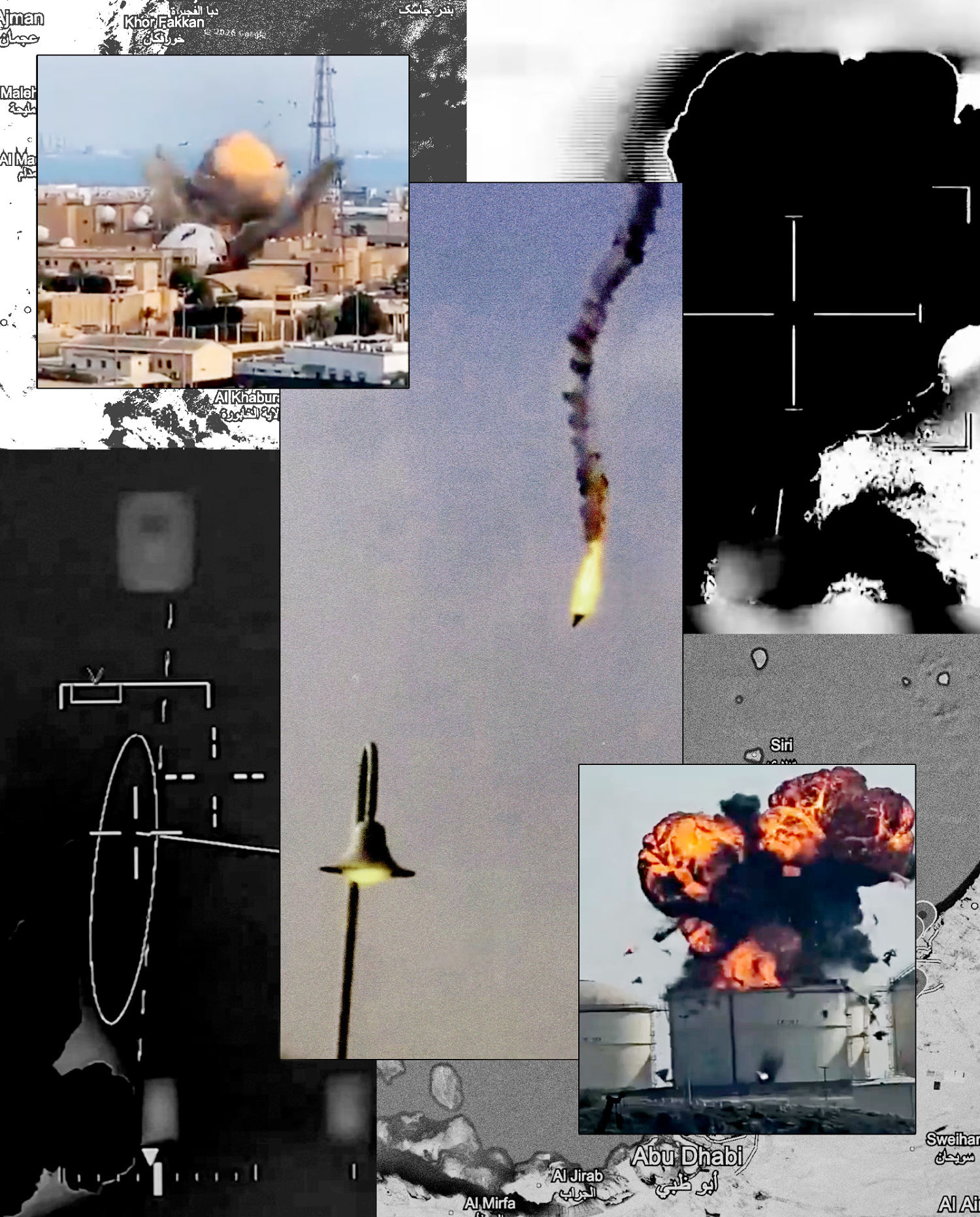
The arithmetic of modern air defense has reached a breaking point in the skies over the Persian Gulf. For decades, the United States built a regional security architecture based on the assumption that air superiority was a matter of technical sophistication. That assumption died in the opening weeks of March 2026.
While the Pentagon highlights high intercept rates against the Iranian "drone army," a grimmer reality exists on the balance sheet. Iran is currently utilizing mass-produced, low-cost loitering munitions to systematically exhaust the most advanced defensive stockpiles in history. By launching swarms of Shahed-136 drones—simple machines powered by what are essentially motorcycle engines—Tehran has forced a confrontation where the defender loses even when they win.
The Brutal Math of Asymmetric Interception
A single Shahed-136 costs between $20,000 and $50,000 to manufacture. To knock it out of the sky, U.S. and allied forces frequently rely on Patriot or SM-6 interceptors, which carry price tags ranging from $2 million to $4 million per shot. This is the Drone Attrition Trap.
Recent satellite imagery and combat footage from Operation Epic Fury reveal the scale of this imbalance. In the first week of March, Iran launched an estimated 3,000 drones and missiles. While the U.S. Central Command (CENTCOM) reported an 83% drop in Iranian launch capacity following heavy strikes on production sites, the remaining 17% is still enough to saturate regional sensors.
The Iranian strategy does not require a 100% success rate. It only requires volume. By flooding the airspace with "precise mass," Iran forces commanders into a desperate choice: expend a $3 million missile on a $20,000 "moped with wings," or risk that drone hitting a high-value target like a desalination plant, an oil refinery, or a crowded military operations center.
Puncturing the Shield Through Saturation
The technical "puncturing" of defenses isn't always a failure of radar; it is a failure of capacity. Even the most capable Aegis-equipped destroyers have a finite number of vertical launch cells. Once those cells are empty, the ship is a multibillion-dollar paperweight until it can return to a secure port to reload—a process that is neither fast nor simple in a hot war zone.
Video evidence from recent engagements in the Red Sea and Gulf of Oman shows Iranian drones using low-altitude flight paths to skim the water's surface, popping up only in the final seconds before impact. This minimizes the reaction time for Phalanx Close-In Weapon Systems (CIWS) and other point-defense tools.
Key Iranian Drone Platforms in the 2026 Conflict
| Platform | Type | Estimated Range | Warhead |
|---|---|---|---|
| Shahed-136 | One-way Attack (Loitering) | 2,000 km | 40 kg |
| Mohajer-6 | ISTAR / Armed Drone | 200 km | Guided Munitions |
| Shahed-238 | Jet-powered Kamikaze | 1,000 km+ | High Explosive |
| Ababil-3 | Surveillance / Strike | 100 km | Multi-role |
The Ukrainian Lesson and the Scramble for Solutions
The U.S. military is currently undergoing a painful, rapid-fire learning curve that should have begun years ago. While Ukraine spent 2024 and 2025 refining "mobile fire groups"—pickups with thermal optics and machine guns—Western forces in the Gulf remained heavily reliant on "Ferrari" solutions for "e-bike" problems.
The tide is beginning to shift, but perhaps too slowly. Under the pressure of the current conflict, the Pentagon is racing to deploy Ukrainian-style interceptor drones. These are small, FPV (First-Person View) platforms that cost roughly $3,000 and can be flown directly into an incoming Shahed. This creates a sustainable economic exchange, but the infrastructure to deploy these at scale across the entire Middle East did not exist when the first salvos were fired in late February.
The vulnerability is most acute at "soft" infrastructure points. While a U.S. carrier strike group can defend itself, the dozens of airports, ports, and power plants across the Gulf Cooperation Council (GCC) states are far harder to blanket with protection. A single drone strike on a Dubai skyscraper or a Kuwaiti desalination plant carries a psychological weight that far exceeds the physical damage of its 40kg warhead.
Sinking the Drone Carriers
In an effort to decapitate this threat, CENTCOM recently shifted its focus to Iran’s naval "drone carriers." On March 5, U.S. forces struck an Iranian vessel roughly the size of a World War II-era aircraft carrier. These ships act as mobile, offshore launch pads, allowing Iran to bypass land-based radar networks and launch attacks from unexpected vectors in the Indian Ocean.
Sinking these vessels degrades Iran's ability to project power far from its shores, but it does little to stop the thousands of drones already hidden in reinforced "concrete sarcophagi" across the Iranian mainland. Satellite imagery from February 2026 shows that Tehran has spent the last year burying its most sensitive assembly lines under meters of soil and concrete, specifically to survive the "Epic Fury" style bombardment currently underway.
The Logistics of Exhaustion
We are seeing the transition of warfare from a contest of quality to a contest of industrial throughput. Iran has proven it can manufacture drones faster than the West can manufacture the high-end missiles needed to stop them.
The strategic goal of the Iranian drone army is not the total destruction of the U.S. Fifth Fleet. It is the exhaustion of the American taxpayer and the depletion of Western munition stocks. Every Patriot missile fired in the Gulf is one less missile available for a potential conflict in the Pacific or for the ongoing defense of Europe.
Air defense is no longer about having the best radar; it is about having the cheapest, most numerous way to kill a target. Until the U.S. and its allies can match Iran’s unit economics, the "puncturing" of defenses will continue not because the technology failed, but because the math did.
Would you like me to analyze the specific satellite imagery coordinates of the Parchin and Isfahan reconstruction sites to determine their current operational status?