The wind in Kidal doesn’t just blow. It scours. It carries the fine, ochre silt of the Adrar des Ifoghas, a mountain range that rises like a jagged spine from the desert floor. For the Tuareg people, this dust is part of their skin, their history, and their defiance. But lately, the air smells of more than just sand and dry scrub. It smells of diesel, spent casings, and the heavy, metallic presence of a world that refuses to let the desert be.
Kidal is more than a town. It is a symbol, a fortress of the soul for the CMA (Coordination of Azawad Movements). For years, it stood as a precarious island of Tuareg autonomy in the vast sea of the Malian Sahel. Now, the map of West Africa is being redrawn, not with ink, but with the boots of mercenaries and the roar of low-flying jets. Meanwhile, you can explore similar stories here: Why the Mali Conflict Just Took a Turn for the Worse.
The facts on the ground are stark. The Malian army, bolstered by Russian paramilitary forces, is pushing north. The rebels, who held Kidal as their crown jewel, have announced a strategic withdrawal. On paper, it looks like a tactical shift. On the ground, it feels like the end of an era.
Imagine a tea seller named Iyad. He is a hypothetical constant in a shifting world. He sits on a low stool, his blue turban wrapped tight against the grit. He watches the white UN vehicles depart, their dust plumes fading into the horizon. For a decade, those white trucks were the awkward, bureaucratic heartbeat of a fragile peace. Now, they are gone. In their place come the "Wagner" men—tall, pale, and silent—carrying weapons that don't belong in a desert that rewards lightness and speed. To explore the full picture, we recommend the detailed report by Associated Press.
Iyad knows that when the giants fight, it is the grass that suffers.
The withdrawal from Kidal isn't just about territory. It’s about the collapse of a promise. The 2015 Algiers Accord, a document meant to stitch the country back together, is now little more than scrap paper blowing through the abandoned barracks. The Malian state, frustrated by years of stalemate and a persistent jihadist insurgency, has traded the slow, grinding machinery of international diplomacy for the sharp, immediate edge of Russian steel.
This transition is visceral. When the UN peacekeepers (MINUSMA) packed their crates, they didn't just take their computers and radios. They took the last thin layer of international scrutiny. Now, the desert is becoming a black box. What happens in the shadow of the Ifoghas stays there.
The rebels of the CMA aren't retreating because they’ve lost their will. They are retreating because the math has changed. You cannot fight a drone with a camel. You cannot hold a fixed position against an army that views "collateral damage" as a foreign concept. They are melting back into the dunes, returning to the ancient guerrilla tactics that have allowed the Tuareg to survive empires for a thousand years.
But this isn't the 19th century.
The stakes are invisible but massive. Underneath that sand lies the potential for mineral wealth, but more importantly, the region is the front line of a global fracture. On one side, a Malian junta that feels it has been patronized by the West for too long. On the other, a Russian influence machine looking for a foothold in the resource-rich heart of Africa. And caught in the middle are the people of Kidal, who just want to know if they can graze their goats without being vaporized from the sky.
Consider the silence that follows a convoy. When the Malian army and their Russian partners enter Kidal, they won't find a city ready to surrender. They will find a city of ghosts. The Tuareg families, the merchants, the storytellers—many have already moved toward the Algerian border or deeper into the mountains. They are waiting. The desert is very good at waiting.
We often talk about geopolitics as if it’s a game of chess played on a flat board. It’s not. It’s a messy, bloody business of broken homes and interrupted lives. The "accord" mentioned in the headlines—the one where the rebels allegedly agreed with the Russians on the terms of withdrawal—is a cynical necessity. It’s a way to avoid a massacre in the streets of a town that has already seen too much blood. It is a surrender of stone to save the flesh.
But the stones of Kidal have a memory.
The Malian government sees this as a restoration of sovereignty. To them, Kidal was a hole in the fabric of the nation, a place where the flag didn't fly and the law didn't reach. To the rebels, it was the last stand of a culture that refuses to be homogenized, a people who view the borders drawn in Berlin in 1884 as a colonial fiction that never took root in the sand.
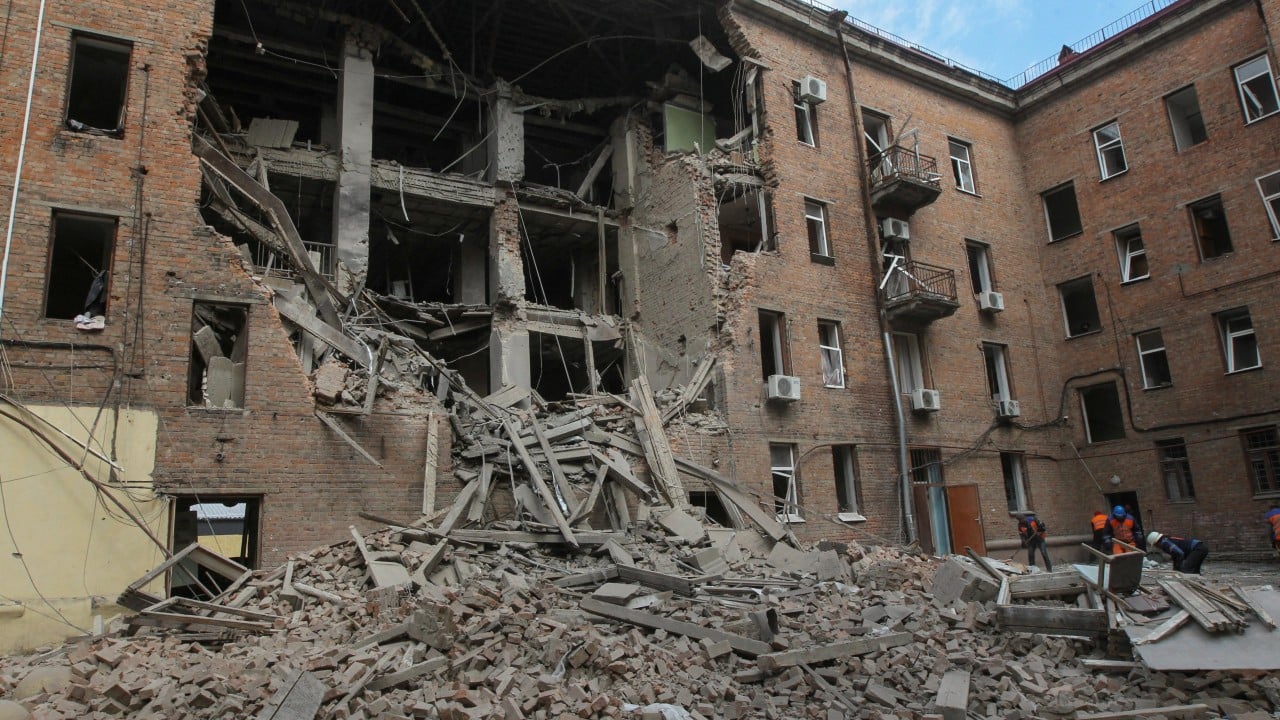
The human cost is measured in the long lines at the wells. In the schools that have stayed shuttered. In the fear that a "reconquest" is just another word for a new cycle of vengeance. When the soldiers march into the central square, they are reclaiming a map, but they are losing a people. You can occupy a town, but you cannot occupy a heart that views you as an invader.
The shift in Kidal is a microcosm of a larger, scarier trend. We are moving away from a world of messy, transparent peacekeeping toward a world of shadows and private contracts. The "Russian retreat agreement" is a phrase that sounds orderly. It isn't. It's a managed exit from the light into the dark.
For someone like Iyad, the tea seller, the nuances of Moscow or Bamako matter less than the reality of the checkpoint. He knows that the new men in Kidal don't speak his language. They don't know the names of the stars that guide travelers through the dunes. They see the desert as a threat to be conquered, while he sees it as a mother to be respected.
The withdrawal is complete. The rebels have moved. The army has arrived. The flags have been swapped. But as night falls over the Adrar des Ifoghas, the cold descends with a brutal weight. The fires are lit in the hidden camps in the valleys. The men in blue turbans clean their rifles by the light of the embers.
They are not gone. They are merely part of the landscape now, invisible and patient. The "victory" in Kidal is as fragile as a salt crust over a dry lake bed. It looks solid until you try to stand on it.
The dust settles, but the wind is already picking up again. In the Sahara, nothing is ever truly buried. The sand eventually reveals everything—every bone, every bullet, and every broken promise.
Iyad pours a third glass of tea. The first is bitter like life. The second is sweet like love. The third is gentle like death. He looks at the empty horizon and waits for the first drone to hum in the distance.