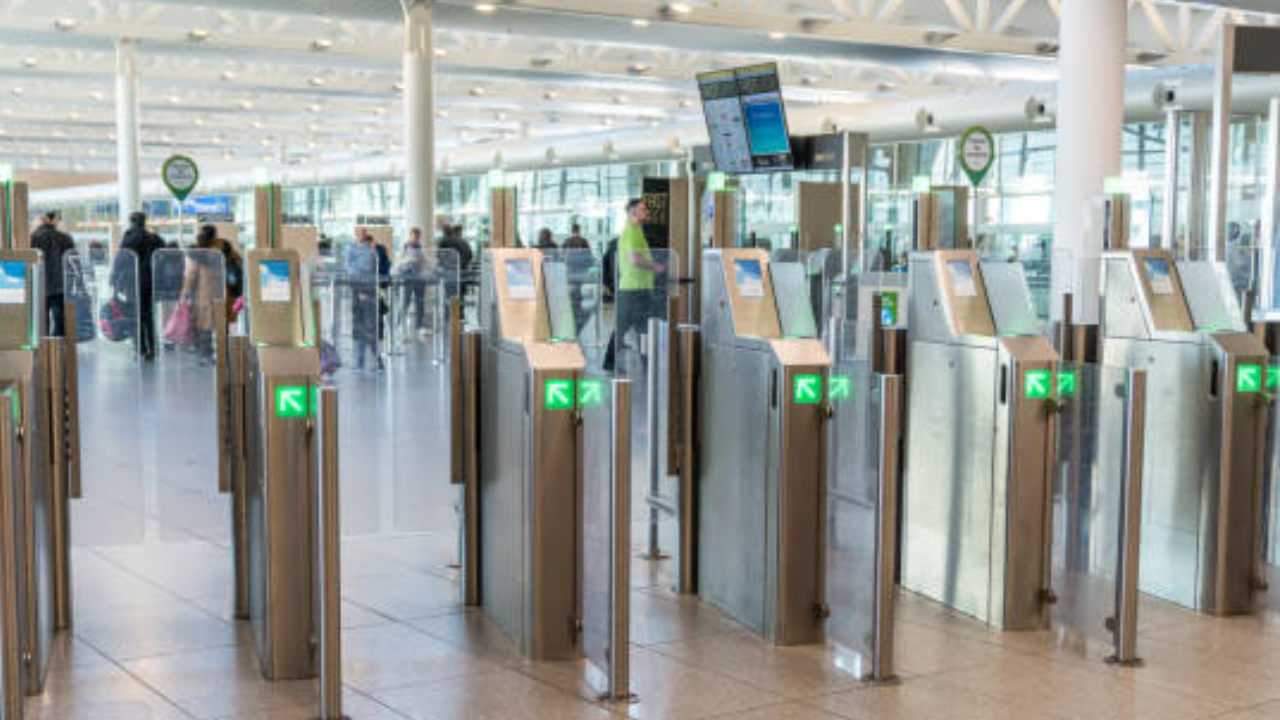
The Home Office recently patted itself on the back for lowering the age limit of e-gates from 12 to 10, and now down to 8. The official narrative is simple: it’s a "family-friendly" upgrade designed to "shorten queues" and "modernize" the border. It sounds like a win for exhausted parents. It sounds like progress.
It is actually a desperate patch for a systemic failure.
Lowering the age limit for automated gates doesn’t magically create more capacity; it merely shifts the bottleneck from the manual desk to the plastic kiosk. We are witnessing the industrialization of the border, where the goal isn't security or efficiency, but the appearance of movement. By inviting eight-year-olds into the automated ecosystem, the UK government isn't fixing the airport experience—they are offloading the labor of border control onto children and their parents while crossing their fingers that the facial recognition algorithms can handle the biological volatility of a growing human.
The Myth of the Seamless Family Journey
Travel journalists love the word "seamless." It's a fantasy. There is nothing seamless about a tired eight-year-old trying to stand perfectly still on a yellow footprint while a camera struggles to match their 3D facial geometry against a 2D passport photo taken when they were four.
The biological reality is that children’s faces change at a rate that makes high-confidence biometric matching a statistical nightmare. When you lower the age threshold, you increase the "false rejection" rate. Every time a child’s face fails to trigger the green light, a manual intervention is required. That means a Border Force officer has to leave their post, walk over, and verify the identity manually.
In reality, the "expansion" often creates a "rejection loop." You aren't saving time; you are gambling on a machine's ability to recognize a child who has grown three inches and lost two teeth since their passport was issued. I have watched this play out at Heathrow Terminal 5: a family of four enters the e-gates, three get through, one child fails, and the entire family is now stuck in a limbo state, blocking the flow for everyone behind them.
Shifting the Burden of Proof
The competitor's fluff pieces suggest this is a service for you. It isn't. It is a cost-cutting measure disguised as a perk.
By pushing more people through automated gates, the government reduces the headcount required at manual desks. This is "self-service" border control. Much like the self-checkout lanes at a supermarket, the responsibility for a successful transaction has been moved from the trained professional to the customer. When the machine fails, it's treated as your error, not a failure of the infrastructure.
If the Home Office were serious about "shortening queues," they wouldn't be tweaking the age limits of existing hardware. They would be addressing the abysmal staffing levels and the aging infrastructure of the primary control points. Instead, they are trying to squeeze more juice out of a dry lemon.
The Biometric Fallacy: Security vs. Statistics
We need to talk about the "security" aspect that everyone ignores. Border control is supposed to be about risk assessment. A human officer is trained to look for behavioral cues—stress, coaching, signs of trafficking, or distress. A machine is trained to measure the distance between your pupils.
When we move children—a high-risk group for safeguarding—into the automated stream, we are trading human intuition for an algorithm. Proponents argue that the machines are more accurate at matching faces. They are wrong. Algorithms are better at matching consistent faces. They are notoriously shaky when dealing with the developmental changes of prepubescent children.
The "lazy consensus" is that more technology equals more security. In reality, more technology often equals more noise. When a system is flooded with "near-miss" biometric matches from eight-year-olds, the operators become desensitized to the alerts. It becomes a game of "just clear the screen" rather than "verify the threat."
The Physicality of the Bottleneck
Even if the software worked perfectly, the physical geometry of an airport doesn't change. You can have 50 e-gates, but if the corridor leading to them is thirty feet wide and the baggage hall on the other side is overflowing, the gates are irrelevant.
The "queue" isn't a single line; it's a fluid dynamic. By speeding up the entry point, you simply accelerate the rate at which people hit the next obstacle. In the UK, that's usually the luggage carousel or the cramped train platforms. Expanding e-gate access to younger children is like adding a lane to a highway that leads directly into a brick wall. It makes the drivers feel better for a mile, but the destination remains just as far away.
The Professional Reality of Border Force
Ask anyone who has actually worked the "line" at Gatwick or Stansted. They aren't celebrating these new rules. They know that every time the gate age drops, their job gets harder. They are now tasked with managing a crowd of people who are tech-literate but "process-illiterate."
A ten-year-old might know how to use an iPad, but they don't understand the gravity of a border crossing. They fidget. They look at the floor. They hold their passport upside down. This "family-friendly" initiative is a recipe for operational chaos during peak summer months.
I’ve seen millions of pounds blown on "innovation" projects that ignore the human element. The e-gate expansion is a classic example of a "Project Manager's Solution." It looks great on a PowerPoint slide under the heading "Throughput Optimization," but it falls apart when it meets a screaming child and a parent who can't find their boarding pass.
Stop Asking if Your Kid Can Use the Gate
The question shouldn't be "Is my eight-year-old allowed to use the e-gate?"
The question you should be asking is "Why are we settling for a border system that treats human beings like barcodes in a logistics warehouse?"
If you want a faster experience, the solution isn't more gates; it's more humans. We have been sold a lie that automation is synonymous with speed. In the context of the UK border, automation is actually synonymous with "we don't want to pay for enough staff."
Next time you stand in that fluorescent-lit hall, watching a machine try to decide if your daughter looks enough like her photo to be granted entry into her own country, remember: this isn't for your convenience. It's for their balance sheet.
Stop cheering for the expansion of the machine. Demand the return of the professional. Until then, pack your patience and expect the "green light" to be nothing more than a lucky break in a fundamentally broken system.
Get off the "seamless" bandwagon. The border is a friction point by design; pretending a camera and an eight-year-old can fix it isn't just naive—it's an insult to the complexity of national security.
Travel isn't getting easier. It's just getting more automated, more impersonal, and more prone to "system errors" that you’ll have to pay for in time.
Stop looking for the short line. It doesn't exist. There is only the illusion of speed.