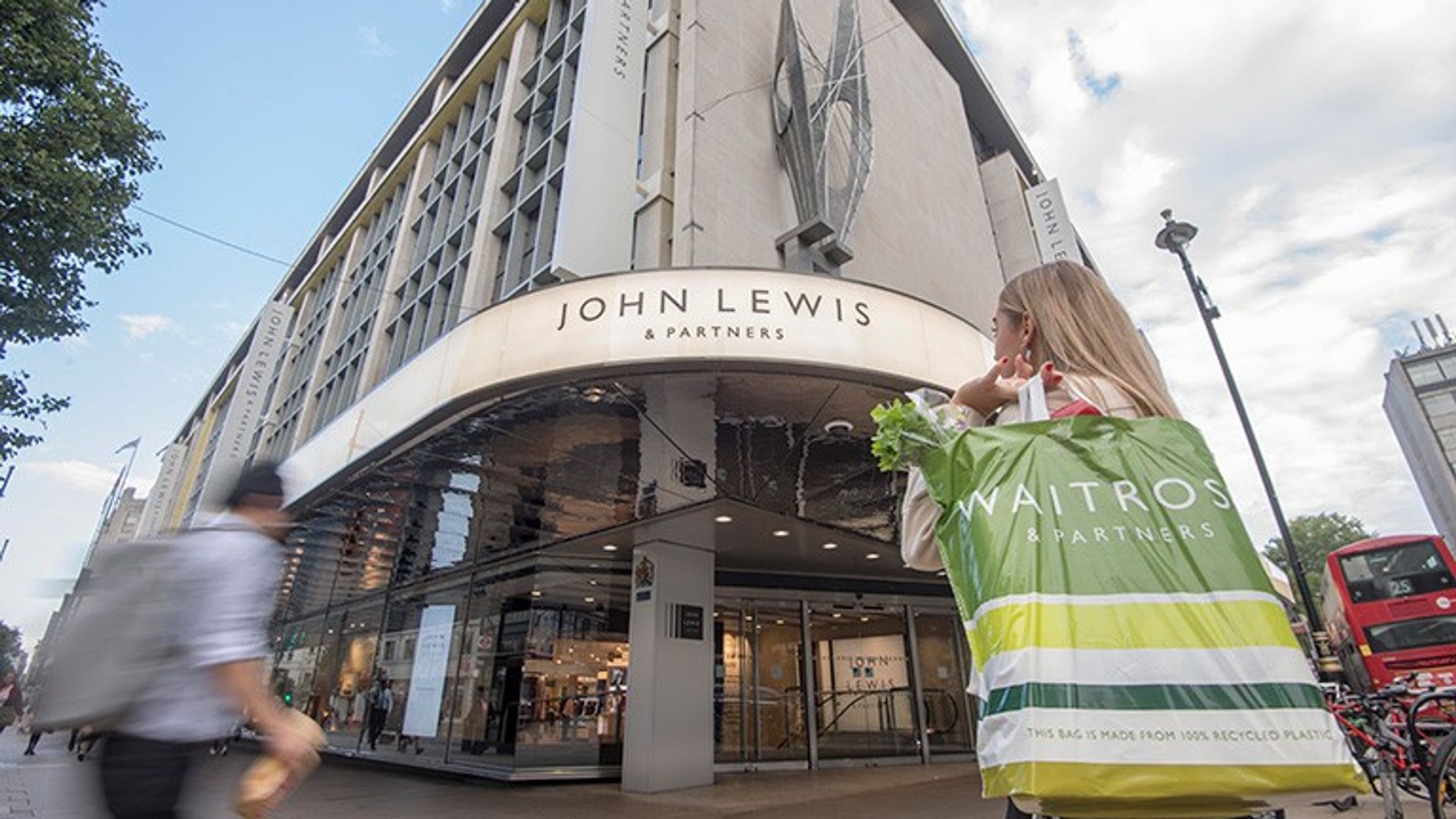
The restoration of the staff bonus at the John Lewis Partnership (JLP) marks the conclusion of a four-year period of fiscal austerity, yet the decision rests on a delicate equilibrium between employee retention and long-term capital solvency. While the headlines focus on the symbolic return of "the bonus," the underlying mechanics reveal a structural shift in how the UK’s largest employee-owned retailer prioritizes its cash flow in an inflationary environment. To understand the viability of this payout, one must examine the friction between the Partnership’s mutual model and the harsh requirements of modern retail scaling.
The Capital Allocation Conflict
The John Lewis Partnership operates under a unique constraint: it cannot raise equity in the same way a PLC can. Every pound paid out as a bonus is a pound not reinvested in store refurbishments, Waitrose supply chain automation, or the diversification into "Build to Rent" housing. The decision to pay a bonus in 2026—after a hiatus stretching back to 2020—indicates that the Partnership has finally cleared its Liquidity Threshold, where internal rate of return (IRR) on internal projects no longer dictates an absolute moratorium on profit sharing. You might also find this related story insightful: Why Trump is Right About Tech Power Bills but Wrong About Why.
The tension in this model is defined by three competing priorities:
- The Debt Maturity Wall: JLP has historically carried significant debt. Profitability must first service the interest and principal of these obligations before the "Partnership Bonus" can even be discussed.
- Modernization Backlog: The Waitrose estate, in particular, has suffered from underinvestment compared to automated competitors like Ocado or high-efficiency operators like Aldi.
- The Talent Risk Premium: In a tight labor market, the absence of a bonus acts as a "loyalty tax" on employees. The 2026 payout is, in many ways, a defensive maneuver to prevent the erosion of the company’s service-oriented culture.
Deconstructing the Profitability Surge
The ability to fund this bonus stems from a ruthless "Plan to Profit" strategy initiated in 2024. This wasn't achieved through organic sales growth alone—which remained modest due to squeezed discretionary spending—but through a fundamental reconfiguration of the cost base. As reported in recent articles by The Wall Street Journal, the implications are notable.
The Efficiency Ratio
The Partnership targeted £900 million in efficiency savings. This was not a vague goal; it was a targeted reduction in "non-customer facing" roles and the consolidation of shared services between the John Lewis department stores and Waitrose supermarkets. By centralizing procurement and logistics, JLP reduced its Cost of Goods Sold (COGS) margin, allowing for a higher bottom-line retention even as footfall remained volatile.
Productivity Per Partner
A critical metric often ignored by generalist reporting is the revenue generated per employee (Partner). During the four-year bonus drought, JLP reduced its total headcount. The 2026 bonus is being distributed among a leaner workforce, meaning the "Bonus Pool" requires less absolute profit to feel significant to the individual recipient. This is a classic example of Operating Leverage: once fixed costs (like store leases and head office salaries) are covered, a higher percentage of every additional pound of revenue drops to the profit line.
The Waitrose-John Lewis Divergence
The Partnership is a tale of two distinct retail cycles. Waitrose acts as the "Cash Cow," providing steady, high-frequency transaction data and reliable cash flow. John Lewis is the "Cyclical Engine," highly sensitive to the housing market and consumer confidence.
- Waitrose's Role: The supermarket wing has successfully pivoted toward "Loyalty Personalization." By using data from the MyWaitrose platform, the brand reduced the "leakage" of high-value customers to Marks & Spencer. This stability provided the floor for the 2026 profit announcement.
- John Lewis's Transformation: The department store has moved away from its "Never Knowingly Undersold" price-matching promise. This shift was a prerequisite for the bonus. By decoupling its pricing from the lowest-common-denominator discounters, John Lewis clawed back its Gross Margin. You cannot pay a bonus while committed to a race-to-the-bottom pricing strategy.
The Risk of the Mutual Model in 2026
The return of the bonus does not mean the Partnership is out of the woods. There are structural headwinds that no amount of internal efficiency can fully mitigate.
The Pension Deficit Constraint
JLP’s defined benefit pension scheme remains a massive liability. In years where the bonus is paid, the Partnership must often make matching or proportional contributions to satisfy the trustees and the Pensions Regulator. This creates a "Multiplier Effect" on the cost of the bonus; if the company pays out £50 million to staff, the total cash impact on the balance sheet might be 1.5x that amount due to associated tax and pension obligations.
The Inventory Trap
Retailers are currently facing a "Bullwhip Effect" in global supply chains. Over-ordering to avoid stockouts leads to high storage costs and eventual discounting (markdowns). JLP’s ability to sustain this bonus in future years depends on its Inventory Turnover Ratio. If the department store gets its fashion or electronics buys wrong, the resulting markdowns will evaporate the profit pool for 2027.
Assessing the "Build to Rent" Diversification
A significant portion of the strategy to "future-proof" the bonus involves diversifying away from pure retail. The Partnership’s move into the residential property market—converting surplus land and store space into rental housing—is an attempt to create a Non-Correlated Revenue Stream.
The logic is sound: retail is volatile, but housing in the UK is a high-demand, supply-constrained asset. However, the capital expenditure (CapEx) required for these property developments is immense. There is a legitimate concern that the "Bonus" is being funded by delaying these vital diversification projects. If JLP prioritizes the 2026 payout over the 2028 housing pipeline, it may be winning the battle for employee morale while losing the war for long-term corporate relevance.
The Behavioral Economics of the Partner Bonus
From a psychological standpoint, the bonus serves as a "Performance Reset." After four years of "shared sacrifice," the 2026 payout functions as a social contract renewal. In mutual organizations, the "Partner" status is supposed to drive higher levels of customer service and lower levels of "shrinkage" (theft or loss).
When the bonus disappears, the distinction between a "Partner" and a "Contractor" at a competitor like Amazon or Tesco begins to blur. The restoration of the bonus is less about the cash and more about re-establishing the Mutual Advantage. If Partners feel like owners, they act like owners, which theoretically lowers the cost of supervision and increases the quality of the customer experience.
Strategic Trajectory and the "Dividend" Floor
To maintain this momentum, JLP must move toward a Sustainable Dividend Model. This involves setting a clear profit-target floor below which no bonus is paid, but above which the payout is predictable. The "all or nothing" nature of the last four years created too much internal instability.
The Partnership’s management must now demonstrate that the 2026 bonus isn't a "one-off" political concession to appease a restless workforce, but the result of a permanent shift in the Break-even Point of the business.
The next 18 months will require a rigorous focus on:
- Refinancing the 2027 Bond: Ensuring that the cost of debt doesn't spike and eat the profit pool.
- Waitrose Premiumization: Increasing the private-label "Duchy" and "No. 1" ranges, which carry significantly higher margins than branded goods.
- Omnichannel Synchronization: Reducing the friction between the online app and the physical store to lower the Customer Acquisition Cost (CAC).
The restoration of the bonus is a signal of operational stabilization, but the structural transformation of the Partnership's balance sheet is far from complete. The organization has successfully pivoted from a "Survival" mindset to an "Optimization" mindset. The challenge now is to ensure that the "Mutual" model can compete with the "Private Equity" or "Publicly Traded" models in an era of high interest rates and declining brand loyalty.
The Partnership must now aggressively deploy its remaining cash into AI-driven stock management and automated micro-fulfillment centers. The 2026 bonus will be remembered either as the moment the Partnership reclaimed its identity or as a temporary reprieve before the next cycle of retail consolidation. For it to be the former, the efficiency gains achieved in the last 24 months must be treated as the new baseline, not a temporary peak.
Would you like me to analyze the specific debt-to-equity ratios of the John Lewis Partnership compared to its main competitors?