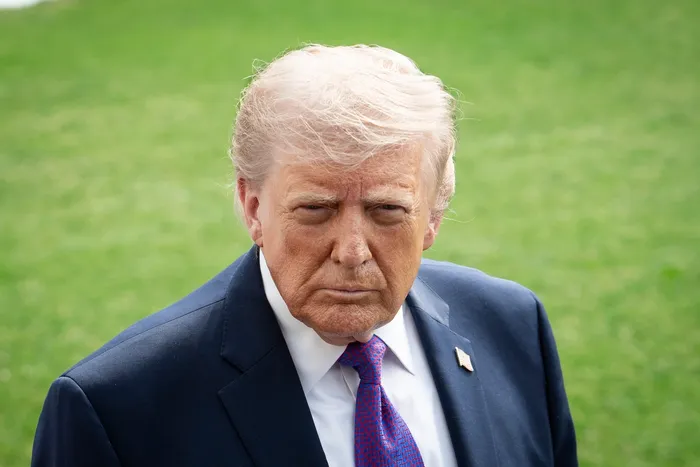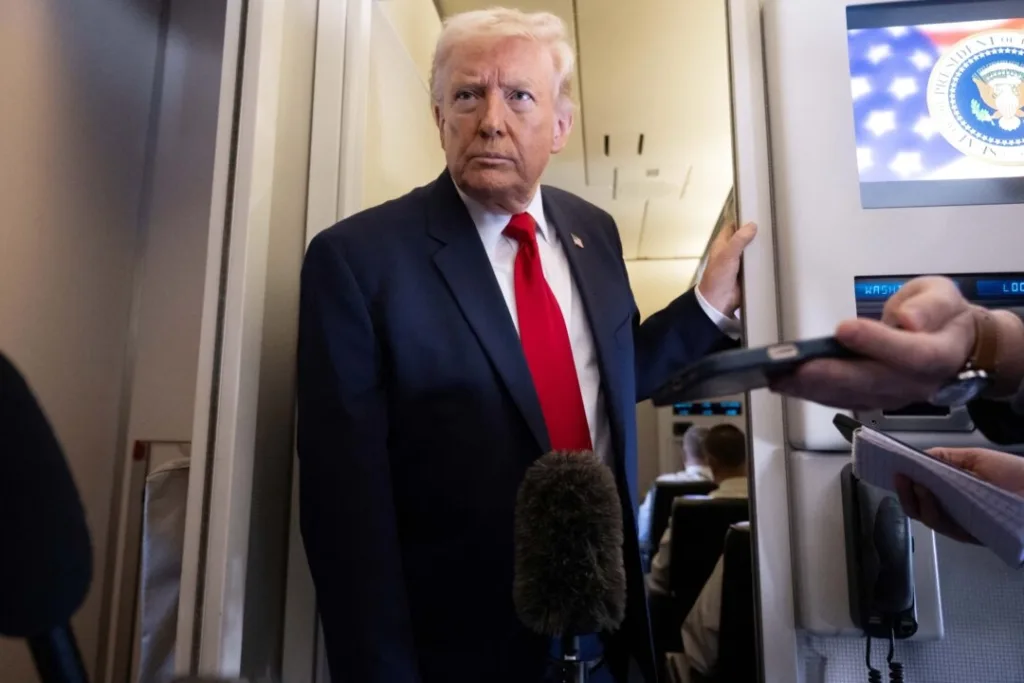
The gold leaf in the grand ballroom of Mar-a-Lago doesn’t usually wait. It expects. It expects the clink of crystal, the heavy scent of expensive cologne, and the gravity of men who move markets with a whisper. But today, the air feels thin. The scheduled summit, the one the world’s financial tickers have been pulsing for, is flickering like a dying bulb. Donald Trump has suggested the meeting with Xi Jinping might not happen by the March deadline.
Silence.
That is the sound of billions of dollars in global trade holding its breath.
When a superpower indicates that a handshake might be delayed, it isn't just a calendar conflict. It is a tectonic shift. For the soybean farmer in Iowa staring at a rusted silo, or the tech executive in Shenzhen tracking the cost of rare-earth minerals, this delay is a physical weight. It is the difference between expansion and bankruptcy.
The core of the friction isn't just about deficits or intellectual property. It is about two men playing a high-stakes game of chicken with the global economy as the asphalt. Trump wants a "grand deal." Xi wants "respect." Between those two desires lies a chasm of tariffs, pride, and the very real possibility that the world's two largest economies are drifting toward a permanent divorce.
The Farmer and the Forecast
Consider a man named Elias. He’s not a diplomat. He doesn't own a tuxedo. He owns three hundred acres of dark, rich soil in the American Midwest. For years, Elias didn't need to know the nuances of Chinese maritime law. He just needed to know that his beans were going on a boat to Dalian.
Now, Elias wakes up every morning and checks his phone before he even puts on his boots. He isn't looking for the weather. He’s looking for a tweet. He’s looking for a headline about a summit. If the summit is on, the price of his crop ticks up a few cents—enough to pay the interest on his tractor loan. If the summit is "delayed," his future stays in the dirt.
This is the human cost of "strategic patience."
The administration argues that the delay is a tool of leverage. If the deal isn't "right," the President won't sign it. It’s a classic negotiation tactic from the Art of the Deal playbook: show the other side you are willing to walk away. But walking away from a table this big creates a vacuum. And in geopolitics, vacuums are rarely filled with anything good.
The Invisible Ledger
The numbers are staggering, yet they feel hollow until you realize they represent human effort. We talk about a $375 billion trade deficit as if it’s a scoreboard in a stadium. It’s not. It’s a ledger of missing factories, shifted supply chains, and the rising cost of a child’s plastic toy at a big-box store.
When Trump says the summit could be pushed back, he is signaling that the structural changes the U.S. demands—ending forced technology transfers and curbing state subsidies—haven't been met. The Chinese side, meanwhile, views these demands as an assault on their sovereign right to grow.
It is a clash of identities.
One side sees a world where they have been cheated for decades. The other sees a world where they are finally reclaiming their historical place at the top. When these two worldviews collide, a "delay" is often code for "deadlock."
The Ghost of 1930
History is a cruel teacher because its lessons are usually written in the blood and sweat of people who didn't see the crisis coming. We have been here before. Trade wars start with a sense of righteous protectionism and often end in a stagnant, fractured world.
The Smoot-Hawley Tariff Act wasn't intended to trigger a global depression. It was intended to protect Elias's grandfather. It failed. Instead, it choked off the arteries of global commerce. Today, the complexity is a thousand times greater. An iPhone isn't "made" in one place. It is a symphony of components from dozens of nations, all converging in a dance of logistics that requires a stable trade environment to survive.
A delay in the Xi-Trump summit isn't just a pause in a conversation. It’s a wrench in that machinery.
Companies that were planning to hire in June are now waiting until September. September becomes January. The "wait and see" approach is a slow-motion poison for the markets. It prevents capital from flowing where it is needed most.
The Weight of the Pen
Imagine the room where this deal is supposed to happen. It is quiet. There are two pens on a table. One is for a man who rose through the brutal, disciplined ranks of the Communist Party. The other is for a man who built a brand on being the ultimate closer.
Both are trapped by their own rhetoric.
If Xi Jinping gives too much, he looks weak to the hardliners in Beijing. If Trump signs a deal that doesn't "fix" the deficit, he looks like a failure to his base in the Rust Belt. The delay is the only way to buy time, but time is a luxury that the markets no longer possess.
The volatility is the point.
We have entered an era where uncertainty is the primary export of the United States. While this might keep the Chinese negotiators off-balance, it also keeps the American consumer in a state of perpetual anxiety. Every "maybe" from the White House ripples through the 401(k)s of millions of people who just want to know if they can afford to retire.
The Reality of the "Great Deal"
What does a successful summit even look like?
It wouldn't just be a purchase order for more American gas and grain. That’s the easy part. A real deal would require China to dismantle the very systems that allowed it to modernize in record time. It would require the U.S. to accept a world where it is no longer the sole, undisputed economic hegemon.
Neither side seems ready for that reality.
So the summit stays in limbo. The "delay" is a convenient shroud. It covers the fact that the two sides are still miles apart on the things that actually matter. Behind the smiles and the "great friendship" that Trump often mentions, there is a cold, hard realization: the two paths are diverging.
The longer the chair at Mar-a-Lago remains empty, the more the world begins to prepare for a future without a deal. Supply chains are already moving to Vietnam, to India, to Mexico. The "Made in China" era is being forced into a metamorphosis, and the "America First" era is finding out that being first often means being alone.
The sun sets over the Florida coast, casting long, distorted shadows across the patio where world leaders were meant to dine. The waves continue to hit the shore, indifferent to the tariffs and the trade gaps. Out in the heartland, Elias turns off his phone and looks at his fields. He doesn't know if the summit will happen in March, or April, or ever. He just knows that the longer they wait to talk, the harder it is to remember what it felt like to be certain.
The empty chair isn't just a missed opportunity. It is a monument to the fear that the bridge between two worlds might finally be too broken to cross.
Would you like me to analyze how this trade delay specifically impacts the global semiconductor supply chain?