The humidity in Florida has a way of sticking to everything, even the most carefully polished diplomatic protocols. By the time the world’s most powerful leaders descend on the palm-lined avenues of the Sunshine State for the G20 summit, the air will be thick with more than just heat. It will be heavy with the scent of a choice that has been made, unmade, and finally solidified in the quiet rooms of the West Wing.
Washington has finally blinked. The White House confirmed it: Russia will be invited.
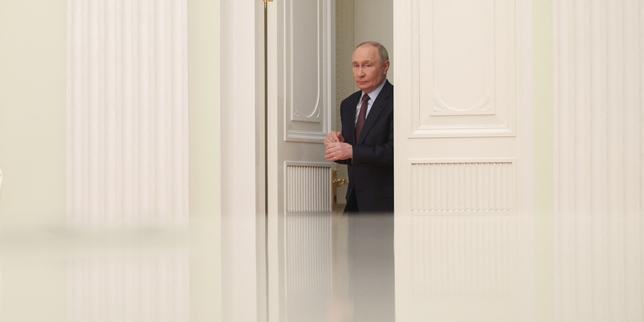
On the surface, it is a matter of administrative routine. The G20 is a forum of twenty nations, and Russia is, for better or worse, a member of that collective. But beneath the bureaucratic veneer lies a visceral, human tension that stretches from the sand-swept beaches of Florida all the way to the frozen, shell-scarred trenches of the Donbas. To invite Vladimir Putin—or his representative—is to invite the ghost of a war into a room meant for economic prosperity. It is a decision that feels like a cold splinter under the fingernail of global morality.
Consider a hypothetical diplomat named Elena. She has spent twenty years in the service, navigating the labyrinth of international relations. She knows that these summits are rarely about the grand speeches delivered from the podium. Instead, they are about the hallway conversations, the "pull-asides," and the precise seating arrangements designed to prevent a physical confrontation between men who are currently ordering each other’s soldiers to die. For Elena, the news of Russia’s invitation isn't a surprise, but it is a weight. She has to figure out how to serve coffee and draft communiqués while the architect of the century’s most brutal European invasion sits three seats down from the representative of a nation he is trying to erase.
The logic from the White House is clinical. They argue that the G20 is an economic bloc, not a moral club. They insist that excluding a major global player—even one currently acting as a pariah—would fracture the institution beyond repair. If the G20 becomes a purely Western instrument, it loses its grip on the Global South, on India, on Brazil, and on China. So, the invitation was sent. The formality was observed.
But for a mother in Kyiv, or a refugee in a cramped apartment in Warsaw, that formality feels like a betrayal. When we talk about "diplomatic inclusion," we are using a sanitized language to describe a very messy reality. We are saying that the global economy matters more than the specific, blood-soaked details of a sovereign border. It is a trade-off. We exchange moral clarity for the hope of a stable market.
The invitation creates a logistical nightmare that goes far beyond security detail. Imagine the "family photo"—that awkward tradition where world leaders stand shoulder-to-shoulder, grinning for the history books. Who stands next to whom? Does the American President shake the hand of the man whose face is synonymous with the destruction of Mariupol? If they refuse to stand together, the photo becomes a visual map of a broken world. If they do stand together, the image becomes a weapon of propaganda, a sign that "business as usual" has returned to the tropics.
This isn't just about optics. It’s about the silent pressure in the room. Every time a Russian delegate speaks about trade or climate change, the air will leave the lungs of everyone else. You cannot talk about the price of wheat without acknowledging that the fields it grows in are being mined. You cannot talk about energy security while pipelines are being sabotaged and cities are being plunged into darkness. The White House knows this. They are betting that the awkwardness is a price worth paying to keep the G20 from collapsing into two separate, warring halves.
There is a specific kind of exhaustion that comes with this conflict. It is the exhaustion of watching the world try to maintain its balance on a tightrope that snapped months ago. We want the rules to work. We want the summits to mean something. We want to believe that if we just get everyone around a mahogany table, logic will prevail. But logic is a frail shield against the raw ambition of empire.
The Florida summit will be a theater of the absurd. In one room, specialists will discuss the "digital economy" and "sustainable development." Outside, the world will be watching the motorcades, looking for a glimpse of the man who turned the 21st century back toward the 19th. The stakes are invisible until you realize they are everywhere. They are in the price of the gas you put in your car, the anxiety of a soldier’s wife, and the credibility of the very idea of international law.
If the Russian delegation shows up, they will likely be met with a series of choreographed snubs. Walk-outs during speeches. Refusals to share meals. It is a high-stakes version of middle-school social exclusion, played out by people with nuclear codes. But even a snub is a form of engagement. By being there, Russia forces the world to acknowledge its persistence. They prove that you cannot simply delete a superpower from the global spreadsheet, no matter how much you despise their actions.
The decision to confirm the invitation was likely born of a grim pragmatism. The U.S. and its allies are realizing that the war in Ukraine is not a sprint; it is a grueling, multi-year marathon. If they bar Russia from every forum, they risk creating a permanent alternative bloc—a "G-Shadow"—centered around Moscow and Beijing. To prevent that, they must endure the bile of sitting across from their adversary. They must endure the Florida heat, the forced smiles, and the crushing weight of the empty chair that represents the peace we used to take for granted.
As the sun sets over the Gulf of Mexico during the summit’s first evening, the light will hit the glass of the convention center, reflecting a world that is beautiful, fragile, and deeply fractured. The politicians will retreat to their private dinners. The cameras will turn off. But the reality remains: an invitation was sent, an invitation was accepted, and the blood on the floor of the world stage will not be buffed out by even the most skilled of diplomatic cleaners.
Sometimes, the most terrifying thing about a room is who is allowed to stay inside it.