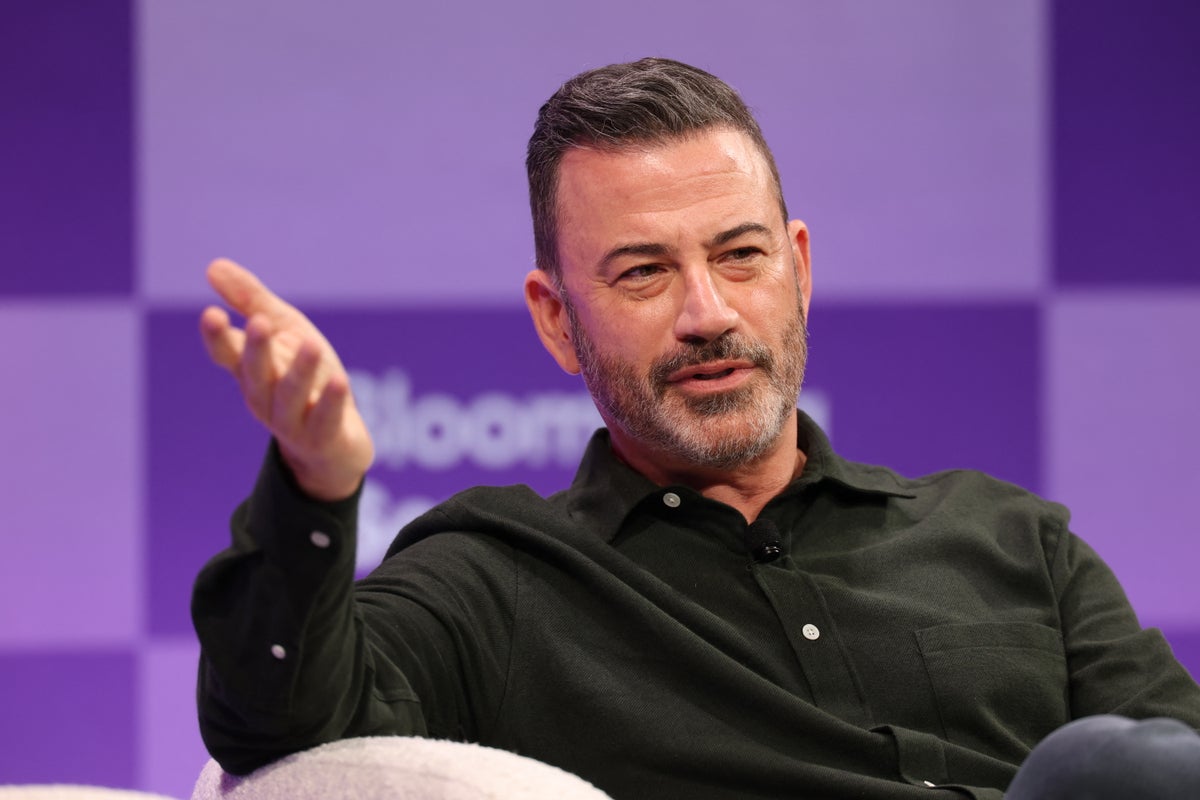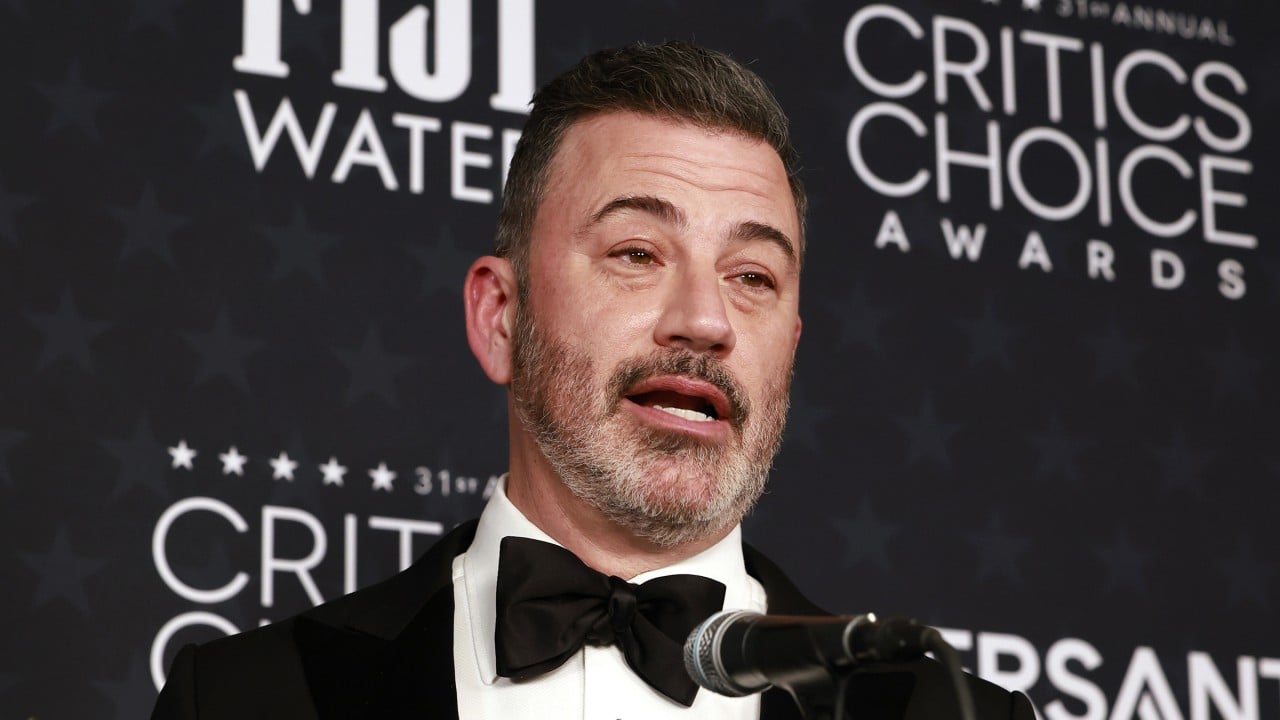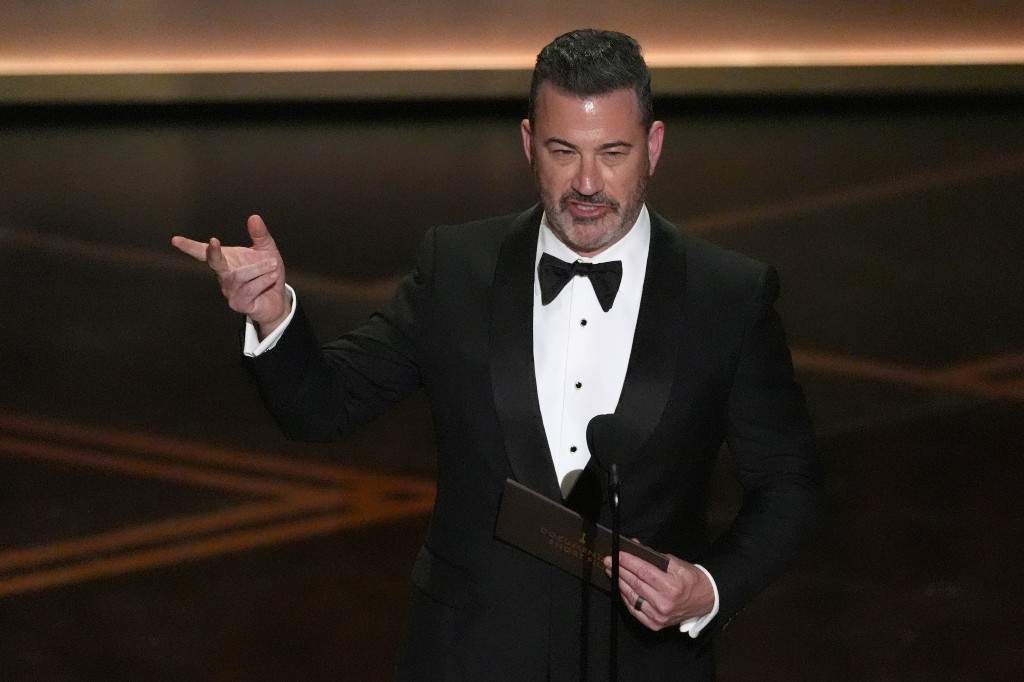
Jimmy Kimmel is no stranger to the crosshairs of a presidential campaign, but the latest flare-up with Donald Trump has moved beyond mere celebrity spat into a predictable, high-stakes ritual. When Trump recently took to social media to demand Kimmel be fired for his performance at the Oscars and his nightly monologues, Kimmel’s response was a shrug wrapped in a punchline. He called it "déjà vu," a nod to the fact that this specific cycle of outrage and rebuttal has been running on a loop since 2016. However, looking at this through the lens of industry mechanics reveals that both men are getting exactly what they want out of the conflict.
The mechanics of late-night television have shifted. For decades, the goal was broad appeal. Now, the goal is targeted engagement. Kimmel’s "déjà vu" comment isn't just about the repetitive nature of Trump’s grievances; it is an acknowledgment of a symbiotic relationship that sustains the ratings of a legacy format and the media presence of a political candidate.
The Economics of Outrage
Late-night hosts used to compete for the center. Johnny Carson avoided partisan politics because he didn't want to alienate half the audience. Today, the audience is already alienated. The fragmentation of media means that Kimmel isn't trying to win over the MAGA base, and Trump isn't trying to convince Hollywood liberals. They are both playing to their respective galleries, using the other as a convenient foil to drive clicks, shares, and loyalty.
When Trump attacks Kimmel, he reinforces his "anti-elite" credentials to a base that views Hollywood as a bastion of out-of-touch liberalism. When Kimmel fires back, he solidifies his position as a leader of the cultural resistance, ensuring that his clips go viral on social platforms where his core demographic lives. It is a closed-loop system. The conflict generates its own fuel.
The "firing" demand is a classic piece of political theater. Trump knows Kimmel won't be fired; ABC’s parent company, Disney, sees the ratings spikes and the massive YouTube numbers that follow these interactions. In an era where linear television viewership is in a freefall, a viral moment is worth more than a dozen standard comedy sketches.
Beyond the Monologue
To understand why this happens, you have to look at the data behind the desk. Kimmel’s tenure has been marked by a sharp pivot toward advocacy. Whether it was his emotional plea regarding healthcare after his son’s birth or his nightly takedowns of the Trump administration, he found a niche that his predecessors avoided. This wasn't just a moral choice; it was a survival strategy in a crowded market.
By becoming a specific kind of voice, Kimmel insulated himself from the general decline of the talk show format. He became a must-watch for a specific, politically active segment of the population. Trump, a master of media manipulation, recognizes this. By targeting Kimmel, he ensures he remains the central topic of conversation even on networks that are ostensibly hostile to him.
The Feedback Loop Mechanism
The process follows a rigid script that has been perfected over eight years.
- The Catalyst: Kimmel makes a joke at a high-profile event (like the Oscars) or during a monologue that strikes a personal nerve.
- The Reaction: Trump issues a statement, usually via Truth Social, calling for a boycott, a firing, or questioning the host's talent.
- The Amplification: News outlets pick up the "feud," creating 24 to 48 hours of constant coverage.
- The Payoff: Kimmel uses the attack as the centerpiece of his next monologue, laughing at the absurdity.
- The Result: Both parties see an uptick in social media engagement and "brand" reinforcement.
This isn't an accident. It’s an ecosystem.
Why the "Déjà Vu" Narrative Sticks
Kimmel’s use of the term "déjà vu" is remarkably accurate from a historical perspective. In 2018, Trump suggested that late-night hosts should be investigated for their "one-sided" coverage. In 2019, he called for "equal time" for Republicans. Each time, the result is the same: the host gets a ratings bump, and the president gets a grievance to fundraise on.
The fatigue that Kimmel hints at is shared by a segment of the public that is tired of the intersection between entertainment and politics. Yet, the numbers suggest that while people claim to be tired of it, they continue to consume it. The metrics don't lie. A monologue about tax policy doesn't move the needle; a monologue about a personal attack from a former president does.
The Erosion of the Third Wall
We are seeing the total collapse of the boundary between the "news" and "entertainment" sectors. Kimmel is no longer just a comedian; he is a political commentator with a writers' room. Trump is no longer just a politician; he is a media personality who understands the pacing of a television feud.
This blurring of lines has consequences for how the public perceives truth and comedy. When the jokes become the news, and the news is delivered via jokes, the "truth" becomes whatever fits the narrative of your chosen side. Kimmel’s "déjà vu" is a symptom of a culture that has stopped looking for new stories and has settled for the comfort of a familiar fight.
The Network Perspective
Behind the scenes at ABC, the mood is likely far from panicked. Executives at major networks are dealing with a brutal landscape. Cord-cutting has gutted traditional revenue streams. Streaming services are siphoning off the younger audience. In this environment, a host who can command the national conversation—even if it's through controversy—is an asset that cannot be easily replaced.
The call for Kimmel’s firing is, in many ways, the ultimate job security. In the current media climate, being hated by the right people is just as valuable as being loved by the right people. It proves relevance.
The Survival of the Loudest
In the investigative world, we follow the money. In the media world, we follow the attention. The attention economy dictates that peace is boring. If Kimmel and Trump were to stop acknowledging each other, both would lose a significant portion of their cultural footprint.
The conflict isn't a bug in the system; it is the system's primary feature.
Breaking the Cycle
Is there a way out of this "déjà vu"? Unlikely. As we head into another election cycle, the intensity will only increase. The scripts are already written. The insults are telegraphed months in advance. Kimmel will continue to poke the bear, and the bear will continue to roar for the benefit of the cameras.
The real losers in this exchange are the viewers who remember a time when late-night was an escape from the world, rather than a mirror of its most divisive elements. But nostalgia doesn't pay the bills in 2026. Conflict does.
The next time a headline appears about a demand for a firing or a "savage" response from a talk show host, understand that you are watching a choreographed dance. They aren't fighting for your mind; they are fighting for your minutes. The more minutes you spend watching the feud, the more successful both men become at their respective jobs.
Stop looking for a winner in this battle. There isn't one. There is only the continuation of the loop.