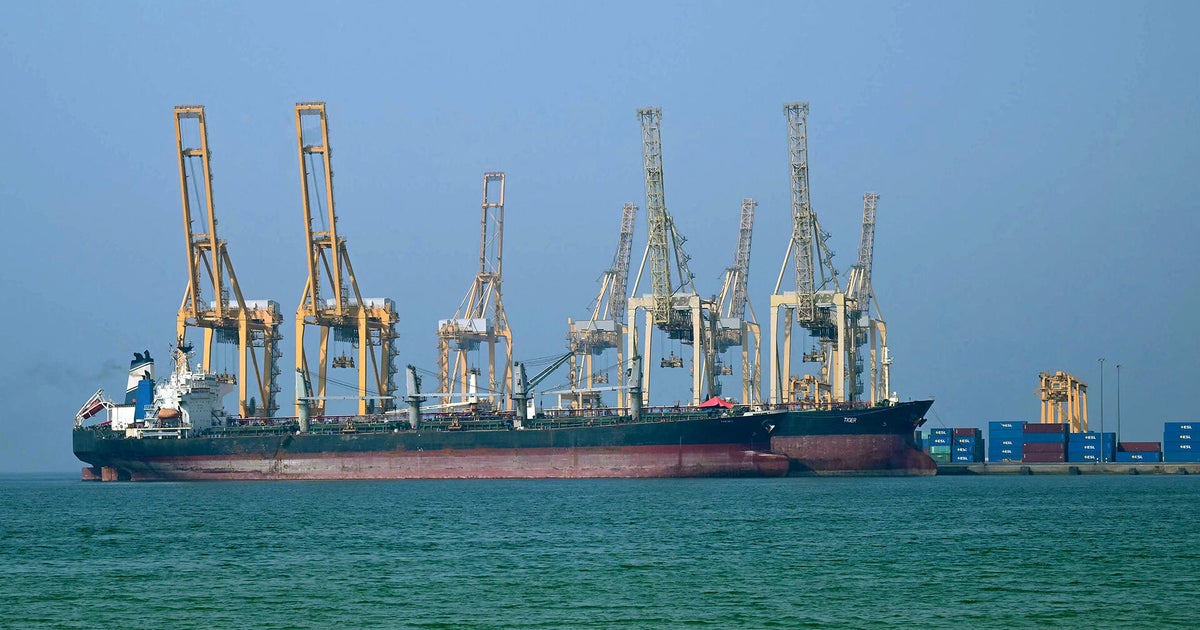
The headlines are celebrating a single tanker. They treat the arrival of a crude vessel from the Strait of Hormuz as a geopolitical victory, a sign that the "war" is manageable and that India’s energy tap is back to a steady flow. This isn't just optimistic; it is dangerous.
If you believe one ship reaching Mumbai port proves the Strait is "open" or that Indian energy security is "restored," you are falling for the oldest trick in the maritime book. You are looking at a localized tactical success and mistaking it for a strategic shift. The reality is that we are currently operating on a knife-edge of luck, and the traditional metrics of "energy security" are being dismantled by asymmetric warfare that no amount of naval escorting can fully solve.
The Myth of the Open Strait
The Strait of Hormuz is not a highway; it’s a choke point that operates on the permission of the most aggressive actor in the room. When a tanker reaches Mumbai, the media treats it like a cargo delivery at a local warehouse. In reality, that ship likely paid a "risk premium" that would make a hedge fund manager blush.
We talk about "free navigation" as if it’s a natural law. It isn't. It’s an expensive, subsidized service provided by aging naval doctrines. The moment a drone costing $20,000 can threaten a VLCC (Very Large Crude Carrier) worth $100 million carrying $100 million in cargo, the math of global trade breaks.
The "consensus" view is that as long as the ships keep moving, the system works. Wrong. The system is hemorrhaging value through insurance hikes, rerouting costs, and the sheer psychological terror of the "shadow war" at sea. Every time a vessel makes it through, the relief we feel is actually a mask for our increasing vulnerability. We are celebrating the fact that we didn't go bankrupt today, while ignoring the fact that the cost of staying solvent is doubling every month.
Why Crude Diversification is a Half-Truth
I’ve seen analysts argue that India is safe because we buy from Russia, Iraq, and the UAE. This is the "diversification" trap. Diversifying your sources doesn't matter if the transit pipe is the same narrow, contested strip of water.
Geography is the one thing you cannot "disrupt" with a startup or a policy paper. If the Strait of Hormuz becomes a kinetic combat zone, it doesn't matter if your oil came from a friendly neighbor or a distant ally. It’s stuck.
The industry likes to pretend that the Strategic Petroleum Reserve (SPR) is our shield. Let’s be blunt: India’s SPR capacity is roughly 5.33 million metric tonnes. That’s about 9 to 10 days of consumption. If you think a 10-day buffer is "security" in a multi-year regional conflict, you aren't an insider; you’re a spectator. We aren't building a fortress; we're carrying a small umbrella in a hurricane and calling it a roof.
The Tech Gap: Drones vs. Destroyers
The competitor's article focuses on the "vessel." They should be focusing on the sensor.
The era of the massive naval escort is dying. Sending a billion-dollar destroyer to swat away a swarm of low-cost loitering munitions is the definition of unsustainable. This is where the status quo fails. We are trying to protect 20th-century infrastructure with 21st-century costs.
- Asymmetric Costs: A missile fired from a ship to intercept a drone costs $2 million. The drone costs $20,000.
- Saturation: You can't defend against 50 drones at once without exhausting your magazine.
- The Insurance Wall: Lloyd’s of London doesn't care about your "brave sailors." They care about the hull. Once the "War Risk" premium exceeds the profit margin of the refinery, the oil stops flowing—not because of a blockade, but because of a spreadsheet.
The Mumbai Port Fallacy
Mumbai is a fantastic port. It is also a legacy asset. Relying on a centralized hub for energy intake during a period of high-intensity regional friction is a bottleneck within a bottleneck.
The industry obsesses over "throughput." We should be obsessing over "redundancy." True energy security isn't one tanker reaching Mumbai; it's 500 small, modular, decentralized energy generation sites that don't require a 300-meter ship to show up every week.
We are addicted to the "Big Oil" logistics chain because it’s easy to tax and easy to monitor. But in a world of Strait-based conflict, this centralization is our greatest weakness. The moment we celebrate a ship's arrival, we admit how much we fear its absence.
Stop Asking if the Strait is Open
The wrong question: "Is the Strait of Hormuz safe for Indian tankers?"
The right question: "How fast can we make the Strait of Hormuz irrelevant to the Indian economy?"
Every Rupee spent on securing a tanker is a Rupee not spent on long-duration energy storage, domestic green hydrogen, or thorium-based nuclear research. We are paying a "security tax" to maintain a status quo that is fundamentally broken.
The insider secret is that the oil companies want the drama. Volatility drives prices. Uncertainty justifies surcharges. The only person losing in this "successful" tanker arrival is the Indian consumer who pays for the navy, pays for the insurance, and pays for the crude.
The Brute Honesty of the "Risk"
Let's do a thought experiment. Imagine a scenario where a single drone strike—not even a sinking, just a fire—occurs on a tanker in the middle of the Strait. Not an Indian tanker. Any tanker.
Within four hours, the global Brent price spikes $10. Within twelve hours, maritime insurers pull coverage for the entire Persian Gulf. Within twenty-four hours, the "victory" of the Mumbai port arrival is erased from history.
That is the fragility of the system we are currently hailing as "stable." We are one bad afternoon away from an energy drought, and no amount of optimistic reporting will change the physics of a narrow waterway.
The Actionable Pivot
If you are a stakeholder in the Indian energy sector, stop looking at the shipping manifests. Start looking at the grid.
- Demand Hard Redundancy: Stop supporting projects that rely on single-point-of-failure logistics.
- Short the "Stability" Narrative: Whenever the media says the situation is "normalizing," prepare for a price hike. Stability in the Middle East is currently a transition state, not a destination.
- Invest in Autonomy: The only way to secure the Strait is through autonomous underwater and surface vehicles that can provide 24/7 surveillance without the billion-dollar price tag of a carrier group.
The arrival of a tanker in Mumbai isn't a success. It's a reminder of our dependency. Every time we cheer for a ship making it through, we are essentially cheering for the fact that the hostage-taker let one person go.
It’s time to stop paying the ransom.
Stop building your strategy around the hope that the Strait stays open. Start building it around the certainty that one day, it won't be.
Invest in the disruption, or be disrupted by the geography.
Choose.