The intersection of Middle Eastern geopolitical instability and global energy procurement reveals a structural failure in modern statecraft: the persistent reliance on high-variance energy inputs. When regional conflicts—specifically those involving Iran and the broader Levant—trigger price shocks, the global economy pays a "volatility tax" that exceeds the nominal cost of the fuel itself. UN Climate Chief Simon Stiell’s recent characterization of these conflicts as an "abject lesson" highlights a fundamental misalignment between national security and carbon-intensive energy portfolios. The transition to decentralized, renewable energy is no longer an environmental preference; it is a defensive maneuver to decouple domestic economic stability from foreign kinetic events.
The Trilemma of Energy Procurement
Analyzing the impact of the Iran-Israel conflict through the lens of energy security requires a breakdown of the three competing pressures facing sovereign states. This framework, often referred to as the Energy Trilemma, dictates how nations prioritize their power generation:
- Security of Supply: The physical availability of energy at all times in sufficient quantities.
- Equity/Affordability: Providing reliable access to energy at a price point that does not stifle industrial output or consumer spending.
- Sustainability: The mitigation of environmental externalities to ensure long-term viability.
Fossil fuel dependence creates a "Security-Equity Paradox." To ensure security of supply in a world of concentrated oil and gas reserves, nations must often sacrifice equity by paying a premium during periods of geopolitical friction. Conversely, seeking the lowest-cost provider often leads to a geographical concentration of supply in volatile regions, thereby compromising security.
The Mechanism of the Geopolitical Risk Premium
The price of a barrel of Brent crude is rarely a reflection of simple extraction costs plus a reasonable margin. Instead, it incorporates a Geopolitical Risk Premium (GRP). This premium functions as a real-time assessment of the probability of supply disruption.
When tensions escalate in the Strait of Hormuz—a chokepoint through which roughly 20% of the world’s liquid petroleum flows—the GRP spikes. This isn't just a cost increase for transport; it is a systemic shock that cascades through the global value chain. The mechanism operates through three distinct vectors:
- Insurance and Logistics: Ship owners face "War Risk" premiums. These costs are immediately passed to the end-user.
- Speculative Front-Running: Commodity traders buy futures contracts in anticipation of supply drops, driving prices up before a single drop of oil is actually lost.
- Currency Devaluation: For non-USD economies, the rising price of oil (denominated in dollars) forces a dual-hit: they pay more for the commodity while their domestic currency weakens against the dollar, further fueling inflation.
This feedback loop illustrates why fossil fuel dependence is a strategic liability. A localized conflict between two regional powers can effectively tax a manufacturing plant in Vietnam or a household in Germany without any direct involvement in the dispute.
Decentralization as a Defense Strategy
The primary flaw in fossil-fuel-based infrastructure is its inherent centralization. Oil and gas require vast, vulnerable physical networks: pipelines, refineries, and shipping lanes. These are high-value targets in "grey zone" warfare. In contrast, renewable energy architectures allow for a transition from a centralized hub-and-spoke model to a distributed mesh network.
The Physics of Resilience
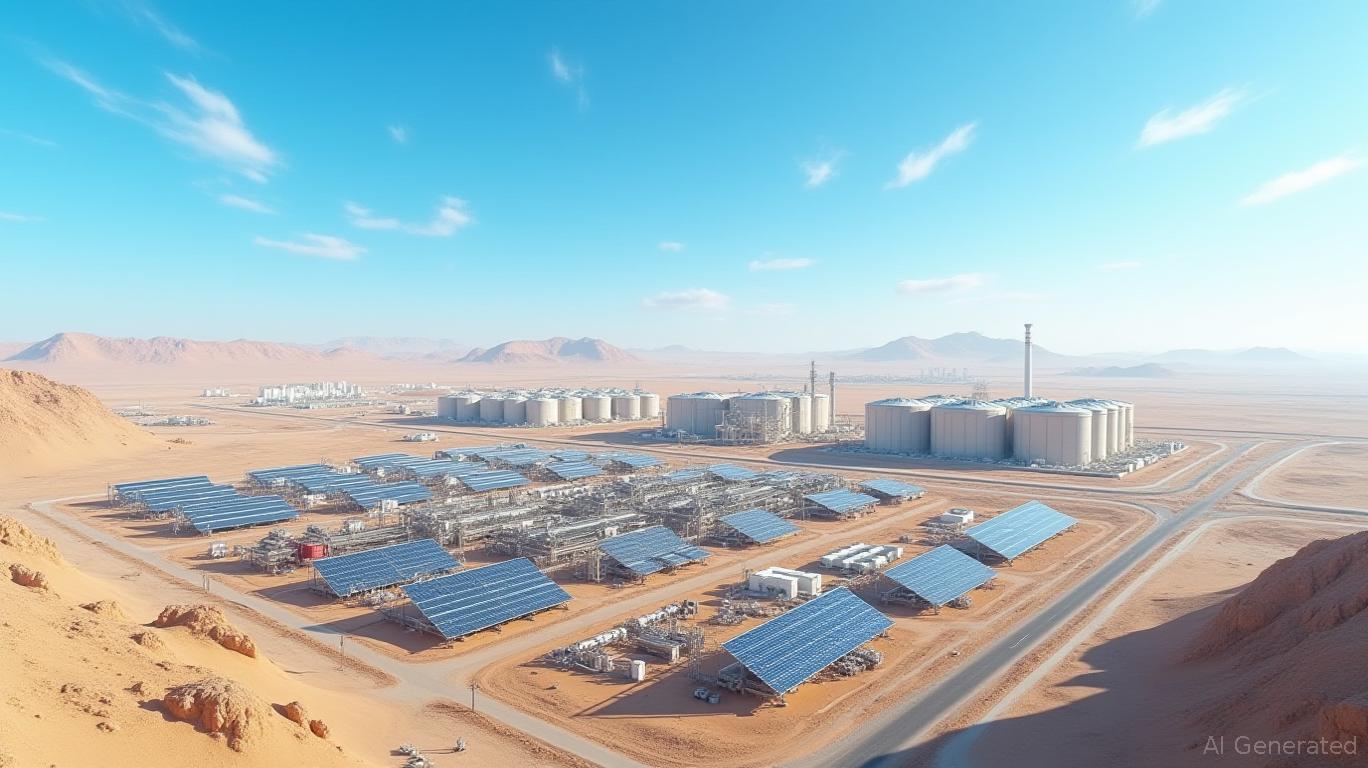
Renewable assets—solar arrays, wind farms, and battery storage—are geographically dispersed. While a missile strike can take a major refinery offline for months, crippling a nation's fuel supply, it cannot easily "shut down" ten thousand individual solar installations spread across a province. The resilience of the grid increases as the density of distributed energy resources (DERs) grows.
The transition to renewables shifts the energy burden from Operating Expenditures (OPEX) to Capital Expenditures (CAPEX). Once a solar farm is built, the "fuel" is free and, crucially, cannot be embargoed, sanctioned, or rerouted by a hostile neighbor. This changes the economic profile of a nation from one of constant vulnerability to one of upfront investment and long-term stability.
The Cost Function of Inaction
Opponents of rapid decarbonization often cite the high cost of the transition. However, this analysis typically fails to quantify the "Cost of Inaction" (CoI). The CoI includes the cumulative GRP paid over decades, the military expenditures required to secure shipping lanes, and the economic friction caused by unpredictable energy inflation.
If we define the total cost of energy $E_{total}$ as:
$$E_{total} = C_{gen} + C_{ext} + P_{risk}$$
Where:
- $C_{gen}$ is the levelized cost of generation.
- $C_{ext}$ represents environmental externalities (carbon costs).
- $P_{risk}$ is the geopolitical risk premium.
Fossil fuels may occasionally compete on $C_{gen}$, but they consistently fail on $C_{ext}$ and $P_{risk}$. Renewables, while requiring significant initial $C_{gen}$ investment, effectively drive $P_{risk}$ toward zero.
Structural Bottlenecks in the Transition
It is a logical fallacy to suggest that moving away from fossil fuels immediately solves all security concerns. The transition introduces a new set of dependencies: Critical Mineral Supply Chains.
The production of electric vehicle (EV) batteries, wind turbines, and photovoltaic cells requires lithium, cobalt, copper, and rare earth elements. Currently, the processing of these minerals is as geographically concentrated as oil reserves, if not more so. A nation that swaps "Middle Eastern Oil" for "East Asian Lithium" has not solved the problem of dependency; it has merely changed the coordinates of its vulnerability.
A sophisticated strategy must therefore include:
- Circular Economy Integration: Developing domestic recycling capabilities to recover minerals from decommissioned tech, reducing the need for virgin ore.
- Chemistry Diversification: Investing in LFP (Lithium Iron Phosphate) or sodium-ion batteries that use more abundant materials than traditional nickel-cobalt chemistries.
- Strategic Stockpiling: Treating critical minerals with the same level of national priority as the Strategic Petroleum Reserve.
The Fallacy of "Energy Independence" Through Extraction
Domestic fossil fuel extraction is often touted as the solution to foreign volatility. However, in a globalized market, "Energy Independence" is a misnomer for any country integrated into the global trade system. Even if the United States or a European nation produces enough gas to meet its internal demand, its domestic producers will still sell at the global market price. If a conflict in the Middle East drives the global price to $150 a barrel, domestic consumers will pay that price regardless of where the oil was pumped.
True independence is only achieved by shifting the energy mix toward sources that are not globally traded commodities. You cannot "export" the sunlight hitting a rooftop in Seville or the wind blowing across the Texas panhandle in the same way you can export a tanker of LNG. These are non-fungible assets that remain within the domestic economy.
Redefining the Military-Industrial-Energy Complex
The "abject lesson" Stiell refers to is fundamentally about the obsolescence of the 20th-century security model. For decades, the projection of military power has been inextricably linked to the protection of energy flows. By de-linking the economy from these flows, a state reduces its "attack surface."
This shift requires a reorganization of national priorities:
- Grid Hardening: Viewing the electrical grid as a primary theater of national defense.
- Incentivizing Over-Provisioning: Encouraging the build-out of more renewable capacity than is strictly necessary to ensure a buffer during low-generation periods, rather than relying on "peaker" gas plants.
- Transborder Interconnections: Building high-voltage direct current (HVDC) lines between friendly nations to share renewable surpluses, creating a "mutual defense pact" based on electrons rather than ammunition.
The current conflict in the Middle East serves as a high-frequency signal in a low-frequency trend. The trend is the terminal decline of the carbon-based geopolitical order. Nations that treat this as a purely environmental issue will find themselves economically stranded, paying the volatility tax long after their competitors have opted out.
The strategic imperative is to front-load the CAPEX of the energy transition to eliminate the permanent OPEX of geopolitical risk. This is not a "green" agenda; it is a cold-blooded calculation of national survival in an increasingly fractured global landscape.
Deploy capital toward the aggressive expansion of long-duration energy storage (LDES) and HVDC interconnectivity. These technologies are the only viable path to turning intermittent renewables into a baseload-capable defense asset. The goal is the total neutralization of the Geopolitical Risk Premium within the domestic consumer price index.