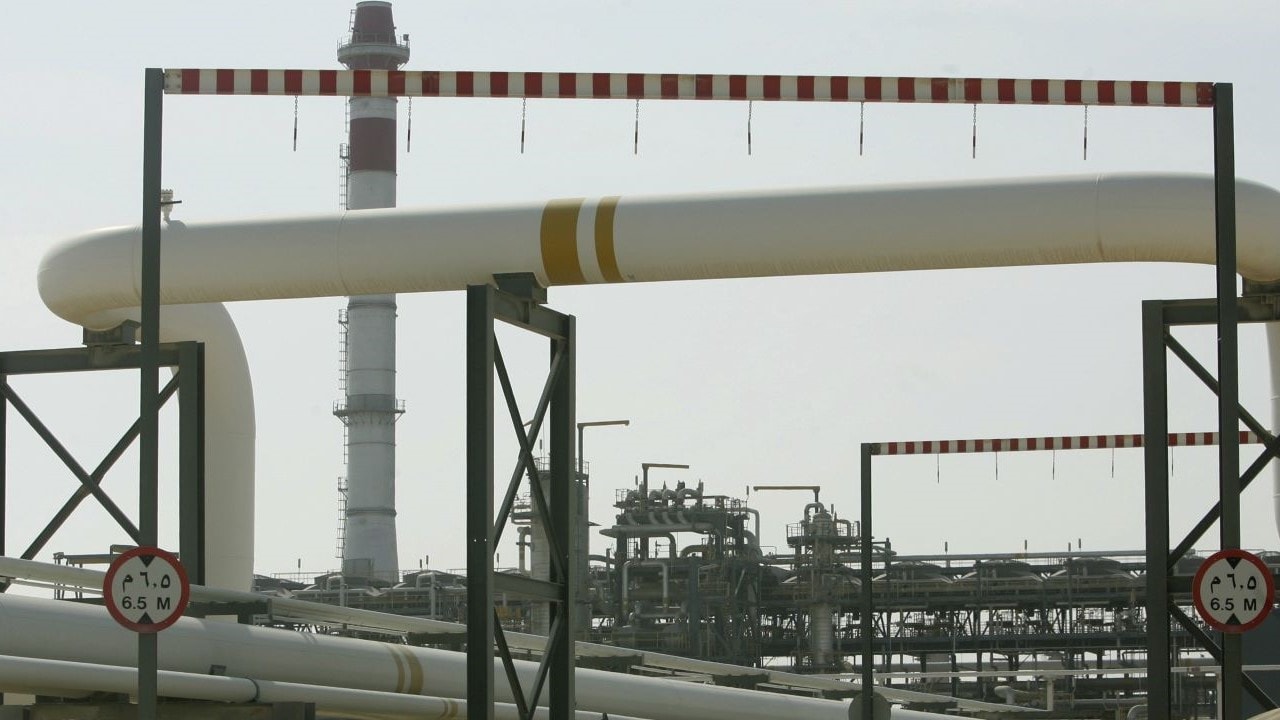
The Emirates are facing a quiet but desperate race against time. While official narratives often prioritize the rapid expansion of solar arrays and nuclear reactors, the backbone of the UAE’s industrial sector remains tethered to a vulnerable network of gas infrastructure. Recent disruptions, traced back to regional hostilities and persistent security breaches at key extraction sites, have done more than just dent production numbers. They have exposed a fundamental weakness in the Gulf's energy security strategy. Current intelligence and industry logistical data suggest that the UAE’s primary gas processing facilities, crippled by repeated targeted strikes, will struggle to reach full operational capacity before the first quarter of 2027. This isn't just a delay. It is a three-year vacuum in a market that cannot afford to wait.
The math of energy recovery is brutal and unforgiving. When a high-pressure gas plant takes a direct hit, you don't just replace a few pipes and flip a switch. You are dealing with specialized alloys, proprietary turbines, and control systems that currently have a two-year lead time in the global supply chain. By the time the damaged units are decommissioned and the site is cleared for new construction, the regional geopolitical theater will likely have shifted again, further complicating the arrival of Western engineering crews. You might also find this related coverage insightful: The Hands That Hold Your Groceries.
The Long Road to Restoration
The physical damage to the infrastructure is only the surface of the problem. Inside the industry, we know that the real bottleneck is the shortage of specialized technicians capable of working on damaged sour gas facilities. These plants handle high concentrations of hydrogen sulfide, making any repair work a lethal undertaking if not executed with surgical precision.
The 2027 timeline is a realistic assessment based on the current backlog of global energy infrastructure projects. With Europe scrambling to replace Russian supply and the United States expanding its export terminals, the UAE is competing for the same limited pool of contractors and equipment. As highlighted in detailed coverage by Investopedia, the effects are worth noting.
- Turbine Availability: Lead times for large-scale industrial turbines have jumped from 14 months to 26 months.
- Specialized Steel: High-grade, corrosion-resistant steel remains in short supply due to manufacturing shifts in Asia.
- Geopolitical Risk Insurance: Premiums for rebuilding in the Gulf have spiked, forcing the state-owned entities to self-insure or seek complex financing arrangements that slow down procurement.
The fallout of this delay hits the domestic industrial sector first. Aluminum smelters and desalination plants require a constant, unwavering stream of gas. When that stream falters, the cost of production rises, and the burden shifts to the taxpayer and the consumer. The UAE has been forced to dip into its strategic reserves and increase its reliance on expensive LNG imports—a bitter irony for a nation sitting on some of the world's largest gas fields.
The Regional Shadow War
We have to look at the mechanics of the attacks themselves to understand why the recovery is so slow. These weren't random acts of vandalism. They were calculated strikes designed to hit the most difficult-to-replace components of the gas chain. By targeting the heat exchangers and the primary processing manifolds, the attackers ensured that the "off" switch would stay down for years, not weeks.
The intelligence community points to a pattern of escalation that suggests the UAE is being used as a pressure point in a larger game between regional powers. Every time progress is made on a diplomatic front, a new "technical issue" or a drone sighting occurs near the sites. This creates an environment of perpetual uncertainty. Investors don't like uncertainty. Engineers don't like working in a zone where their primary workspace is a target.
This is a war of attrition played out in the plumbing of the global economy. If the UAE cannot secure its gas infrastructure, its ambitions to become a global hydrogen hub and a leader in carbon capture will be pushed back by a decade. You cannot build a green future on a cracked foundation of gray energy.
Infrastructure Vulnerability in a Drone Age
The traditional defense of a gas plant involved high fences and a few security patrols. That era ended the moment affordable, long-range loitering munitions became widely available. Now, a $10,000 drone can take out a $500 million compressor station.
The UAE is currently investing billions in missile defense systems and anti-drone technology, but these are reactive measures. The sheer scale of the gas fields makes them nearly impossible to harden completely. Every kilometer of pipeline and every remote valve station is a potential failure point. The industry is now looking at "distributed processing" as a potential solution—building smaller, more numerous plants rather than one massive, vulnerable target—but that transition takes time and immense capital.
The Economic Ripple Effect
The delay in restoring the gas plants impacts more than just the lights in Dubai. It disrupts the entire value chain of the petrochemical industry. Gas is the feedstock for plastics, fertilizers, and a host of other exports that the UAE uses to diversify its economy away from crude oil.
When the gas doesn't flow, the factories slow down. When the factories slow down, the non-oil GDP growth—a key metric for the government's "We the UAE 2031" vision—takes a hit. We are seeing a quiet recalibration of growth projections. Banks in Abu Dhabi are already adjusting their risk models for industrial loans, factoring in the possibility that energy prices will remain volatile until the 2027 restoration is complete.
The reliance on the Dolphin pipeline and other cross-border energy links has also become a point of contention. Relying on neighbors for energy security is a gamble that the UAE is increasingly unwilling to take. However, their internal alternatives are currently in a state of repair.
Rethinking the National Energy Mix
The current crisis has accelerated the push toward nuclear and solar, but those are long-term plays. You cannot run a heavy industrial furnace on solar power at 3:00 AM without massive battery storage that doesn't yet exist at that scale. The Barakah nuclear plant is a marvel, but even its massive output cannot replace the specific role that gas plays in providing flexible, "peaking" power and industrial feedstock.
The UAE finds itself in a bridge period where the bridge is currently on fire. The strategy now is one of "aggressive diversification," which means buying anything and everything to keep the grid stable while the primary gas plants are rebuilt. This includes:
- Increased LNG Floating Storage: Hiring specialized ships to act as mobile gas terminals.
- Emergency Interconnects: Building faster links to the Saudi power grid.
- Demand Management: Implementing strict energy efficiency mandates for the commercial sector.
These are expensive, temporary fixes. They drain the sovereign wealth funds that were intended for future-proofing the nation, redirecting that capital toward basic survival.
The Technical Reality of 2027
To understand why 2027 is the magic number, you have to look at the "Turnaround and Inspection" (T&I) cycles of the global oil and gas industry. Most major contractors schedule their "mega-projects" years in advance. The UAE's sudden need for a massive reconstruction effort doesn't automatically move them to the front of the line.
The specialized rigs required to drill new injection wells and the heavy-lift vessels needed to transport the processing modules are currently booked through 2025. Adding the time for onsite assembly, testing, and safety certification, the 2027 window is actually an optimistic estimate. If there is another regional flare-up, or if a global recession slows down the manufacturing of key components, we could be looking at 2028 or beyond.
The UAE is trying to bypass this by offering "premium" contracts—essentially paying double to cut the line—but money can only move things so fast when the physical parts don't exist. There is also the human element. The number of engineers globally who are qualified to oversee the reconstruction of a damaged sour gas plant is small enough to fit in a single hotel ballroom. Everyone wants them right now.
Security as a Service
The UAE is reportedly looking into hiring private maritime and aerial security firms to provide a "permanent umbrella" over their energy assets. This moves energy production from a commercial venture into a paramilitary one. It increases the cost per million BTU (British Thermal Units), making UAE gas less competitive on the global market, but it may be the only way to ensure that the 2027 restart actually happens.
The "investigative" truth is that the damage was much worse than initially reported. Satellite imagery and leaked contractor reports suggest that the thermal stress on the primary containment vessels was so high that they cannot be patched; they must be completely fabricated from scratch. This isn't a repair job. It's a total rebuild under fire.
The UAE must decide if it will continue to double down on centralized, vulnerable gas hubs or if it will use this crisis to fundamentally redesign how it generates and distributes power. The old model is dead. The next three years will determine if the UAE emerges as a more resilient energy power or if it remains at the mercy of any actor with a drone and a grudge. The clock is ticking toward 2027, and every day without a full restoration is a day the UAE's industrial heart beats a little slower.
:max_bytes(150000):strip_icc():focal(708x236:710x238)/United-Airlines-First-Class-Cabin-041024-d7f929ad60ef4a9e95d6ebdeaf87d6a4.jpg)