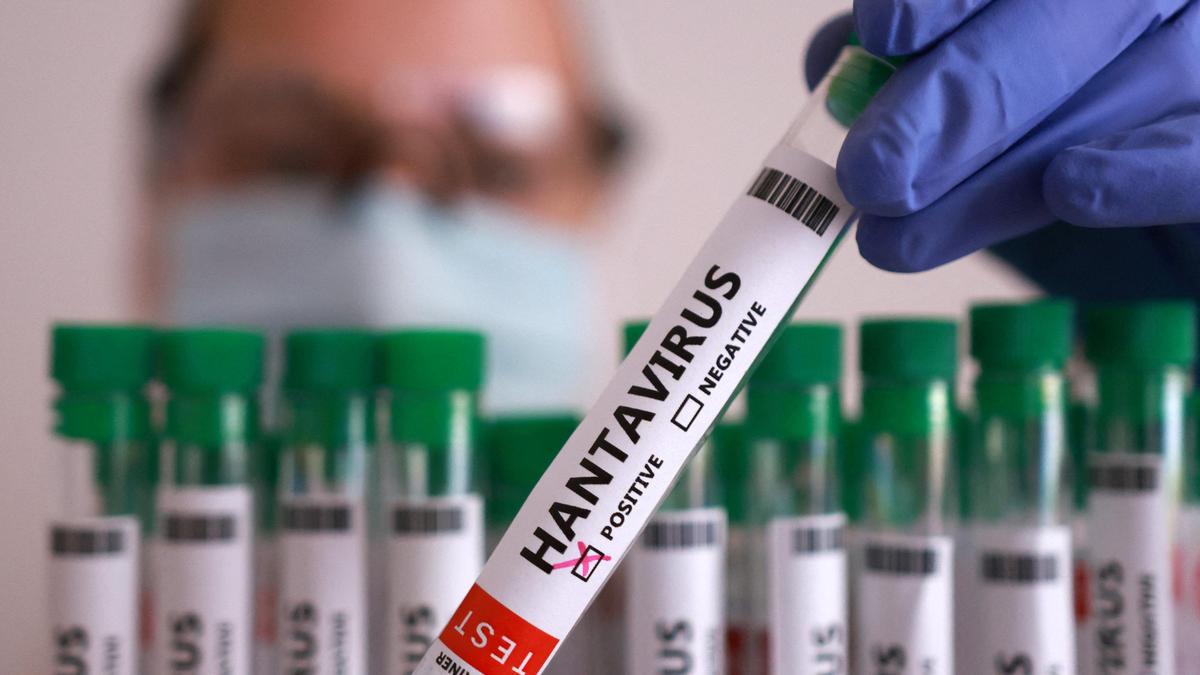
The confirmation of five hantavirus cases aboard a cruise vessel transitions the event from a statistical anomaly to a structural failure in bio-containment. While public health narratives focus on the immediate count, the true threat lies in the intersection of rodent-borne viral shedding and the closed-circuit environmental systems characteristic of modern maritime architecture. Hantavirus Pulmonary Syndrome (HPS) carries a case fatality rate nearing 40%, yet the maritime industry lacks a standardized, high-frequency surveillance protocol for the specific vectors—primarily mice and rats—that thrive in the interstitial spaces of high-occupancy vessels.
The Viral Transmission Mechanism in Confined Ecosystems
Hantaviruses do not require direct contact for transmission. The primary infection vector is the aerosolization of viral particles present in the dried excreta, urine, and saliva of infected rodents. In a terrestrial setting, airflow dispersion reduces viral load density. On a cruise ship, the risk profile shifts due to the Heating, Ventilation, and Air Conditioning (HVAC) configurations.
The mechanical chain of infection follows a three-stage progression:
- Vector Infiltration: Rodents enter through provisioning ports or mooring lines. Unlike land-based structures, a ship provides a multi-layered "envelope" where rodents can move between decks via cable runs and piping insulation.
- Environmental Loading: Once established, the rodent population sheds the virus. In confined areas with low air turnover, such as storage lockers or mechanical voids, the concentration of viral particles reaches a critical threshold.
- Mechanical Distribution: Maintenance activities or standard airflow patterns disturb these deposits. The HVAC system then acts as a force multiplier, distributing aerosolized pathogens into passenger cabins or dining areas.
The current cases suggest that the "Vector-Environment-Human" interface was compromised at multiple points. Five confirmed cases indicate a sustained exposure event rather than a singular point-source contact.
Quantifying the Lag in Pathogen Detection
Standard maritime health screenings are optimized for gastrointestinal outbreaks, specifically Norovirus. The diagnostic delay inherent in HPS creates a massive window of liability and further transmission.
HPS has an incubation period ranging from one to eight weeks. This temporal lag means a passenger may disembark, travel through international hubs, and become symptomatic weeks later. This creates a data fragmentation problem:
- The Reporting Gap: Domestic health systems often fail to link a respiratory failure case back to a specific cruise itinerary if the voyage concluded weeks prior.
- Symptomatic Mimicry: Early-stage HPS presents as fever, myalgia, and fatigue—symptoms indistinguishable from influenza or COVID-19. Without specific serological testing for IgM antibodies, the five confirmed cases likely represent the "tip of the spear," while sub-clinical or misdiagnosed cases remain off-grid.
The World Health Organization (WHO) intervention serves as a lagging indicator of a systemic failure in the ship's Integrated Pest Management (IPM) strategy.
Structural Vulnerabilities in Shipboard Pest Management
The failure to prevent these five cases reveals gaps in the "Sanitary Barrier" model used by most major lines. Effective pest management in a maritime context is not about elimination; it is about the management of the "Infiltration-Nesting-Breeding" cycle.
The Port-to-Plate Vulnerability
Cruise ships are floating supply chains. Every pallet of produce or dry goods represents a potential Trojan horse for rodents. If a vessel takes on supplies in a region where Sin Nombre or related hantavirus strains are endemic, the probability of vector introduction increases exponentially. Most ships rely on visual inspections at the gangway, which are insufficient for detecting juvenile rodents or nests embedded within palletized cargo.
Micro-Habitat Proliferation
Modern vessels are designed for passenger density, which necessitates a high volume of "dead space" between the inner hull and the cabin walls. These voids are thermally regulated and provide easy access to moisture—ideal conditions for rodent nesting. Traditional baiting and trapping are reactive. By the time a rodent is seen in a public area, the population density within the vessel's structure has likely exceeded the capacity of the hidden micro-habitats.
The Economic and Operational Cost Function
An outbreak of a high-fatality virus like hantavirus triggers a sequence of economic depreciations that extend far beyond the immediate medical costs of the five patients.
- Asset Sterilization Costs: Traditional cleaning agents are ineffective against aerosolized hantaviruses if they cannot reach the internal surfaces of the HVAC ducts. Deep-cleaning a 150,000-ton vessel requires specialized biocidal fogging and localized structural stripping, leading to extended dry-dock durations and lost revenue.
- Reputational Devaluation: Unlike Norovirus, which is perceived as a "nuisance" illness, hantavirus carries the stigma of high mortality. This shifts the consumer perception of the brand from "luxury" to "biohazard," impacting forward bookings and long-term customer lifetime value.
- Regulatory Friction: National health agencies, such as the CDC or EMA, can issue "No Sail" orders or increase the stringency of Vessel Sanitation Program (VSP) inspections. The cost of compliance with new, potentially mandated Hantavirus-specific protocols would require a permanent increase in staffing for environmental health officers on every ship.
Implementing a High-Fidelity Bio-Security Protocol
To mitigate the risk of future clusters, the industry must move toward an "Active Defense" framework. This replaces periodic inspections with continuous environmental monitoring.
- Sensor-Based Surveillance: Deploying thermal and acoustic sensors in mechanical voids to detect rodent movement in real-time. This allows for targeted extermination before a population becomes established.
- HEPA-Grade HVAC Filtration: Retrofitting air handling units with HEPA-rated filtration (MERV 17-20) to capture aerosolized viral particles. While this increases the load on the ventilation fans and raises fuel consumption, it provides a physical barrier against hantavirus distribution.
- Genome Sequencing of Vectors: If a rodent is captured, immediate genomic sequencing should be performed to determine if it carries viral strains. This proactive testing bypasses the "Incubation Lag" of human cases.
The presence of five confirmed cases is a directive for the industry to reconsider the vessel as a biological system rather than a hotel. The focus must shift from passenger symptoms to the integrity of the ship's internal environment. Cruise lines must now integrate virology and environmental engineering into their core operational strategy. The current failure is not a medical crisis; it is an engineering and logistics failure that requires a structural solution.
Immediate action requires the isolation of the affected vessel's ventilation zones and a forensic audit of the provisioning supply chain in the ports where the vessel recently docked. Failure to identify the specific breach in the sanitary barrier ensures that the next cluster will not be a matter of if, but a matter of when the next rodent-laden pallet is loaded.