The cycle of violence in the West Bank hasn't just become predictable; it's become a daily reality that the world seems increasingly content to ignore. Another Palestinian life was lost today during an Israeli military operation in the occupied territory. It’s a headline we see so often that the numbers start to blur. But behind every "neutralized" target or "clash" mentioned in a brief military communique lies a family, a community, and a political situation that is rapidly spiraling toward a point of no return.
Military raids are no longer just about high-value targets. They’ve transformed into a constant, grinding presence that defines life from Jenin to Hebron. If you’re looking for a simple explanation of what happened today, you won’t find it in a sterile press release. You have to look at the shifting tactics of the IDF and the growing desperation of a generation that has known nothing but occupation.
The Reality of Day Operations in the West Bank
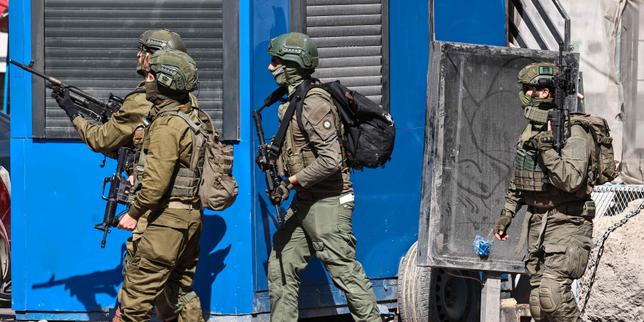
Most people think these raids happen under the cover of darkness. That’s old news. Lately, we’ve seen a significant increase in broad-daylight incursions into densely populated refugee camps and city centers. This morning’s incident follows that pattern. When the military enters a high-traffic area at noon, the risk to civilians doesn't just increase—it’s guaranteed.
The Israeli military usually claims these missions are "counter-terrorism" efforts aimed at preempting attacks. While they often seize weapons or detain suspects, the cost is almost always measured in Palestinian blood. Today, the Palestinian Ministry of Health confirmed the death of a young man during one of these operations. The details follow a grimly familiar script. Soldiers enter, residents resist with stones or improvised explosives, and live fire becomes the primary tool for "crowd control."
I've talked to people on the ground who describe the atmosphere as a tinderbox. It’s not just about the specific person being arrested. It’s about the feeling of being trapped in your own neighborhood while armored vehicles roll past your front door. The psychological toll is massive. Kids aren't going to school; they're watching soldiers from their windows.
Why 2026 is Seeing Record Levels of Violence
If you think the situation is the same as it was five years ago, you’re wrong. It’s significantly worse. Data from organizations like B'Tselem and the United Nations Office for the Coordination of Humanitarian Affairs (OCHA) shows that 2024 and 2025 were some of the deadliest years on record since the Second Intifada. 2026 is currently on track to match or exceed those numbers.
Several factors drive this escalation:
- The expansion of settlements: Every new outpost creates a new point of friction. Settler violence has become more organized and frequent, often occurring with the tacit or direct protection of the military.
- The collapse of the Palestinian Authority (PA): The PA has lost its grip on several northern cities. Groups in Jenin and Nablus no longer look to Ramallah for leadership. They’ve formed local brigades that operate independently, making the security situation far more unpredictable.
- Technology in the conflict: We're seeing more drone strikes in the West Bank than ever before. What used to be a ground-only theater now involves aerial assassinations, which drastically changes how the local population perceives their safety.
Basically, the "status quo" is a myth. The ground is shifting every day. When a Palestinian is killed in the West Bank, it’s not an isolated event. It’s a spark in a room full of gasoline.
Tactical Shifts and the Rules of Engagement
The IDF has faced intense international scrutiny over its rules of engagement. Human rights groups like Amnesty International often argue that the use of lethal force is disproportionate. The military counters that its soldiers face life-threatening situations.
But here’s the thing. When you look at the forensic evidence from many of these raids, the "threat" often seems distant. We see reports of people shot in the back or hit while trying to provide medical aid. In today’s case, witnesses claim the victim wasn't even involved in the initial confrontation. Whether that’s true or not, the lack of independent investigations means we rarely get a clear picture of the truth.
The Israeli judicial system almost never indicts soldiers for these killings. According to Yesh Din, an Israeli human rights organization, the vast majority of complaints against soldiers for harming Palestinians are closed without an indictment. This creates a culture of impunity. If a soldier knows they won't face consequences for pulling the trigger, they're more likely to do it.
The Impact on Local Infrastructure
It’s not just about the loss of life. These raids are destroying the basic infrastructure of Palestinian life. Bulldozers often accompany the troops, tearing up roads to look for IEDs. In the process, they burst water pipes and cut power lines.
I’ve seen photos from the aftermath of today’s raid. The streets look like a war zone. This isn't "surgical." It’s "total." The economic impact is devastating for a population already struggling with high unemployment and restricted movement. When a shopkeeper’s storefront is smashed by an armored vehicle, that’s their livelihood gone in an instant.
The International Response or Lack Thereof
The world’s eyes are often on Gaza, but the West Bank is where the long-term future of any peace process is being dismantled piece by piece. Washington usually issues a "both sides" statement, calling for restraint. Brussels expresses "grave concern." None of it changes the reality on the ground.
Critics argue that the international community’s refusal to impose actual consequences on the Israeli government for settlement expansion and military excesses has given the green light for this escalation. You can’t claim to support a two-state solution while the territory for one of those states is being carved up and its people killed daily. It’s a contradiction that most diplomats seem happy to live with, even as the death toll rises.
Understanding the Human Element
We need to stop talking about these deaths as just statistics. The man killed today had a name. He had friends. He likely had a job or was trying to find one. When we strip away the humanity of the victims, we make it easier for the violence to continue.
The anger in the West Bank isn't just about politics. It’s about the indignity of the occupation. It’s about the checkpoints that turn a twenty-minute drive into a three-hour ordeal. It’s about the night raids that wake up children. It’s about the feeling that your life is worth less than the security of a neighbor who shouldn't be on your land in the first place.
Moving Beyond the Headlines
If you want to actually understand what’s happening, you have to look past the "clash" narrative. You need to follow local journalists on the ground who are filming these raids as they happen. Don't just rely on official military spokespeople.
The next time you see a headline about a Palestinian killed in the West Bank, ask yourself why it’s happening so often. Ask yourself what the endgame is. Because right now, the only plan seems to be more raids, more deaths, and more bitterness.
Stay informed by following updates from organizations like Al-Haq or Addameer, which document these incursions in real-time. Contact your representatives and ask why your tax dollars are supporting a military occupation that shows no signs of ending. The cycle only breaks when the silence does.