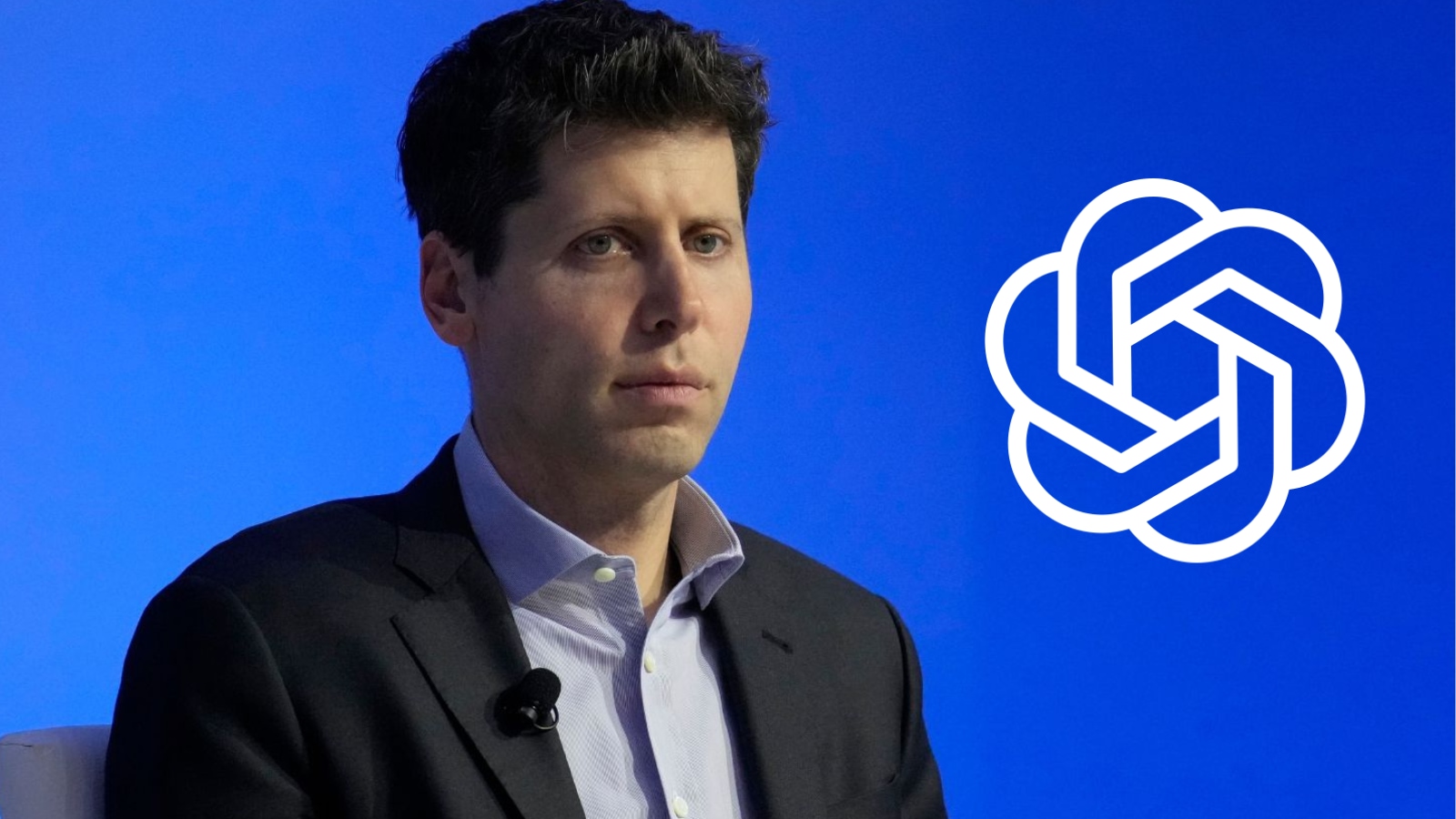
The physical targeting of OpenAI CEO Sam Altman represents a shift in the threat profile for technology executives from digital harassment to kinetic engagement. When a person of interest (POI) is targeted with an incendiary device, such as a Molotov cocktail, the incident serves as a failure of the outer security perimeter and a catalyst for re-evaluating the physical cost of ideological influence. This breach highlights the friction between the public-facing nature of AI leadership and the escalating volatility of those who perceive themselves as displaced or threatened by the technology.
The Threat Vector Hierarchy in the AI Era
The security of a high-profile technology executive relies on managing three distinct layers of exposure. Each layer demands a different defensive posture, and the recent incident in San Francisco indicates a collapse in the transition from Layer 2 to Layer 1.
- Digital Anonymity and Location Obfuscation: The first line of defense is the management of PII (Personally Identifiable Information). For figures like Altman, whose real estate acquisitions are often documented in public records or tech journals, this layer is inherently compromised. The availability of high-resolution satellite imagery and real-time flight tracking data renders traditional privacy measures insufficient.
- The Residential Perimeter: This involves the physical hardening of a private residence. In the San Francisco incident, the suspect’s ability to approach and discharge an incendiary device suggests a perimeter that prioritized aesthetic integration over tactical deterrence. A robust perimeter requires a "defense in depth" strategy, incorporating thermal imaging, seismic sensors for ground intrusion, and ballistic-rated glazing.
- Kinetic Response and Neutralization: This is the immediate physical intervention by executive protection (EP) teams. The objective is not just to apprehend the intruder but to create a "sterile zone" around the POI. The fact that an arrest was made suggests the EP team or local law enforcement responded effectively post-event, but the act of the throw itself signifies a pre-event detection failure.
The Psychology of the Radicalized Luddite
The motivation behind targeting an AI executive differs fundamentally from traditional corporate kidnapping or theft. We can categorize the threat actors into a framework of "Technological Displacement Stress."
- The Existentialist: This actor perceives AI as an existential threat to humanity. Their violence is framed as a preemptive strike to "save" the future.
- The Economically Displaced: This actor blames specific leadership for the loss of their livelihood or the devaluation of their skillset.
- The Attention Seeker: The proximity to a globally recognized name provides a platform. The act of violence is a vehicle for a manifesto or a plea for relevance.
In the case of the San Francisco breach, the use of a Molotov cocktail—a low-tech, high-signature weapon—suggests an actor focused on symbolic destruction rather than a sophisticated assassination attempt. This is a crucial distinction for security analysts; symbolic attacks often precede more coordinated efforts if the underlying ideological driver is not addressed or if the security posture remains static.
Quantifying the Vulnerability Gap
The "Vulnerability Gap" is the delta between an executive’s public exposure and their private security investment. For Altman, this gap is widened by his role as the face of an industry-defining transition.
- The Visibility Variable: Every public appearance, podcast, or congressional testimony increases the visibility variable. This creates a feedback loop where increased influence leads to increased targeting.
- The Urban Density Problem: San Francisco’s geography presents unique challenges. High-value residences are often located in high-density areas with multiple points of egress and ingress. Unlike a remote estate where a mile-long driveway acts as a buffer, urban residences offer attackers "close-quarters approachability."
- Response Time Latency: In an urban environment, the time between a breach and a law enforcement response is subject to traffic, local policy, and department bandwidth. Private security must, therefore, be self-sufficient for a minimum of 10 to 15 minutes of sustained engagement.
Strategic Hardening of the Residential Environment
Standard security protocols are no longer sufficient for individuals at the center of the global AI discourse. A transition toward "Hardened Intelligence Environments" is necessary.
Advanced Surveillance Integration
Passive CCTV is a forensic tool, not a preventative one. Modern residential security must utilize AI-driven behavioral analytics. These systems do not just record; they identify anomalies in gait, loitering patterns, and the presence of concealed items before a person reaches the property line.
Static and Dynamic Countermeasures
The deployment of a Molotov cocktail requires a short distance for accuracy. Hardening a property involves extending the exclusion zone. This can be achieved through:
- Non-Lethal Deterrence: High-intensity strobe lights and directional acoustic devices can disorient an attacker without the legal or PR ramifications of lethal force.
- Structural Resilience: Utilizing Fire-Resistant Glazing (FRG) that meets UL 752 Level 3 or higher to ensure that an incendiary device cannot penetrate the building envelope even if the outer perimeter is breached.
- Air Filtration Systems: Since incendiary devices create toxic smoke and oxygen depletion, a hardened residence requires an internal positive-pressure HVAC system to prevent smoke inhalation by the POI during a lockdown.
The Legal and Societal Bottleneck
One of the primary challenges in protecting tech leaders is the legal framework surrounding preemptive intervention. In many jurisdictions, law enforcement cannot act until a crime is committed. This creates a "Wait-to-Fail" security model. Private security firms are restricted by use-of-force laws that vary significantly between states.
Furthermore, the "Streisand Effect" complicates security. Increasing visible security (armed guards, high fences, armored vehicles) can draw more attention to a location and further inflame the "anti-elite" sentiment that fuels these attacks. The goal is "invisible hardening"—making the residence a fortress without it looking like one.
The Cost Function of Personal Safety
Security is an overhead cost that scales with the perceived value of the target. For a CEO managing a company valued in the hundreds of billions, the security budget should be viewed as a component of the Business Continuity Plan (BCP). If a key executive is incapacitated, the market cap volatility can result in billions of dollars in lost value.
- Fixed Costs: Personnel, technology infrastructure, and physical modifications to property.
- Variable Costs: Travel security, event-specific intelligence gathering, and cyber-harassment mitigation.
- Opportunity Costs: The limitations placed on the executive's movement and their ability to interact with the public, which may be vital for the brand's humanization.
Analyzing the San Francisco Breach as a System Failure
The incident involving the suspect, identified in reports as Zdenek Lakatos, provides a case study in "low-complexity, high-impact" threats. A Molotov cocktail is an improvised incendiary weapon consisting of a breakable container filled with flammable liquid and a wick. Its effectiveness lies in its simplicity and the psychological terror of fire.
The system failed because the attacker was able to:
- Locate the residence with enough precision to plan a strike.
- Approach the perimeter with an active or semi-prepared incendiary.
- Deploy the weapon before being neutralized.
This indicates that the "Detection-to-Action" timeline was longer than the "Approach-to-Strike" timeline. To prevent future occurrences, the detection phase must move from the sidewalk to the street level, utilizing license plate readers (LPR) and facial recognition linked to watchlists of known agitators.
Shifting Toward a Proactive Intelligence Model
Executive protection must evolve from a reactive bodyguard model to a proactive intelligence operation. This involves monitoring "fringe" digital spaces where anti-AI sentiment is radicalized.
The transition from online venting to offline violence rarely happens in a vacuum. There are often "indicators of intent" (IOIs) found in forum posts, social media manifestos, or previous smaller-scale harassments. A comprehensive security strategy integrates "Open Source Intelligence" (OSINT) with physical security to create a predictive model of when a POI is at heightened risk.
The Strategic Path Forward for High-Profile Leaders
Leadership in the AI sector now carries a physical risk premium that must be priced into corporate governance. The San Francisco incident is not an outlier; it is a precursor.
The objective is to move from a "Guard at the Door" mentality to a "Digital and Physical Moat" strategy. This requires:
- Standardizing residential security to match the level of corporate data centers.
- Implementing mandatory travel and residential security protocols that cannot be waived by the executive.
- Developing a "threat-informed" communication strategy that addresses public fears without making the leadership a lightning rod for individual grievances.
The era of the "accessible" tech visionary is closing. The new reality demands a shielded leadership class, protected by the very technologies they are building to change the world. Safety is no longer a matter of luck or local police presence; it is a matter of architectural and digital engineering.