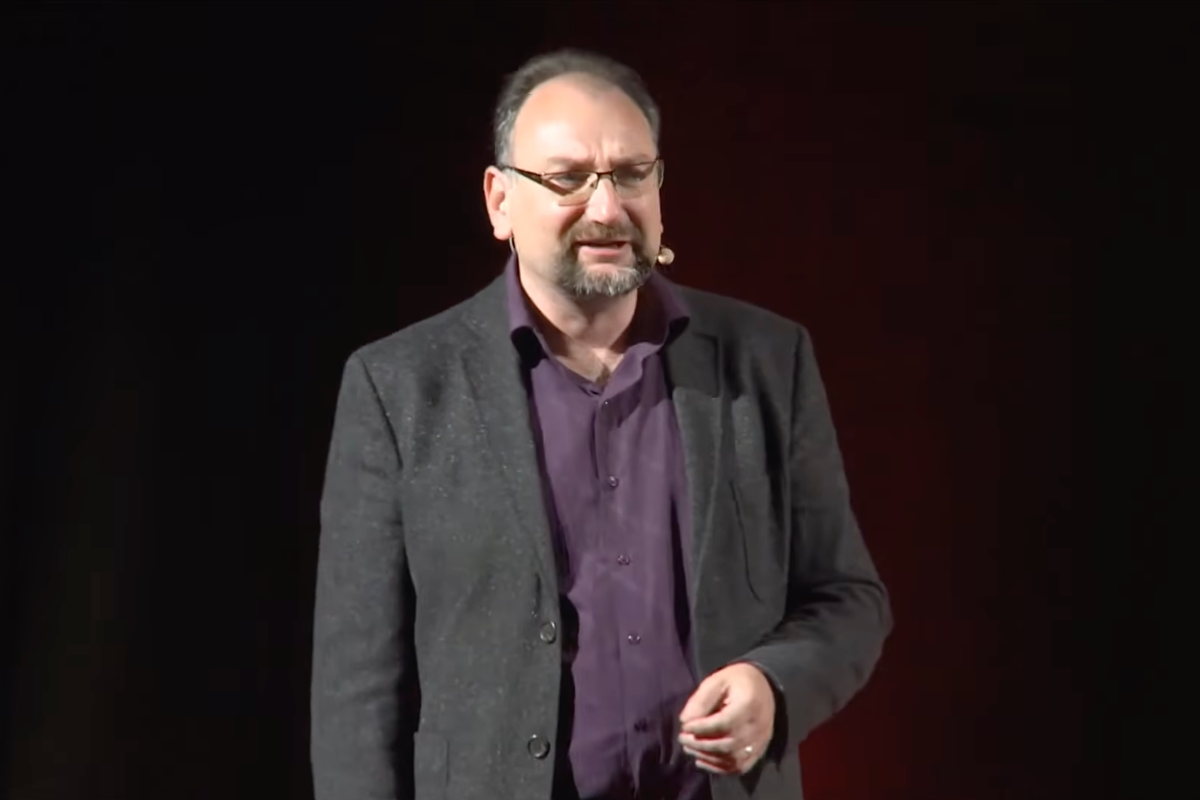
The media loves a clean, moralistic scandal. When news broke that a French professor allegedly fabricated a "Nobel-style" award only to hand it to himself, the internet responded with the usual chorus of mockery. They called it pathetic. They called it fraud. They called it the ultimate ego trip.
They missed the point entirely.
This isn't a story about a delusional academic. It’s a story about a broken, hyper-competitive prestige economy where the traditional gatekeepers have failed so spectacularly that "manufacturing your own merit" has become the only logical move for those tired of waiting for permission. We live in an era where perceived value often outweighs actual value. If the institutions won't validate you, why shouldn't you build your own institution to do the job?
The Fallacy of Institutional Validity
We are taught to believe that prestigious awards are the objective output of a rigorous meritocracy. We treat the Nobel, the Fields Medal, or the Legion d'honneur as if they were handed down by gods on stone tablets.
In reality, these are legacy brands. They are subject to the same office politics, regional biases, and "who-knows-who" networking as a mid-level promotion at a paper company. Every year, brilliant scientists are overlooked because their work isn't "fashionable" or because they didn't play the social game in Stockholm or Geneva.
When this French professor—a man already deep within the academic machine—decides to short-circuit the system by creating a mirror image of it, he isn't "faking" excellence. He is exposing the absurdity of the hardware. He realized that the gold medal doesn't make the man; the theatre of the gold medal makes the man.
Prestige is a Commodity Not a Virtue
In the business world, we call this "growth hacking." If a startup buys a billboard in Times Square to look bigger than they are, we call them ambitious. If a consultant writes a book and buys enough copies to hit a bestseller list, we call them a marketing strategist. But when an academic applies this same logic to his "industry," he’s treated like a criminal.
Let's look at the mechanics. To "win" at academia, you need:
- Citations (often traded in "citation rings")
- Grant money (often awarded based on previous grant money)
- High-impact journals (controlled by a handful of profit-hungry publishers)
This professor didn't break a holy seal. He simply created a vertical integration of his own reputation. He became the producer, the judge, and the star. In a world where university rankings are manipulated by administrators every single day to attract tuition-paying students, his "fake" prize is the most honest thing in the room. It’s a one-man reflection of the very system that is now trying to "probe" him.
The Myth of the Humble Scholar
People are offended because this act violates our romanticized image of the "humble scholar." We want our geniuses to be quiet, tucked away in dusty libraries, waiting patiently for the world to notice them.
That version of academia is dead.
Today’s researcher is a salesperson. They spend 40% of their time writing grant proposals and another 30% networking at conferences to ensure their work gets noticed. The "pure" pursuit of knowledge is a luxury for those who already have tenure and a massive endowment. For everyone else, it's a street fight for relevance.
If you find yourself disgusted by someone awarding themselves a prize, ask yourself why. Is it because he lied? Or is it because he showed you how easy it is to replicate the "prestige" you’ve spent your life chasing?
The ROI of Audacity
Imagine a scenario where a mid-career professional is stuck. They are qualified, they are productive, but they lack the "X-factor" that leads to keynote invites and board seats.
They have two choices:
- Option A: Work 20% harder for the next decade and hope a committee of strangers notices them.
- Option B: Create the "International Institute of [Their Niche]," launch an annual "Global Excellence Award," and name themselves the inaugural recipient.
Option B works. It works because 99% of people—including journalists, HR directors, and event organizers—never look past the title. They see the "Award-Winning" prefix and move on. By the time someone realizes the award came from a basement in Lyon, the winner has already used that momentum to secure a real contract, a higher salary, or a better position.
This isn't "fake it until you make it." It’s "build the stage so you have a place to stand."
The Inevitable Decentralization of Honor
We are witnessing the "Uber-ization" of authority. We no longer wait for a taxi dispatcher; we use an app. We no longer wait for a record label; we go to SoundCloud. Why should we wait for a legacy committee of octogenarians to decide who the most important thinkers in the world are?
The outrage over this professor is the dying gasp of the gatekeeper class. They are terrified because if prestige can be self-generated, their power to grant or withhold it vanishes. If anyone can start a prize, then the "real" prizes have to actually prove their worth rather than relying on 100 years of branding.
Stop Waiting for the Medal
The lesson here isn't "don't lie." The lesson is that the systems you think are protecting quality are actually just protecting the status quo.
The professor's mistake wasn't the creation of the prize. His mistake was getting caught before he could scale it into a legitimate entity. Had he invited ten other professors to win it first, he’d be celebrated as a "visionary founder of a new academic tradition."
If the game is rigged, stop playing by their rules. Build your own trophy. Write your own headline. The world is full of people with "real" credentials who are doing nothing of value. If you have the value, the source of the trophy is irrelevant.
The probe will continue, the university will issue its stern statements, and the public will laugh. But in five years, nobody will remember the probe. They’ll just remember that for one brief moment, a man decided he was tired of asking for a seat at the table and decided to build his own hall.
Go build yours.


