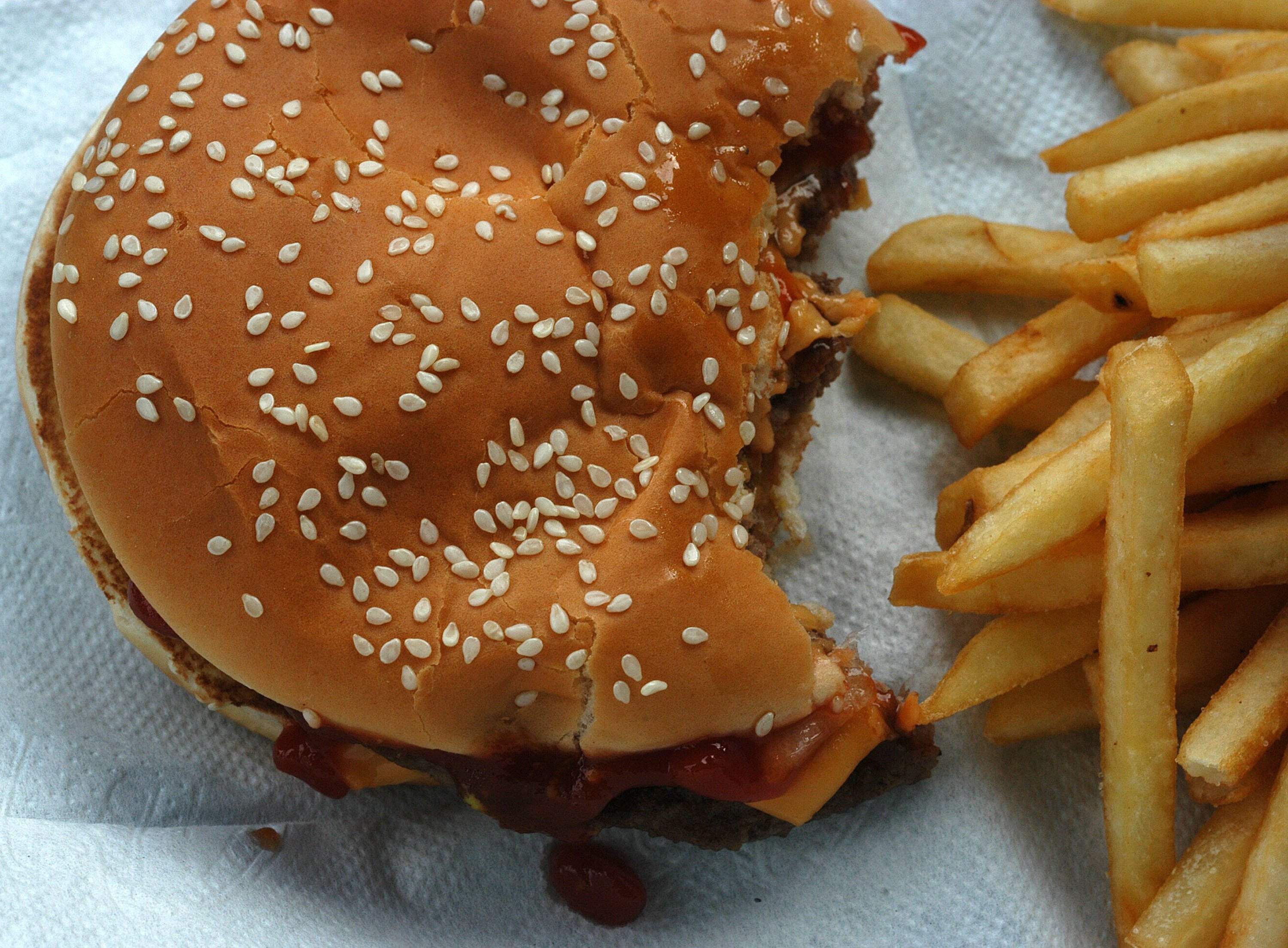
The "downturn diet" is a myth cooked up by analysts who haven't stepped inside a franchise since 2019.
The narrative is everywhere. You’ve seen the headlines. "The $18 Big Mac meal is killing the golden goose." "Value menus are the only thing saving the industry." It’s a comfortable, lazy consensus. It suggests that fast food chains are losing because they got greedy and priced out the working class.
It's wrong.
Fast food isn't dying because of a price hike. It’s undergoing a violent identity crisis. For forty years, the industry sold you a lie: that you could have speed, quality, and rock-bottom prices all at once. Now that the bill has come due for labor, real estate, and supply chains, the industry is fragmenting.
The "crunch" isn't about consumers seeking deals. It’s about consumers finally realizing that "cheap" was a subsidized hallucination.
The Myth of the Marginalized Consumer
Critics love to point at the $12 burrito or the $5 small fry as proof of corporate malfeasance. They claim the "low-income consumer" is fleeing to grocery stores to save money.
Check the data. Groceries have seen a cumulative inflation rate that rivals or exceeds many menu items over the last four years. The cost of eggs, butter, and beef at the supermarket hasn't exactly stayed stagnant. If the consumer was purely "deal-seeking," they’d be starving.
The reality is that the consumer isn't fleeing price; they are fleeing insulting value propositions.
When you pay $15 for a meal at a legacy burger chain, you aren't just paying for the calories. You are paying for the massive overhead of a 3,000-square-foot building, a flickering drive-thru headset, and a logistical nightmare that hasn't been updated since the Clinton administration.
I have watched brands pour tens of millions into "value platforms" only to see their margins evaporate and their foot traffic stay flat. Why? Because a $2 discount doesn't fix a cold burger or a twenty-minute wait in a "fast" food line.
Stop Blaming "Greedflation"
The term "Greedflation" is a convenient scapegoat for people who don't understand an income statement.
Let's look at the mechanics. Fast food operates on razor-thin net margins, usually between 5% and 15% for a well-run franchise. When California raises the minimum wage to $20 an hour, or when the price of corrugated cardboard for your fry boxes jumps 30%, that money has to come from somewhere.
If a business doesn't pass those costs on, it closes. Simple math.
The "contrarian" truth is that fast food was artificially cheap for decades because it relied on an exploited labor pool and dirt-cheap fuel. Those days are over. The industry isn't "gouging" you; it's finally charging you what the food actually costs to produce and deliver in a modern economy.
The chains that are "crunching" are the ones trying to pretend they can still be the $1-menu kings of 2005. They are trapped in a race to the bottom that they cannot win.
The Death of the Middle-Tier Franchise
We are witnessing the "Barbell Effect."
On one end, you have the ultra-automated, high-efficiency players who are leaning into digital-only footprints. On the other, you have "Fast Casual" brands like Chipotle or Wingstop that have convinced people that $16 for a bowl is a reasonable lifestyle choice.
The losers? The middle-tier legacy brands.
They are stuck in no-man's-land. They aren't high-quality enough to justify the "Fast Casual" price tag, but they aren't efficient enough to be "Value" leaders. They are trying to please everyone and ending up with lukewarm fries and a confused customer base.
If you are a CEO of a legacy burger brand right now and your strategy is "more coupons," you are already dead. You just haven't stopped twitching yet.
The Convenience Trap
People think they go to McDonald's or Taco Bell for the food. They don't. They go for the frictionless experience. Or at least, the promise of it.
But the friction has returned.
Mobile apps that glitch. Delivery drivers who take 45 minutes to go three miles. Drive-thrus that are backed up into the street.
When the "convenience" part of the equation breaks, the "price" part becomes much more visible. If I have to wait 20 minutes for a $14 meal, I'm going to be furious about the $14. If that meal arrived in my hand in 3 minutes, I wouldn't even check the receipt.
The "crunch" is actually a Convenience Deficit.
Why "Value" Is a Loser’s Game
The industry is currently obsessed with "Value Meals." Starbucks is doing it. Burger King is doing it. They think they can buy loyalty with a $5 bag of food.
This is a tactical error of the highest order.
- Cannibalization: You aren't attracting new customers; you're just convincing your regular customers to pay less for the stuff they were going to buy anyway.
- Brand Erosion: You are training your customers to never pay full price. Once you become a "discount brand," you can never go back. Ask the retail clothing industry how that worked out.
- Operational Strain: Discounting usually leads to higher volume but lower quality control. More stress on the staff, more mistakes, more "friction."
The superior move? Focus on Unfair Advantages.
In-N-Out doesn't do "Value Meals." They don't even have a complex menu. They do one thing with terrifying consistency, and people will wait an hour in a drive-thru line for a burger that costs less than a Big Mac but tastes like actual food. They haven't "crunched" because they never lied to their customers about what they were.
The High Cost of Delivery
If you want to find the real culprit behind the "downturn diet," look at the delivery apps.
DoorDash, UberEats, and Grubhub have inserted a parasitic layer between the kitchen and the consumer. They take a 30% cut from the restaurant and charge the consumer a 20% premium plus fees.
You aren't paying $20 for a burger; you're paying $10 for a burger and $10 for the privilege of being lazy.
The industry let this happen. They outsourced their most important asset—the relationship with the customer—to a third-party tech company. Now, the customer blames the restaurant for the high price, even though the restaurant is making less money than ever.
The "contrarian" advice to consumers complaining about prices: Get off the couch. If you drive to the restaurant, the "crunch" magically disappears by 40%.
The Strategy for Survival
If I were sitting in a boardroom at a struggling QSR (Quick Service Restaurant) today, I’d tell them to do three things immediately:
- Kill the Menu: 70% of your menu is bloat. It slows down the kitchen and confuses the customer. Cut it. Focus on the three things you do better than anyone else.
- Fire the Delivery Apps: Build your own delivery infrastructure or tell people to come pick up their food. The fees are a slow-motion suicide note for your margins.
- Automate or Die: If your business model relies on paying people $12 an hour to stand in a booth, you don't have a business model. You need kiosks, automated fryers, and AI-driven ordering that actually works.
The Truth Nobody Admits
The "downturn" isn't an economic cycle. It’s a correction.
For decades, we enjoyed a "Golden Age" of cheap, fast calories that were subsidized by low interest rates and cheap labor. That era is dead. It’s not coming back.
The consumers who are "seeking deals" aren't going to save the industry. They are the least loyal, lowest-margin segment of the market. Chasing them is a death wish.
The future belongs to the brands that stop apologizing for their prices and start fixing their soul-crushing service.
People will always pay for speed and consistency. They will never forgive you for being expensive and slow.
Stop looking for the "deal" that will save your quarter. Start looking for the friction that is killing your brand.
The $15 burger isn't the problem. The fact that it's mediocre and takes fifteen minutes to get to the window is the problem.
Fix the window. The price will take care of itself.
If you can't justify your existence at $15, you don't deserve to exist at $5.


