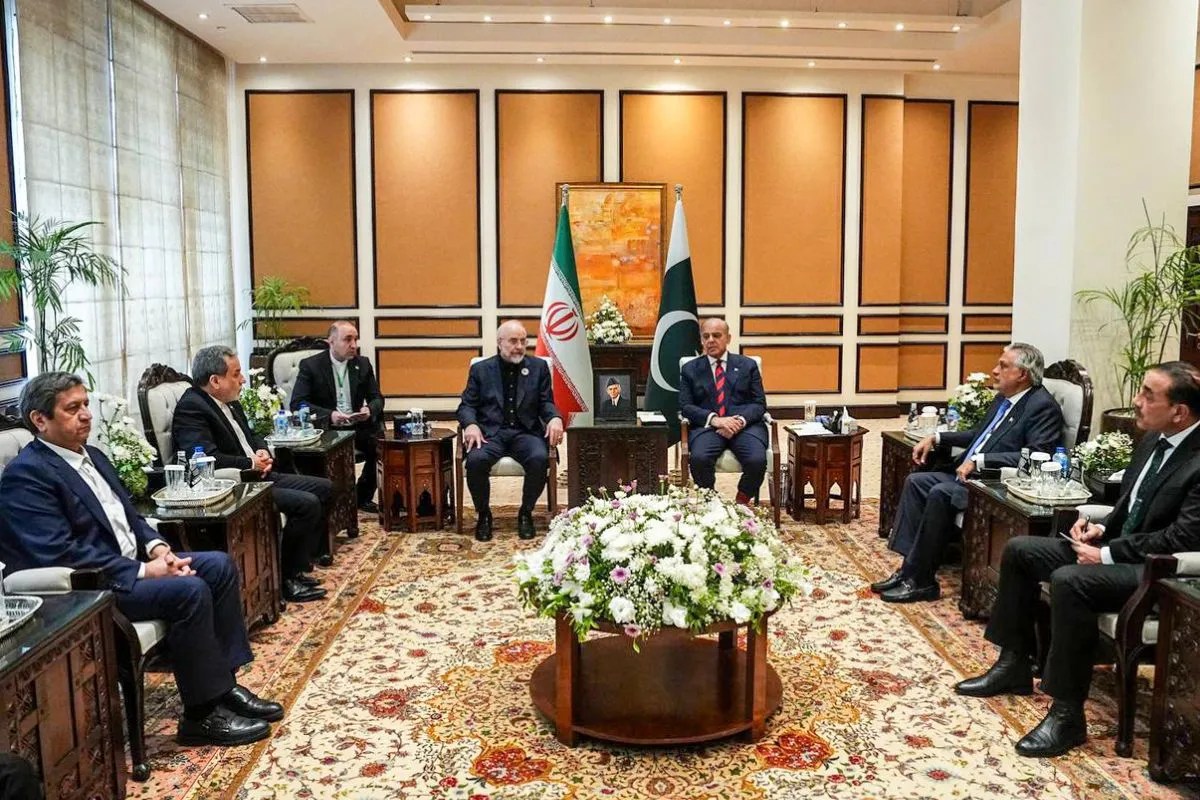
The air in a high-end hotel suite in Beirut or a neutral conference room in Doha doesn't smell like history. It smells like stale coffee, industrial carpet cleaner, and the faint, metallic tang of nervous sweat. But when the representatives of Washington and Tehran sit across from one another, the oxygen in the room seems to vanish. It has been forty-seven years since these two powers spoke with this kind of direct, desperate clarity. Nearly half a century of cold shoulders, burned flags, and proxy wars fought in the shadows of desert alleys has led to this specific, quiet moment.
History isn't just a collection of dates. It is a weight. To understand why the recent direct talks between the U.S. and Iran matter, you have to look past the dry headlines about diplomatic "demarches" and see the human faces caught in the gears.
Imagine a shopkeeper in southern Lebanon. Let’s call him Hassan. For weeks, his life has been dictated by the whistle of descending metal and the terrifying, bone-shaking thump of airstrikes. He doesn't care about the intricacies of the 1979 Islamic Revolution or the technical nuances of uranium enrichment. He cares about whether the ceiling of his daughter’s bedroom stays where it is. When the news breaks that American and Iranian officials are finally, incredibly, sitting in the same room to discuss a ceasefire, Hassan isn't reading a policy brief. He is holding his breath.
The silence between these two nations was a wall. For decades, they communicated through intermediaries—the Swiss, the Omanis, the Qataris—like feuding parents using a child to pass notes because they can’t stand the sound of each other’s voices. But notes have no tone. They have no nuance. You cannot see the exhaustion in an opponent’s eyes through a translated letter.
The Cost of the Long Detour
Since the fall of the Shah in 1979, the relationship has been defined by a series of "almosts" and "never agains." We saw the hostage crisis, the "Axis of Evil" speech, and the jagged hope of the 2015 nuclear deal, which withered away like a plant left in the sun without water. Every time the door creaked open, someone slammed it shut.
But the current stakes in Lebanon have changed the physics of the room. The regional fire is no longer a slow burn; it is a flashover. When Israel and Hezbollah—Iran’s most potent regional ally—locked into a cycle of escalating violence, the old way of communicating through middle-men became too slow. Seconds matter when missiles are in flight.
The core of these talks isn't just about high-level geopolitics. It is about the realization that a total collapse of Lebanon serves no one. Not the Americans, who want to avoid being dragged into another generational Middle Eastern quagmire, and not the Iranians, who are watching their "Forward Defense" strategy being dismantled piece by piece by a relentless Israeli air campaign.
A Table Set With Ghosts
When these diplomats sit down, the room is crowded with ghosts. There is the ghost of the 1953 coup, the ghost of the 1983 barracks bombing, and the ghost of every civilian caught in the crossfire of the "Shadow War."
To the American diplomat, the Iranian across the table is a representative of a regime that has defied the international order for decades. To the Iranian, the American is the face of "Maximum Pressure" and sanctions that have throttled the dreams of the Iranian middle class. These aren't just disagreements. They are identities.
Breaking a forty-seven-year streak of avoidance requires more than a shared interest in a ceasefire. It requires a brutal kind of pragmatism. It’s the realization that you don't make peace with your friends; you make it with the person you’ve spent your entire life teaching your children to hate.
Consider the technical reality of what they are negotiating. A ceasefire in Lebanon isn't just about "stopping the shooting." It’s a Rubik’s cube of logistics. It involves the withdrawal of armed groups from the border, the deployment of the Lebanese Armed Forces, and the guarantee that neither side will use the lull to re-arm for a bigger fight. These are details that cannot be ironed out through a Swiss diplomat’s fax machine. They require the grit of face-to-face confrontation.
The Lebanon Pressure Cooker
Lebanon has always been the world’s most beautiful tragedy. It is a place where you can ski in the morning and swim in the Mediterranean in the afternoon, but it is also a place where the political architecture is designed to fail. It is a mosaic of sects and interests that has been used as a playground for larger powers for centuries.
The recent demand for an immediate cessation of hostilities isn't just a "request." It’s an emergency cry from a country that has run out of blood and money. The Lebanese lira is worth less than the paper it’s printed on. The hospitals are running on fumes. When the U.S. and Iran talk, they are discussing the life support system for an entire nation.
If the talks succeed, it’s not because everyone suddenly became friends. It’s because the cost of the status quo became higher than the cost of compromise. For Iran, seeing Hezbollah—the crown jewel of their regional influence—take hit after hit is a strategic nightmare. For the U.S., a full-scale regional war would ignite oil prices and force a military commitment that the American public has zero appetite for.
The Invisible Stakes
While the diplomats argue over the wording of a communique, there are millions of people whose lives hang on the placement of a comma.
There is the student in Tehran who wants to be able to buy specialized medicine for his mother, medicine that is currently stuck behind a wall of sanctions. There is the tech worker in California who wonders if his tax dollars are about to be funneled into a new carrier strike group. There is the grandmother in Haifa who wants to stop running to a bomb shelter every time the siren wails.
These are the "invisible stakes." Diplomacy is often treated like a game of chess, but in chess, the pawns don't have heartbeats. In this game, every move affects the survival of actual families.
The forty-seven-year gap has created a linguistic divide. We use different words for the same things. What Washington calls "regional stability," Tehran calls "American hegemony." What Tehran calls "resistance," Washington calls "terrorism." These talks are, in many ways, an attempt to build a new dictionary. They are trying to find a set of words that both sides can say without feeling like they are betraying their own history.
The Fragility of the Moment
Skepticism is the only rational response to this news. We have been here before. We have seen the handshake on the lawn and the signed paper on the desk, only to watch it all burn a year later. The trust between these two nations isn't just broken; it’s pulverized. It’s a fine dust that gets in your eyes and makes it impossible to see the way forward.
But there is a difference this time. The desperation is more symmetrical.
In the past, one side usually felt they had the upper hand. Today, both sides look tired. The U.S. is stretched thin by conflicts in Europe and the Pacific. Iran is facing internal dissent and an economy that is screaming for relief. When two exhausted giants meet, they might not find friendship, but they might find a reason to stop swinging.
The demand to stop the attacks in Lebanon is the immediate catalyst, but the "Big Ask" is something much larger. It’s the question of whether these two civilizations can exist in the same hemisphere without trying to erase each other.
It starts with a room. It starts with two chairs. It starts with the admission that forty-seven years of silence didn't make the world any safer.
Hassan, the shopkeeper in Lebanon, doesn't need a grand bargain. He doesn't need a new world order or a revolutionary shift in global alignment. He just needs the silence to hold. He needs the men in the hotel suite to keep talking until the sun goes down, and then to come back the next morning and talk some more.
Because as long as they are talking, the missiles are a little bit more likely to stay in their tubes. As long as they are talking, the wall of silence is being chipped away, one uncomfortable, tense, coffee-stained hour at a time. The stakes aren't on the map. They are in the quiet of a house that finally stops shaking.
History is being made not by a grand flourish of a pen, but by the slow, painful grind of two enemies realizing they are trapped in the same burning building.
The door has been pushed open an inch. The light coming through is harsh, and it reveals just how much wreckage is left to clear. But for the first time in nearly half a century, the two people on either side of that door are looking at each other, rather than at the wood.
Silence was a choice. Now, perhaps, speech is a necessity.