The silence in the border towns isn’t empty. It’s heavy. For the first time in years, the low-frequency hum of regional anxiety—the kind that vibrates in your teeth before you even realize you’re afraid—has stopped. When the news broke that the United States and Iran had agreed to a two-week ceasefire, the world didn't cheer. It exhaled. It was a collective, ragged breath from a planet that has spent too long bracing for impact.
In the hallways of the United Nations, the reaction was more surgical. Leaders spoke of "windows of opportunity" and "de-escalation frameworks." But on the ground, the reality is far more visceral. Imagine a merchant in a bustling market, a person we will call Arash, who has spent the last decade watching the prices of bread and medicine fluctuate based on the tone of a press conference in Washington or a speech in Tehran. For Arash, this isn't a diplomatic maneuver. It’s a chance to stock his shelves without wondering if his inventory will outlive his storefront.
The agreement is fragile. It is held together by the geopolitical equivalent of scotch tape and hope. Fourteen days. It seems like a blink, a rounding error in the grand timeline of a half-century of friction. Yet, in the logic of war, two weeks is an eternity. It is 336 hours where parents don't have to scan the sky. It is 20,160 minutes where the machinery of destruction sits idle, cooling in the desert heat.
The Geography of a Handshake
The logistics of the ceasefire are as complex as the animosity that preceded it. World leaders reacted with a mixture of cautious optimism and sharp-eyed skepticism. The European Union’s foreign policy chief characterized the pause as a "necessary bridge," while leaders in the Middle East scrambled to calculate how this temporary peace shifts the local balance of power.
But the "bridge" isn't made of steel. It’s made of trust, a commodity that is currently in shorter supply than the oil that flows beneath the Persian Gulf. To understand the stakes, we have to look at the invisible lines drawn across the map. These aren't just borders; they are nerve endings. When one side twitches, the entire system screams.
The ceasefire covers more than just direct kinetic action. It includes a freeze on cyber operations—the silent, digital war that often precedes the physical one. This is where the modern battlefield lives. While we look for tanks, the real skirmishes happen in the code of power grids and the servers of banks. By pulling the plug on these invisible attacks for fourteen days, both nations are effectively showing their hands. They are proving that they have the control to stop, which is often more terrifying to an opponent than the will to fight.
The Weight of Global Eyes
The British Prime Minister called it a "moment of sanity." The Kremlin issued a brief, icy nod of acknowledgment. In Beijing, the tone was one of calculated support, framed as a victory for multilateralism. Everyone is watching because everyone is invested. We live in a world where a spark in a narrow strait can set a forest on fire three thousand miles away.
Consider the shipping lanes. The Strait of Hormuz is a jugular vein for the global economy. Approximately one-fifth of the world’s total oil consumption passes through this stretch of water. When tensions rise, insurance premiums for tankers skyrocket. Those costs don't stay at sea. They trickle down into the price of a gallon of milk in a suburb of Ohio and the cost of heating a home in London.
The ceasefire is, in a sense, a temporary subsidy for the global economy. By removing the immediate threat of a blockade or a stray missile, the world’s markets have been given a dose of adrenaline. But it’s a nervous energy. Investors are like birds on a wire; they are ready to fly at the first sign of a shadow.
The Human Cost of the "Maybe"
We often talk about war in terms of casualties and territory. We rarely talk about the psychological toll of the "maybe." Living in a state of perpetual "maybe" is a slow-motion trauma. Will the schools be open next month? Maybe. Will the currency be worth anything tomorrow? Maybe.
The ceasefire provides a temporary cure for the "maybe." For two weeks, the answer to "Will we be at war tomorrow?" is "No."
There is a specific kind of exhaustion that comes from high-alert living. Medical professionals in conflict zones describe it as a chronic elevation of cortisol that never quite resets. You see it in the eyes of the elderly who have seen too many "new beginnings" turn into old tragedies. You see it in the teenagers who plan their futures in two-week increments because dreaming any further feels like an act of hubris.
Metaphorically, this ceasefire is a tourniquet. It stops the bleeding, but it doesn't heal the wound. It buys time for the surgeons to get to work, assuming the surgeons can stop arguing long enough to pick up the scalpel.
The Chessboard and the Players
Critics of the agreement argue that fourteen days is just enough time for both sides to reload. They see it not as a peace treaty, but as a strategic pit stop. In this view, the U.S. uses the time to reposition its naval assets, and Iran uses it to fortify its defensive perimeters and shore up its internal logistics.
There is a grim logic to this. History is littered with "pauses" that were merely the indrawn breath before a scream. The 1914 Christmas Truce is the romanticized version of this—soldiers trading cigarettes and playing football in the mud of No Man’s Land, only to return to the slaughter the next morning.
But the modern world is different. We are too connected for the "reload" to happen in total darkness. Satellite imagery, signal intelligence, and the relentless cycle of social media mean that every movement is scrutinized. If one side uses this window to prepare for an escalation, the world will see it in real-time. The reputational cost of breaking this specific silence is higher than almost any other diplomatic penalty.
The Sound of a Ticking Clock
As the first week of the ceasefire draws to a close, the atmosphere is shifting. The initial shock has worn off, replaced by a frantic, desperate kind of diplomacy. Behind closed doors, in rooms that smell of stale coffee and expensive wool, the real work is happening. These aren't the televised handshakes. These are the technical discussions about uranium enrichment percentages, sanctions relief, and prisoner exchanges.
These are the things that don't make for good television. They are boring. They are granular. They involve hundreds of pages of legal text and the precise definition of words like "verifiable" and "permanent." Yet, the life of Arash the merchant and the stability of the global oil market depend entirely on whether a lawyer in a basement can find a synonym for "concession" that doesn't sound like a defeat.
The difficulty lies in the domestic audiences. Both the American President and the Iranian Supreme Leader are playing to two crowds at once. They must look strong enough to satisfy their hardliners at home while looking reasonable enough to keep the international community on their side. It is a tightrope walk over a pit of fire, performed in a hurricane.
The Architecture of the Void
What happens when the fourteen days are up?
This is the question that haunts every dinner table from Tehran to Topeka. Peace is not the absence of war; it is the presence of a better alternative. Right now, we have the absence of war, but we haven't yet built the alternative.
We are currently living in the "void." It is a space of pure potential. It could be the beginning of a long-term framework that redefines the 21st century, or it could be a historical footnote—a brief moment of lucidity in a long, dark fever.
The leaders who reacted to the news are essentially betting on the void. Some are betting it will hold, others are betting it will collapse. But for the people who actually live in the path of the potential storm, the bet is much simpler. They are betting on today. They are going to the park. They are visiting relatives. They are buying the "expensive" flour because, for at least another week, they know they will be around to bake the bread.
The beauty of the ceasefire isn't in the grand strategy. It’s in the mundane. It’s in the ability to make a plan for next Tuesday and actually believe it will happen.
But the clock is the loudest thing in the room. Each tick is a reminder that the "maybe" is coming back. The silence is temporary, and unless the people in the quiet rooms can turn this pause into a pattern, the hum will return. It will start low, a vibration in the floorboards, and then it will rise until it drowns out everything else.
For now, though, the market is open. The ships are moving. The sky is just the sky.
On a dusty street corner, a child kicks a ball. There is no siren. There is no flash on the horizon. There is only the sound of the ball hitting the ground and the distant murmur of a city that has forgotten, for just a moment, how to be afraid. We should look at that child. We should memorize that sound. Because in seven days, the world has to decide if it wants to go back to the noise.
The two-week window is closing, and the light it let in is starting to fade. The diplomats are tired. The hardliners are restless. The merchant is checking his watch.
Fourteen days was never enough time to fix fifty years of hate. But it was enough time to remember what it feels like to live without it. And that memory might be the only thing strong enough to keep the hum from coming back.
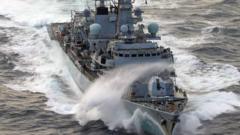
The sun sets over the Persian Gulf, casting a long, golden shadow over the warships and the fishing boats alike. They sit in the same water, under the same sky, waiting for a signal from a world that is still trying to decide if peace is worth the risk of looking weak.
The silence continues. For now.