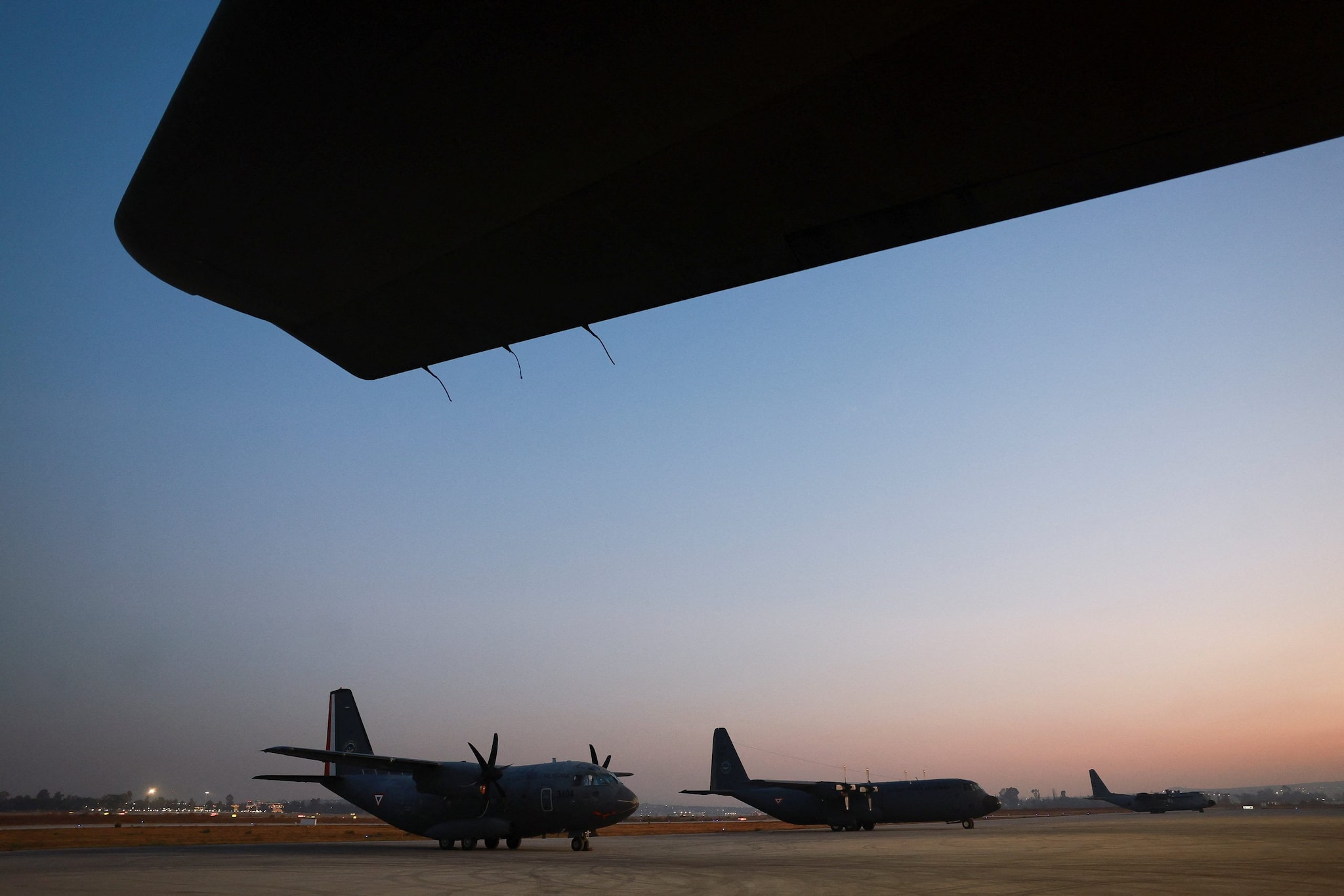
The cargo terminal at Cochin International Airport (CIAL) is usually a place of controlled chaos. It smells of damp cardboard, aviation fuel, and the sharp, acidic sweetness of overripe fruit. On a normal Tuesday, the air is thick with the shouts of loaders and the mechanical whine of forklifts moving pallets of "green gold"—the pineapples, plantains, and betel leaves that connect the soil of Kerala to the dinner tables of Dubai and Doha.
But the air has grown heavy in a different way.
The crates are stacking up. They are sitting too long. And in the world of perishable logistics, time isn't just money; it is the difference between a premium export and a pile of rotting compost.
The geopolitical tremors shaking West Asia are not just headlines on a screen for the farmers in Muvattupuzha or the exporters in Kochi. They are a physical weight. When a missile enters the airspace over the Red Sea or a flight path is diverted due to escalating tensions, the ripple effect travels five thousand kilometers to a warehouse in Kerala. It manifests as a canceled booking, a doubled freight rate, and a frantic phone call to a farmer who has already harvested his crop.
The Invisible Bridge
Consider a man we will call Raghavan. He isn't a CEO. He owns four acres of pineapple farm. For Raghavan, the "West Asian conflict" is a ghost that haunts his bank account. He doesn't track drone strikes; he tracks the belly capacity of a Boeing 777 flying out of Nedumbassery.
Most people assume air cargo travels on dedicated jumbo jets. While those exist, the lifeblood of Kerala’s export economy actually flows through "belly cargo"—the space beneath your feet when you fly to Abu Dhabi for a holiday. When airlines reduce frequencies or swap to smaller aircraft because of rising insurance premiums and fuel surcharges in conflict zones, that space vanishes.
Raghavan’s pineapples are currently competing for space with high-value electronics and emergency medical supplies. Guess who loses?
The math is brutal. Shipping costs have spiked by nearly 40% in some sectors. When the cost of moving the fruit exceeds the value of the fruit itself, the bridge between the farm and the foreign market snaps. This isn't a "market fluctuation." It is a structural collapse of a decades-old trade route.
The Geography of Anxiety
The cargo movement from Kochi is a delicate ecosystem. Kerala sends nearly 150 tonnes of perishables to Gulf Cooperation Council (GCC) countries every single day. It is a umbilical cord of nutrition and commerce. But that cord is being pinched.
The conflict has forced carriers to rethink their routes. Longer flight paths mean more fuel. More fuel means less weight allowed for cargo. To stay profitable, airlines are hiking "war risk" surcharges. For a massive multinational shipping silicon chips, a few extra cents per kilo is a rounding error. For an exporter moving 500 kilograms of fresh coriander, it is a death sentence for the profit margin.
The exporters are tired. You can see it in the way they lean against the cold metal railings of the terminal. They are navigating a labyrinth where the walls keep moving. One week, the demand in Riyadh is peaking, but there are no containers. The next week, the flights are available, but the buyers in Jordan are hesitant to commit because of the regional instability.
It is a game of musical chairs played at 30,000 feet, and the music just stopped.
Beyond the Pallets
We often talk about trade in terms of "tonnage" and "year-on-year growth." Those words are too clean. They hide the grit.
They hide the fact that when cargo movement hits a snag in Kochi, the local trucking industry stalls. The casual laborers who load the crates go home early with empty pockets. The small-scale packaging units that manufacture the corrugated boxes see their orders evaporate.
There is a specific kind of silence that falls over a packing house when the news breaks of further escalations in the Middle East. It’s the sound of a calculated risk turning into a loss. The exporters aren't just losing sales; they are losing trust. If a supermarket in Kuwait can’t rely on Kochi for its daily supply of vegetables, it will look toward Egypt, Turkey, or even local hydroponics.
Market share is easy to lose and agonizingly difficult to reclaim.
The Logistics of Survival
The resilience of the Kochi cargo hub is being tested in a way it hasn't been since the pandemic. Back then, the world stopped together. Now, the disruption is surgical and localized, making it harder to find a collective solution.
Some have suggested shifting to sea routes. It sounds logical on paper. But you cannot put a delicate, sun-ripened banana on a slow boat that has to navigate the Cape of Good Hope to avoid the Red Sea. By the time it arrives, it’s mush. Air cargo is the only oxygen mask for this specific industry, and the air is getting thin.
The stakeholders are pivoting, or trying to. There is talk of consolidating shipments, of seeking out new markets in Southeast Asia or Europe to hedge against the West Asian volatility. But the cultural and culinary ties between Kerala and the Gulf are deep. You can't just tell a farmer to grow something else for a different country overnight. The soil has a memory, and so does the supply chain.
The Weight of the Future
Last night, the lights stayed on late at the CIAL cargo terminal. A few dedicated freighters were being loaded, a small victory against the tide of cancellations.
But the tension remains. Every time a phone pings with a news alert about a new development in the Levant or the Persian Gulf, a loader in Kochi pauses. He looks at the crate in his hands. He wonders if it will actually reach its destination, or if it will become another statistic in the growing ledger of "unforeseen disruptions."
The true cost of conflict isn't just found in the craters left by explosions. It is found in the quiet desperation of a warehouse where the fruit is turning soft, in the ledger books of small businesses being bled dry by surcharges, and in the eyes of men like Raghavan who are watching their livelihoods drift away into an uncertain sky.
The world feels very small when a distant war decides whether you can afford to pay your children’s school fees. It makes the vast distances of the globe feel like a single, fragile thread. And right now, in the humid air of Kochi, that thread is being pulled to its absolute limit.
A crate of pineapples sits on the tarmac, gleaming under the floodlights. It is waiting for a plane that might not come, destined for a city that is currently looking the other way. It is a small, spiked crown of fruit, carrying the weight of an entire economy on its bruised skin.