The traditional transatlantic pipeline is cracking. For decades, ambitious young Europeans viewed the United States as the ultimate destination to supercharge a career, bag an Ivy League degree, or cash in on Silicon Valley tech salaries. But German Chancellor Friedrich Merz just blew up that script.
Speaking to a packed audience at a Catholic convention in Würzburg, the conservative leader dropped a rhetorical bomb that sent shockwaves from Berlin to Washington. He flat out stated that he would no longer advise his own children to study or work in the United States.
For a politician who built his career as a staunch, old-school transatlanticist, it's a massive about-face. It also signals a deeper, structural shift in how Europe views American opportunity under the current administration.
The Social Climate is Shifting Fast
Merz didn't hold back during his podium discussion. He explicitly pointed to a rapidly changing social climate that has gripped America, referencing a cultural rift driven by intense political polarization.
"I am a great admirer of America," Merz told the crowd. "At the moment my admiration is not growing."
The crowd laughed and applauded, but the underlying message was deadly serious. The Chancellor highlighted that a toxic domestic atmosphere makes the US a much less appealing place for young foreigners trying to find their footing. It isn’t just about politics. It’s about daily stability.
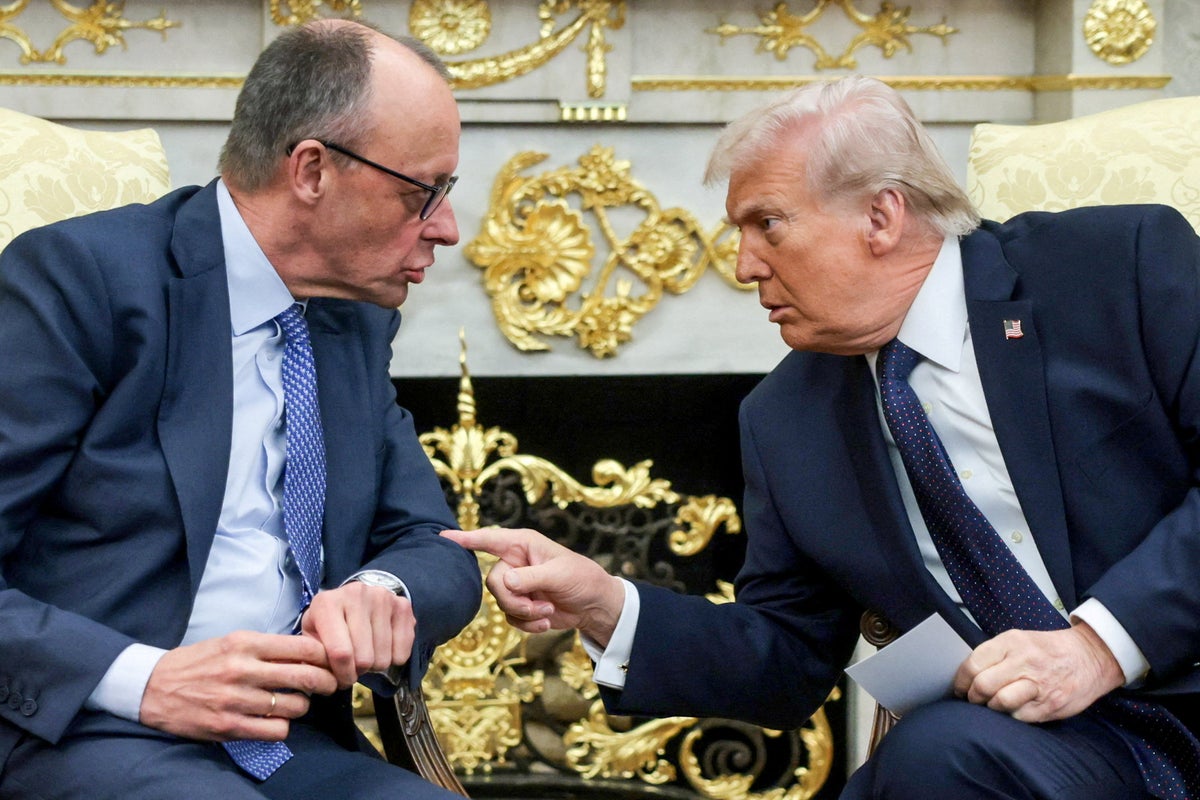
This public critique drops right into an ongoing, nasty feud between Merz and US President Donald Trump. Tensions spiked last month when Merz bluntly remarked that the American leadership was being "humiliated" by Iran in the ongoing Middle East conflict. Trump didn't take the slight lying down. The White House retaliated by threatening to pull 5,000 American troops out of Germany, while Trump publicly slammed Merz for doing a "terrible" job running a "broken country."
But reducing this to a personal spat ignores a harsh reality. Merz is tapping into actual economic data that shows the American dream is currently stumbling for entry-level professionals.
The Job Market Reality for High Earners
Merz made a specific economic claim that raised eyebrows. He argued that today, even the best-educated people in America are finding it incredibly difficult to secure employment.
While that sounds like political hyperbole, recent labor data shows he isn't entirely wrong. The entry-level corporate job market in the US has cooled significantly. Data from the Federal Reserve Bank of New York reveals that unemployment among recent college graduates has ticked up to around 5.7%, outstripping the national general unemployment rate.
More alarming is the underemployment rate. Over 40% of recent American graduates are currently working jobs that don't even require a college degree. Corporations have slashed entry-level hiring, frozen tech pipelines, and scaled back international visa sponsorships. For a young German moving abroad, the math simply doesn't add up like it used to a few years ago. You face astronomical tuition costs or sky-high rent in cities like New York or San Francisco, with no guarantee of a corporate landing pad.
Looking Inward to Counter the Critics
Naturally, the blowback to Merz's speech was instantaneous. Trump’s circle immediately swung back. External adviser Richard Grenell mocked the German Chancellor on social media, accusing him of suffering from "Trump Derangement Syndrome" and claiming Merz is entirely controlled by domestic media.
At home, far-right Alternative für Deutschland (AfD) leader Alice Weidel seized on the moment too. She pointed out the irony of a Chancellor presiding over a sluggish, anaemic German economy pointing fingers at Washington's stability.
Merz knows he's fighting on a tough domestic front. His poll numbers are struggling, and the German economy needs a serious jolt. That's exactly why he used the rest of his Würzburg speech to pivot toward domestic optimism. He urged young Germans to abandon "disaster mode" and realize that few places on earth offer the kind of structural, baseline safety and economic opportunity for youth as Germany does.
What This Means for Your Next Career Move
If you're a young professional or student weighing your options between Europe and the US, the playbook has officially changed. You can't just assume an American move is an automatic upgrade.
Take a hard look at visa realities. The H-1B lottery system remains a massive gamble, and corporate sponsorships are shrinking as US companies look inward.
Evaluate the real cost of education. Spending six figures on a US master's degree requires a certain return on investment that entry-level markets aren't reliably delivering right now.
Consider the European alternative. Germany and its neighbors are actively trying to retain talent to combat their own demographic crunches. The salaries might not match peak Silicon Valley numbers, but when you factor in healthcare, structural security, and zero tuition debt, the net calculation looks vastly different than it did a decade ago.
Keep your eyes on the upcoming NATO summit in Ankara. The policy decisions made there regarding defense and trade will tell you exactly how deep this US-Europe fracture runs, and whether Merz's warning is a temporary blip or the new permanent reality.