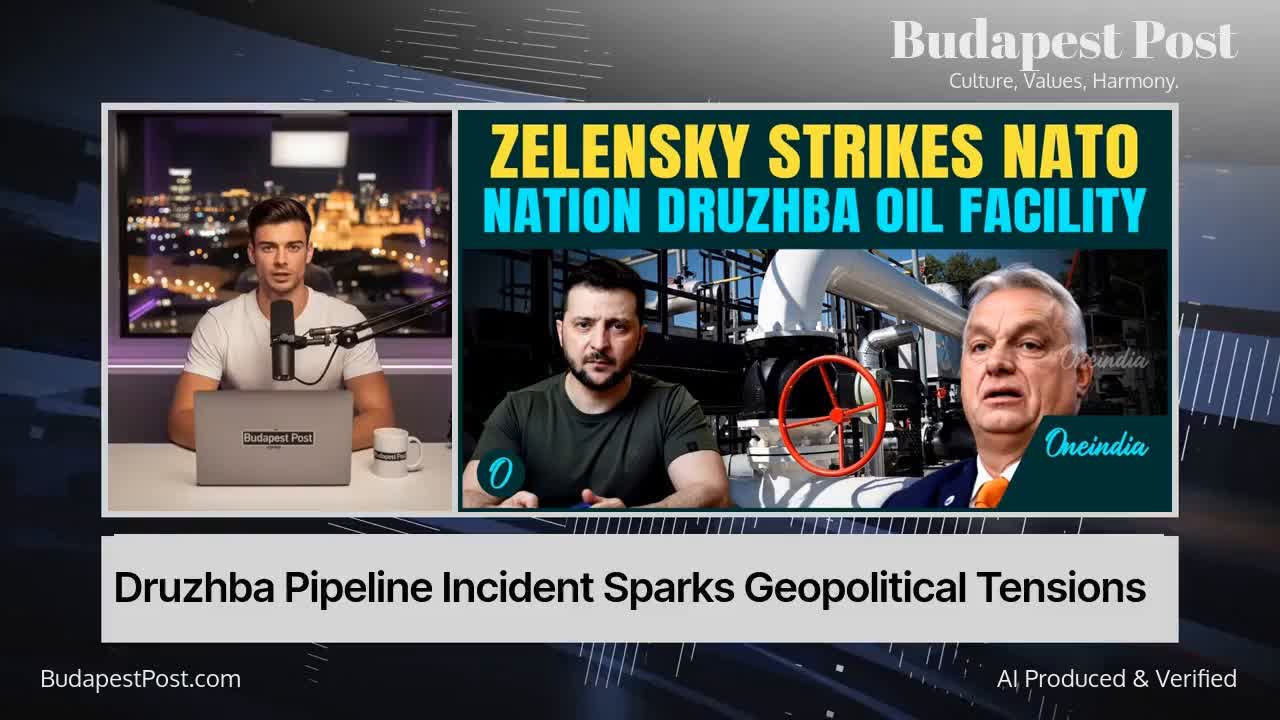
Energy infrastructure remains the ultimate arbiter of European fiscal sovereignty. The resumption of Russian crude flows through the southern branch of the Druzhba pipeline is not merely a logistical restoration; it represents a tactical alignment of energy security, sovereign debt obligations, and intra-bloc diplomacy. By unblocking the transit of Urals crude to Hungary, Slovakia, and the Czech Republic, the involved parties have effectively cleared the financial bottleneck preventing the disbursement of EU-backed loans to Kyiv. This nexus demonstrates that physical commodity transit functions as a de facto credit enhancement for geopolitical stability.
The Mechanics of Transneft-UkrTransNafta Friction
The disruption of the Druzhba pipeline was a failure of financial clearing, not physical capacity. To understand the restart, one must dissect the transit fee architecture. Under standard operating procedures, Transneft—the Russian state-owned pipeline operator—pays UkrTransNafta for the right to move crude across Ukrainian territory. Western sanctions, specifically those targeting the Russian financial sector and the SWIFT system, created a "compliance gap" where European banks refused to process these payments, fearing secondary sanctions or regulatory scrutiny. For another view, check out: this related article.
The Payment Redirection Framework
The resolution shifted the burden of payment from the supplier to the recipient. To restore the flow, MOL (the Hungarian energy giant) and Slovnaft (its Slovakian subsidiary) stepped in to settle the transit fees directly with the Ukrainian operator. This move bypassed the Russian banking blockade by utilizing European-origin funds to pay for services rendered on Ukrainian soil. This creates a tripartite liability structure:
- The Supplier (Transneft): Retains ownership of the volume but loses control over the transit payment logistics.
- The Intermediary (UkrTransNafta): Receives guaranteed payment from a "clean" EU source, insulating them from Russian credit risk.
- The Off-taker (MOL/Slovnaft): Assumes the upfront financial cost of transit to protect their downstream refining margins.
This maneuver highlights a critical vulnerability in the sanctions regime: physical dependencies often force the sanctioned party's customers to act as financial conduits to maintain their own industrial survival. Related analysis on this trend has been provided by The Motley Fool.
Refineries as Hostages of Chemistry
The urgency for Hungary and Slovakia to restart the Druzhba flows is rooted in the chemical engineering of their infrastructure. The Duna and Bratislava refineries were specifically designed to process "sour" Urals crude, which has a higher sulfur content ($1.3%$ to $1.8%$) compared to "sweet" Brent or WTI.
Switching to alternative grades is not a matter of turning a valve; it requires a complete recalibration of the refining units. A sudden shift to light, sweet crude would lead to:
- Reduced Distillate Yields: The distillation towers would produce an imbalance of products, potentially causing a shortage of heavy fuels and diesel essential for the Central European industrial base.
- Metallurgical Degradation: Processing mismatched crude can lead to accelerated corrosion in piping not rated for specific acidic profiles.
- Infrastructure Chokepoints: Reaching these landlocked refineries via the Adria pipeline (from the Croatian coast) requires significant upgrades to pump stations and storage tanks, which currently lack the throughput to replace 100% of the Druzhba volume.
[Image of oil refinery fractional distillation process]
The EU Loan Nexus: Financial Reciprocity
The timing of the pipeline restart coincides with the release of macro-financial assistance to Ukraine. In this context, energy transit functions as a leverage point for EU internal negotiations. Hungary’s historical opposition to certain aid packages for Kyiv has often been linked to its own energy security concerns and the release of frozen EU funds.
The "Unblocking Mechanism" follows a specific logic of reciprocity:
- Energy Security for Kyiv’s Liquidity: Ukraine allows the transit of Russian oil, which earns them transit revenue and maintains the goodwill of their immediate neighbors (Slovakia and Hungary).
- Geopolitical Compliance: By facilitating the flow, Budapest removes a primary friction point that had previously justified its vetoes or delays on EU-wide financial support for Ukraine.
- Risk Hedging: The EU uses the promise of loan disbursements to ensure that Ukraine does not weaponize the pipeline, while simultaneously pressuring Hungary to remain aligned with the broader bloc's foreign policy objectives.
Analyzing the Transit Cost Function
The direct payment of transit fees by MOL and Slovnaft alters the cost-benefit analysis of Russian oil exports. While the nominal price of Urals crude remains subject to the G7 price cap, the "all-in" cost for the European off-taker now includes:
$$C_{total} = P_{urals} + T_{transit} + S_{compliance}$$
Where $P_{urals}$ is the purchase price, $T_{transit}$ is the directly paid transit fee, and $S_{compliance}$ represents the legal and administrative overhead required to navigate the sanctions environment.
This structure actually benefits Ukraine’s fiscal position. By receiving payment directly from EU entities, they eliminate the risk of Russian payment defaults or "technical" delays used as political pressure. Furthermore, it sets a precedent for "recipient-pays" models that could be applied to other trans-border commodities, effectively decoupling the physical flow of Russian goods from the Russian financial system.
The Fragility of the Landlocked Advantage
The exemptions granted to the southern Druzhba branch under EU sanctions are a recognition of the "Landlocked Reality." Unlike Germany or Poland, which have sea-access terminals like Gdańsk or Rostock, the Czech Republic, Slovakia, and Hungary are captive to the pipeline.
However, this advantage is diminishing. The European Commission is aggressively pushing for the "Phase Out 2027" strategy. This involves:
- Forced De-bottlenecking: Mandating the expansion of the TAL (Transalpine) and Adria pipelines to ensure Central Europe can be fed from Mediterranean ports.
- Refinery Retrofitting: Providing subsidies for refineries to upgrade their metallurgy and catalysis units to handle non-Russian grades.
- Strategic Stockpile Integration: Creating a cross-border reserve system that allows for localized disruptions without triggering national emergencies.
The current restart is a stay of execution, not a long-term pardon. The dependence on Druzhba remains the single greatest point of failure for Hungarian and Slovakian industrial policy.
Operational Risks and Systemic Vulnerabilities
Despite the flow restoration, the system remains under high kinetic and economic risk. The physical security of the pipeline within Ukrainian territory is subject to the volatility of the ongoing conflict. A single strike on a pumping station—many of which rely on a fragile electricity grid—would halt the flow regardless of payment status.
Furthermore, the legal framework is precarious. Should the EU or the US tighten the definition of "circumvention," the direct-payment model used by MOL could be challenged. This creates a "Compliance overhang" where banks may still retreat from processing these transactions if the political winds shift, leading to another stop-start cycle.
The Strategic Path Forward
To mitigate the inherent instability of the Druzhba corridor, energy firms and regional governments must execute a two-track strategy:
- Immediate Financial Hedging: Off-takers must establish escrow accounts in neutral jurisdictions specifically for transit fees to ensure continuous payment flow regardless of future bank-level sanctions on Russia.
- Accelerated Metallurgy Diversification: Refineries must begin the "blending" process—mixing Urals with alternative grades in increasing increments ($10%$, $20%$, $30%$) to test the limits of their current equipment while the long-term retrofitting is underway.
The resumption of oil flows is a tactical win for Central European energy stability, but it reinforces a dangerous reliance on a conduit that passes through a theater of war. The logical conclusion is that the "Southern Druzhba" is no longer an asset, but a high-maintenance liability being managed in real-time. Stakeholders must utilize this period of restored flow to fund the very infrastructure that will eventually make the pipeline obsolete.