The failure of a hegemon to secure multinational participation in maritime policing operations signals a breakdown in the traditional "security-for-alignment" contract. When the United States requested its key allies to form a naval coalition—Operation Sentinel—to escort tankers through the Strait of Hormuz, the tepid response from Berlin, Tokyo, and Paris was not merely a diplomatic snub. It was a rational calculation based on diverging threat perceptions, economic dependencies, and the perceived illegitimacy of the underlying "Maximum Pressure" campaign.
Maritime security in the Persian Gulf operates as a global public good. However, the cost of providing this good is high, and the willingness of regional partners to contribute is dictated by three structural variables: the proximity of the threat to national interests, the legal framework of the mission, and the risk of inadvertent escalation into a kinetic conflict with Iran. For a deeper dive into this area, we suggest: this related article.
The Triad of Allied Reticence
The reluctance of major powers to join a US-led mission in the Hormuz bypass creates a vacuum in maritime governance. This hesitation is driven by three distinct pillars of strategic logic.
1. The Decoupling of Security Interests
For decades, the US provided the security umbrella for the Persian Gulf under the Carter Doctrine, ensuring the free flow of oil. However, the US has transitioned from a net energy importer to a major exporter of liquefied natural gas (LNG) and crude. In contrast, Japan and Germany remain deeply dependent on Middle Eastern hydrocarbons. While logic suggests this dependency should drive them to join the coalition, the opposite has occurred. They view US presence as a potential catalyst for the very instability they seek to avoid. To these nations, the US is no longer a neutral guarantor of trade but a party to a specific geopolitical dispute. For broader information on this topic, extensive reporting can be read on The Guardian.
2. The Legitimacy Deficit of Unilateral Mandates
International law regarding the "Right of Innocent Passage" provides the legal basis for maritime transit. Allied nations, particularly those in the European Union, prioritize missions conducted under the auspices of the United Nations or established multilateral frameworks. A US-led mission lacks the broad international mandate required for many parliamentary democracies to deploy their navies. Germany’s refusal was framed explicitly around the "Maximum Pressure" policy; joining the naval mission would be seen as an implicit endorsement of a strategy designed to collapse the Iranian economy—a strategy the EU officially opposes.
3. The Escalation Cost Function
Naval deployments are not static; they are dynamic escalatory signals. The risk for a partner like Japan is that a minor tactical miscalculation in the Strait—a collision or a warning shot—could trigger a broader war. The cost function for Tokyo involves the potential total loss of energy imports in the event of a regional conflagration. By staying out of the US-led mission, they maintain a "neutral" posture that allows for separate diplomatic channels with Tehran, effectively hedging their bets.
The Mechanics of Maritime Chokepoints
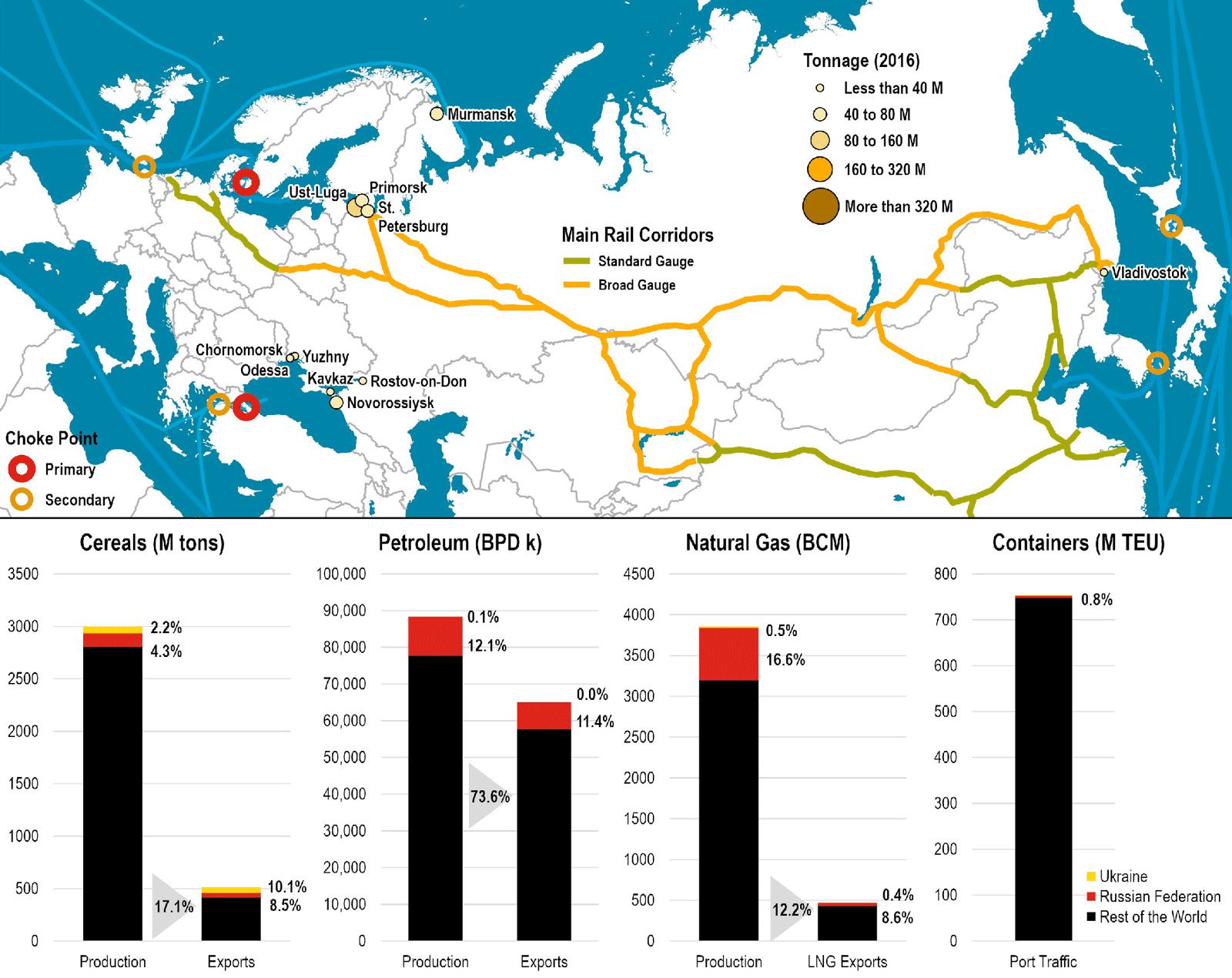
The Strait of Hormuz is the world’s most significant oil chokepoint. Understanding why a warship escort program is difficult to implement requires a look at the physical and technical constraints of the waterway.
- Traffic Density: Approximately 21 million barrels of oil pass through the 21-mile-wide strait daily.
- Geography: The shipping lanes consist of two-mile-wide channels for inbound and outbound traffic, separated by a two-mile wide buffer zone.
- Asymmetric Threats: Iran’s Islamic Revolutionary Guard Corps Navy (IRGCN) utilizes "swarm" tactics—hundreds of small, fast-attack craft—rather than traditional naval vessels.
A traditional warship escort is designed to counter peer-level threats, such as submarines or destroyers. Against a swarm of fast-attack craft and land-based anti-ship cruise missiles (ASCMs), a single destroyer is over-optimized and under-equipped. To effectively protect every tanker, a coalition would need a density of hulls that no single navy, including the US Navy, can currently maintain without sacrificing its presence in other theaters like the South China Sea.
The Structural Failure of "Maximum Pressure" as a Coalition Driver
The primary friction point is the divergence in the "Theory of Change" regarding Iran. The US administration’s strategy assumes that economic strangulation will force a renegotiation of the JCPOA (Joint Comprehensive Plan of Action). Allies, however, observe a different cause-and-effect chain: sanctions lead to Iranian "counter-pressure" in the maritime domain, which leads to increased shipping insurance premiums (hull war risk premiums), which then leads to a request for escorts.
Allies view the request for warships as a request to subsidize the security costs of a US policy they did not agree to. This creates a "Free Rider" problem in reverse: the US wants the allies to pay for the security of a policy that the allies believe is creating the insecurity.
European Strategic Autonomy and the EMASoH Alternative
The emergence of the European-led Maritime Awareness in the Strait of Hormuz (EMASoH) mission represents a tectonic shift in maritime strategy. By establishing a separate headquarters in Abu Dhabi, nations like France and the Netherlands created a "de-conflicted" rather than "integrated" presence.
This dual-track approach serves a specific function:
- De-escalation: It provides a presence that ensures "freedom of navigation" without being subsumed into the US military command structure.
- Diplomatic Space: It allows European powers to signal to Iran that they are protecting their own commercial interests, not participating in a regime-change or "maximum pressure" agenda.
- Intelligence Independence: It allows for an independent assessment of maritime incidents, preventing a "Gulf of Tonkin" scenario where a single nation’s intelligence might drive a coalition into an unwanted war.
The Economic Impact of Naval Absence
When navies refuse to participate, the burden shifts to the private sector. The quantification of this "security gap" is visible in the maritime insurance markets.
- LMA/IUA Joint War Committee (JWC): The designation of the Persian Gulf as a high-risk area allows insurers to charge "Additional Premiums" (AP) for every transit.
- Operational Costs: Tankers are forced to adopt "Hardened Maritime Security" measures, including armed private security teams, which increases the daily operating expense (OPEX) by thousands of dollars.
- Route Diversion: While there is no viable physical alternative to Hormuz for the volume of oil required, some shippers have attempted to utilize the East-West Pipeline in Saudi Arabia or the Habshan–Fujairah pipeline, though these have limited capacity (approx. 6.5 million barrels combined).
Constraints on Middle Power Naval Deployment
The lack of participation is also a matter of platform availability and readiness. The Royal Navy, for instance, has faced significant "hull availability" issues, with a fleet size that has shrunk considerably since the Cold War. Deploying a Type 45 destroyer to the Gulf means withdrawing it from the North Atlantic or the Mediterranean. For Japan, the "Self-Defense" constraints of its constitution limit where and how its Maritime Self-Defense Force (JMSDF) can operate, requiring "research and study" mandates rather than combat-ready escort rules of engagement.
The Strategic Realignment of Maritime Power
The refusal of US allies to join the Hormuz mission marks the end of the era of "automatic coalitions." In a multipolar world, maritime security is becoming compartmentalized. The US provides high-end deterrence; the Europeans provide "de-escalatory monitoring"; and regional powers like India provide independent escorts for their own flagged vessels.
This fragmentation increases the complexity of maritime coordination. Without a unified Command and Control (C2) structure, the risk of "friendly fire" or conflicting signals to Iranian forces increases. However, for the allies, this risk is preferable to the perceived certainty of being dragged into a US-Iranian war.
The strategic play for any maritime power in this environment is the transition from "escort-based security" to "surveillance-based transparency." The goal is no longer to fight a naval battle in the Strait, but to make the cost of Iranian interference so high in the court of global public opinion—via undeniable sensor data and real-time imagery—that the IRGCN is deterred from action.
The move toward autonomous underwater vehicles (AUVs) and high-altitude long-endurance (HALE) drones will eventually replace the need for physical warship escorts. Until that technological transition is complete, the Strait of Hormuz will remain a theater of "competitive insecurity," where the lack of a unified coalition is the clearest indicator of a fractured global order.
Future stability in the region depends on a return to a "Functionalist" approach to maritime law—treating the Strait as a neutral utility rather than a geopolitical lever. Failing that, the cost of transit will continue to fluctuate not based on supply and demand, but on the shifting diplomatic temperaments of the powers involved.