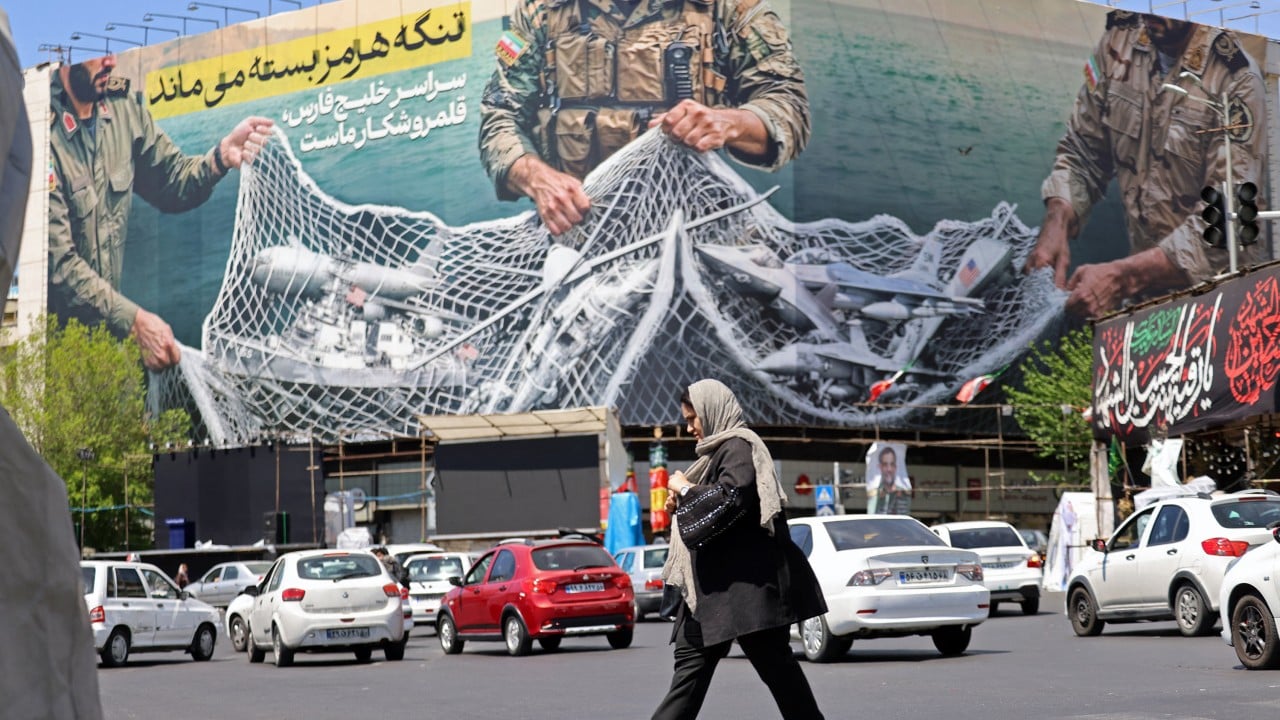
The kinetic engagement of three merchant vessels by Iranian forces in the Strait of Hormuz, occurring immediately after a public extension of a ceasefire by the United States, represents a calculated breakdown in the "de-escalation via restraint" doctrine. This incident exposes a fundamental mismatch between Western diplomatic signaling and Iranian regional security logic. While the ceasefire extension was intended to lower the temperature, it functioned as a strategic vacuum that Tehran filled to recalibrate its leverage. To understand the volatility of this corridor, one must move beyond the headlines of "random aggression" and analyze the operational calculus of the Islamic Revolutionary Guard Corps Navy (IRGCN) through the lens of asymmetric naval theory and the economics of maritime choke points.
The Strategic Triad of Iranian Maritime Doctrine
The IRGCN does not operate under the same conventional naval paradigms as a blue-water fleet. Their actions are governed by three distinct operational pillars:
1. The Signaling Function of Kinetic Harassment
In the context of the Strait of Hormuz, kinetic action—firing upon or seizing ships—is a sophisticated form of diplomatic communication. By engaging vessels immediately following a U.S. ceasefire extension, Iran signals that its regional behavior is not contingent upon American permission or "gifts" of restraint. It is an assertion of local hegemony designed to prove that the U.S. security umbrella is porous.
2. Cost-Imposition Strategies
Iran’s maritime strategy seeks to maximize the economic cost of regional instability for the international community while minimizing its own risk. The mechanism here is the War Risk Insurance Premium. Every shot fired in the Strait increases the insurance rates for tankers, which translates directly into higher landed costs for crude oil and Liquified Natural Gas (LNG) globally. Iran uses this "invisible tax" to exert pressure on global markets, forcing international actors to the negotiating table to seek stability.
3. Asymmetric Layered Defense
The IRGCN utilizes a "swarm and strike" methodology. By using small, high-speed patrol boats equipped with anti-ship missiles and mines, they neutralize the technical superiority of larger carrier strike groups. The geography of the Strait—a narrow 21-mile-wide passage at its narrowest point—removes the advantage of standoff distance that Western navies rely on for defense.
Quantifying the Vulnerability of Global Energy Flux
The Strait of Hormuz serves as the world’s most critical energy artery. Approximately 20% of the world’s total petroleum consumption passes through this choke point daily. When Iran targets three ships, the market does not just react to the damage on those specific hulls; it reacts to the potential for a total throughput stoppage.
The primary bottleneck is the Deep-Water Channel. While the Strait is 21 miles wide, the actual shipping lanes consist of two 2-mile-wide channels (one inbound, one outbound) separated by a 2-mile buffer zone. Any localized kinetic activity within these lanes forces ships to slow down or reroute, increasing fuel consumption and voyage time.
If the IRGCN increases the frequency of these engagements, they create a "cumulative friction" effect. This friction degrades the efficiency of the Global Supply Chain in two ways:
- Asset Immobilization: Ships are held in port or diverted, reducing the effective supply of available tonnage in the tanker market.
- Capital Flight: Sustained insecurity discourages long-term investment in regional port infrastructure, shifting the economic center of gravity toward more stable, albeit more expensive, alternatives.
The Logic of the Ceasefire Failure
The failure of the ceasefire extension to prevent this escalation reveals a flaw in the "Reciprocity Assumption." The U.S. administration operated on the belief that a unilateral extension of a ceasefire would be met with a corresponding reduction in Iranian naval activity. This ignores the Internal Political Variable in Tehran.
The IRGCN operates with a high degree of autonomy from the civilian diplomatic corps. For the IRGCN, a U.S. ceasefire is viewed as a period of reduced threat, providing an "operational window" to conduct harassment with lower risk of immediate military retaliation. This creates a moral hazard: by announcing a ceasefire, the U.S. inadvertently lowered the "cost of aggression" for Iranian hardliners.
The Mechanics of the Engagement: 3-Ship Interdiction
The specific targeting of three ships simultaneously, or in quick succession, indicates a coordinated exercise in Area Denial. This was not a localized skirmish but a test of the "Reaction Time" of the International Maritime Security Construct (IMSC).
The IRGCN employs several tactical layers during these engagements:
- Electronic Interference: Jamming GPS and AIS (Automatic Identification System) signals to confuse the merchant vessel’s navigation and obscure the ship's location from shore-based monitors.
- Physical Boarding Threats: Utilizing fast-roping from helicopters or boarding from fast-attack craft to gain physical control of the bridge.
- Warning Shots and Direct Fire: The use of 23mm cannons or small-arms fire to intimidate the crew and force the vessel into Iranian territorial waters.
These tactics are designed to be "sub-threshold." They are violent enough to disrupt commerce and grab headlines but remain below the level of destruction that would trigger a full-scale kinetic response from the U.S. Navy.
Analyzing the Economic Feedback Loop
The relationship between Iranian aggression and global oil prices is often simplified, but the underlying calculus is a function of Supply Elasticity. In a market with high spare capacity, these incidents cause temporary spikes. However, in the current market environment where spare capacity is limited, even a minor disruption in the Strait of Hormuz creates an outsized volatility response.
The "Escalation Premium" is typically priced into Brent Crude within 30 minutes of a reported incident. This premium reflects the market's assessment of the probability of a "Hormuz Closure Scenario." While a total closure is unlikely due to its devastating impact on Iran’s own economy, the threat of closure is a highly effective tool for geopolitical arbitrage.
The Bottleneck of Naval Escorts
One of the most persistent "People Also Ask" themes is why the U.S. and its allies do not simply escort every merchant vessel. The answer lies in the Escort-to-Vessel Ratio.
Over 80 ships transit the Strait of Hormuz every day. Providing a dedicated naval escort for each ship would require a fleet size that currently does not exist in the region. Furthermore, an escort-heavy strategy would likely be viewed by Iran as an escalation, potentially leading to the very "flashpoint" event the ceasefire extension was designed to avoid. Instead, navies rely on "Sentinel" operations—monitoring the lanes and responding to distress calls—which leaves a window of vulnerability that the IRGCN continues to exploit.
Strategic Realignment and the Path Forward
The persistence of these attacks suggests that the current deterrent model is insufficient. To restore order in the Strait of Hormuz, the international community must pivot from a reactive "Response" model to a proactive "Friction" model.
The first step is the Decoupling of Diplomatic and Maritime Security. The ceasefire extension should have been conditioned on verified maritime stability, rather than being granted as a blanket policy. By separating the two, the U.S. can maintain diplomatic channels while retaining the right to immediate, localized kinetic responses to maritime harassment.
The second step involves Enhanced Automated Surveillance. Increasing the density of unmanned surface vehicles (USVs) and persistent aerial surveillance would eliminate the "shadow zones" where the IRGCN currently operates. When every movement of an Iranian patrol boat is broadcast in real-time to the global community, the "deniability" factor of their aggression evaporates.
The final element is the Redefinition of Territorial Waters. Iran often justifies these seizures by claiming the vessels were in Iranian waters, a claim that is frequently disputed by GPS data. A standardized, internationally recognized digital "Hard Border" for the Strait's transit lanes, backed by automated enforcement notifications, would strip the IRGCN of its legalistic cover.
The current trajectory indicates that Iranian maritime aggression is not a bug in their foreign policy, but a core feature. Until the cost of harassment—whether through immediate naval counter-action or targeted economic sanctions against the IRGCN’s domestic business interests—exceeds the signaling value of the attacks, the Strait of Hormuz will remain the world's most volatile maritime intersection. Naval planners must prepare for a "Long-Term Friction" environment where the goal is not a total cessation of incidents, but the systematic reduction of their strategic impact.