The global energy market hinges on a single geological anomaly: the North Field-South Pars complex. Spanning approximately 9,700 square kilometers, this is the world's largest non-associated natural gas field. The central tension is not merely the extraction of resources, but the asymmetric extraction capability between Qatar and Iran. While the reservoir is continuous, the political, technological, and capital structures governing each side are fundamentally decoupled. This decoupling creates a "drainage paradox" where the more technologically advanced actor can theoretically capture a disproportionate share of the shared pressure, turning a geological asset into a zero-sum kinetic theater.
The Mechanics of Reservoir Depletion and Pressure Interference
To understand the friction between Doha and Tehran, one must first master the physics of a shared carbonate reservoir. Natural gas exists in a state of high pressure; when one party drills a well and begins extraction, it creates a pressure sink. Because the Permo-Triassic Khuff formation is porous and permeable, gas migrates from high-pressure zones to low-pressure zones.
This creates a competitive extraction environment governed by three variables:
- Perforation Density: The number of active wells positioned along the maritime border.
- Compressor Horsepower: The mechanical ability to maintain flow rates as natural reservoir pressure declines.
- Liquefaction Throughput: The speed at which extracted raw gas is converted into a transportable commodity (LNG).
Qatar’s North Field expansion, specifically the North Field East (NFE) and North Field South (NFS) projects, aims to raise its LNG capacity from 77 million tons per annum (mtpa) to 126 mtpa. This is not just a growth strategy; it is a defensive move to maximize recovery before the reservoir’s internal energy—the pressure required to push gas to the surface—is exhausted by shared depletion.
The Technological Deficit as a Catalyst for Conflict
Iran’s South Pars sectors face a structural crisis that cannot be solved by domestic willpower alone. The "South Pars Syndrome" is characterized by the inability to counter natural pressure drops (roughly 7 psi per year in mature wells).
The technical requirements for maintaining South Pars production include:
- Large-scale offshore compression platforms: These structures weigh upwards of 20,000 tons, far exceeding the 1,500-to-3,000-ton platforms Iran currently manufactures.
- Horizontal drilling precision: Maximizing contact with the "sweet spots" of the reservoir to compensate for declining pressure.
- Cryogenic technology: The ability to process gas into LNG for global export rather than relying on regional pipelines.
Sanctions have effectively cordoned off Iran from the "Big Three" oilfield service providers and the specific turbine technology required for high-capacity compression. Consequently, while Qatar utilizes TotalEnergies, ExxonMobil, and Shell to implement cutting-edge recovery techniques, Iran is forced to rely on "pressure boosting" methods that are often inefficient and prone to mechanical failure. This creates a widening gap in Recovery Factor (RF)—the percentage of total gas in place that is actually extracted.
The Weaponization of Infrastructure and Interdependence
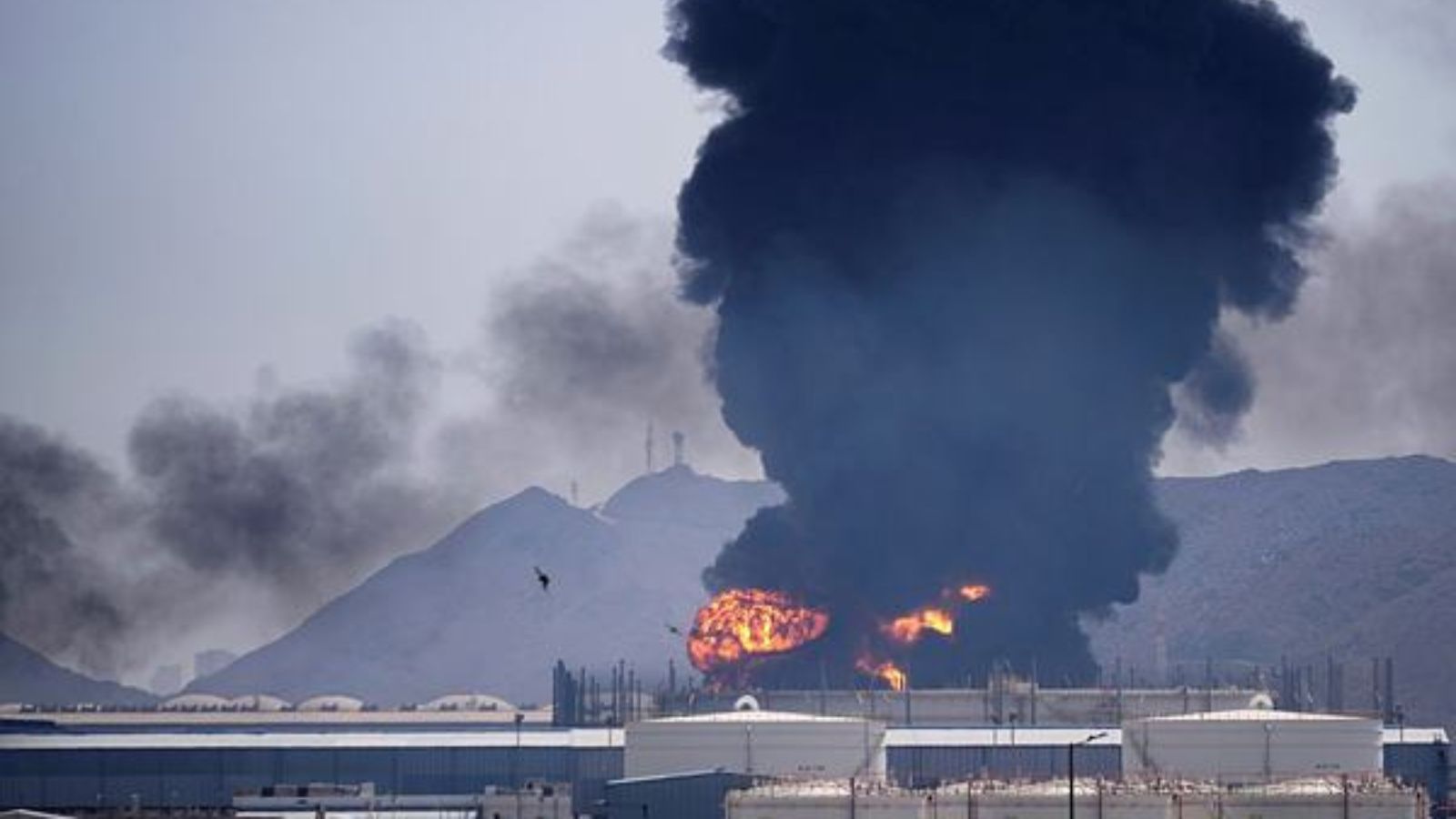
In the Persian Gulf, energy infrastructure is the primary target for gray-zone warfare because it represents the highest concentration of capital expenditure (CAPEX) with the lowest physical defense-to-value ratio. A single drone strike on a liquefaction train or a regasification terminal does not just stop production; it freezes the entire debt-servicing capability of the state.
The strategic logic follows a "Counter-Value" framework:
- Qatar's Vulnerability: Its economy is a monoculture of LNG exports. The Ras Laffan industrial complex is a high-density target where a localized disruption has global price implications.
- Iran's Leverage: Lacking the ability to compete on extraction volume, Tehran utilizes its proximity to the Strait of Hormuz and its proxy network to introduce "Risk Premia" into Qatari shipping.
When Iran perceives that it is losing the "underground war" for reservoir pressure, it has historically pivoted to "above-ground" escalations. These include GPS interference with tankers, maritime seizures, or the deployment of limpet mines. The goal is to equalize the economic playing field by increasing the insurance and security costs for Qatari exports, thereby negating the competitive advantage of Qatar's superior technology.
The Capital Expenditure Barrier and the LNG Glut
The global transition toward decarbonization introduces a "terminal value" risk to the South Pars-North Field complex. Analysts often overlook the Asset Stranding Timeline. If the world reaches peak gas demand by 2040, any gas not extracted by 2035 risks being left in the ground.
Qatar is currently winning the race to extract "last-in-class" molecules. By lowering its unit cost of production through massive economies of scale at Ras Laffan, Doha ensures that even in a low-price environment, its gas remains the most competitive on the global margin.
Iran, conversely, faces a capital trap. To reach parity with Qatar's current extraction rate, Iran requires an estimated $20 billion to $30 billion in immediate investment for offshore compression alone. Without the removal of US secondary sanctions, this capital is non-existent. The result is a forced shift in Iranian strategy: from being an energy superpower to being a regional energy disruptor.
Operational Constraints in the Strait of Hormuz
The Strait of Hormuz is the narrowest bottleneck in the global energy supply chain, with a width of 21 miles at its narrowest point. However, the actual shipping lanes—the Deep Water Channel—are only two miles wide in each direction.
The tactical reality of this geography dictates the following:
- The Choke Point Reflex: Iran does not need to close the Strait to be effective; it only needs to make it "un-insurable." A 300% spike in P&I (Protection and Indemnity) insurance premiums for LNG carriers is as effective as a physical blockade.
- Detection vs. Attribution: The use of Uncrewed Underwater Vehicles (UUVs) and loitering munitions allows for "deniable" strikes on subsea pipelines connecting the North Field platforms to the mainland.
Strategic Realignment: The Russia-China-Iran Triad
As Western majors entrench themselves in Qatar, Iran has attempted to form a "Gas OPEC" or a technical alliance with Russia’s Gazprom. The logic is sound on paper: Russia possesses the expertise in deep-bore drilling and pipeline logistics that Iran lacks. However, this alliance is hollowed out by two factors:
- Resource Competition: Russia and Iran are competitors for the same market share in China and India.
- Technological Parity: Russia itself is struggling with the loss of Western subsea technology, making it an ineffective partner for the high-complexity needs of South Pars.
This leaves China as the sole arbiter of the Gulf's energy future. China’s long-term Sale and Purchase Agreements (SPAs) with Qatar (some lasting 27 years) provide the "off-take" security Doha needs to fund its $30 billion expansion. Simultaneously, China’s 25-year strategic pact with Iran promises investment that has yet to manifest in the gas sector. China is essentially playing both sides of the reservoir, using Qatari volume to ensure supply security while using Iranian desperation to secure discounted feedstock.
The Deployment of Subsea Power Grids
A critical, yet under-reported, technological shift is the electrification of the North Field. Qatar is moving toward powering its offshore platforms with subsea cables from a centralized, onshore solar and gas-fired grid. This reduces the carbon footprint of each MMBtu (Million British Thermal Units) produced, making Qatari LNG more attractive to EU buyers under the Carbon Border Adjustment Mechanism (CBAM).
Iran cannot replicate this. Its offshore platforms must remain self-powered, usually burning a portion of the raw gas they extract. This increases maintenance cycles and the heat signature of the platforms, making them easier to target and more expensive to operate. The "Green Premium" for gas is becoming a quantifiable metric that further divides the two halves of the field.
The Erosion of the Internal Buffer
Historically, Iran used South Pars gas to satisfy massive domestic demand (heating and industrial use), while Qatar exported almost its entire volume. This "domestic burn" acts as a drag on Iran's geopolitical power. As Iranian domestic consumption rises—driven by an inefficient power grid and subsidized prices—its "exportable surplus" shrinks toward zero.
The strategic implications are binary:
- Systemic Collapse: Iran becomes a net importer of gas during peak winter months, leading to industrial blackouts and civil unrest.
- External Aggression: To prevent domestic collapse, Iran must either seize regional assets or coerce neighbors into unfavorable energy-sharing agreements.
The North Field-South Pars complex is no longer just a source of wealth; it is a ticking clock. The speed of Qatari extraction, the decay of Iranian infrastructure, and the closing window of the global gas era are converging. The primary risk factor is no longer a localized skirmish, but a systemic rebalancing where the disadvantaged actor—Tehran—concludes that the cost of inaction (losing the reservoir to drainage) exceeds the cost of kinetic escalation.
The immediate strategic priority for global energy stakeholders is the hardening of LNG export infrastructure. Reliance on "freedom of navigation" in the Gulf is a depreciating asset. Operations must pivot toward "Export Resiliency," which includes the deployment of localized anti-drone systems (C-UAS) on offshore platforms and the diversification of export routes away from the Strait of Hormuz where possible. For Qatar, the North Field expansion is an existential race against geological drainage; for the rest of the world, it is a race to secure volume before the pressure in South Pars drops low enough to trigger a regional desperation play.
Would you like me to develop a detailed risk-assessment model for the Ras Laffan-Hormuz corridor based on these pressure-drop timelines?