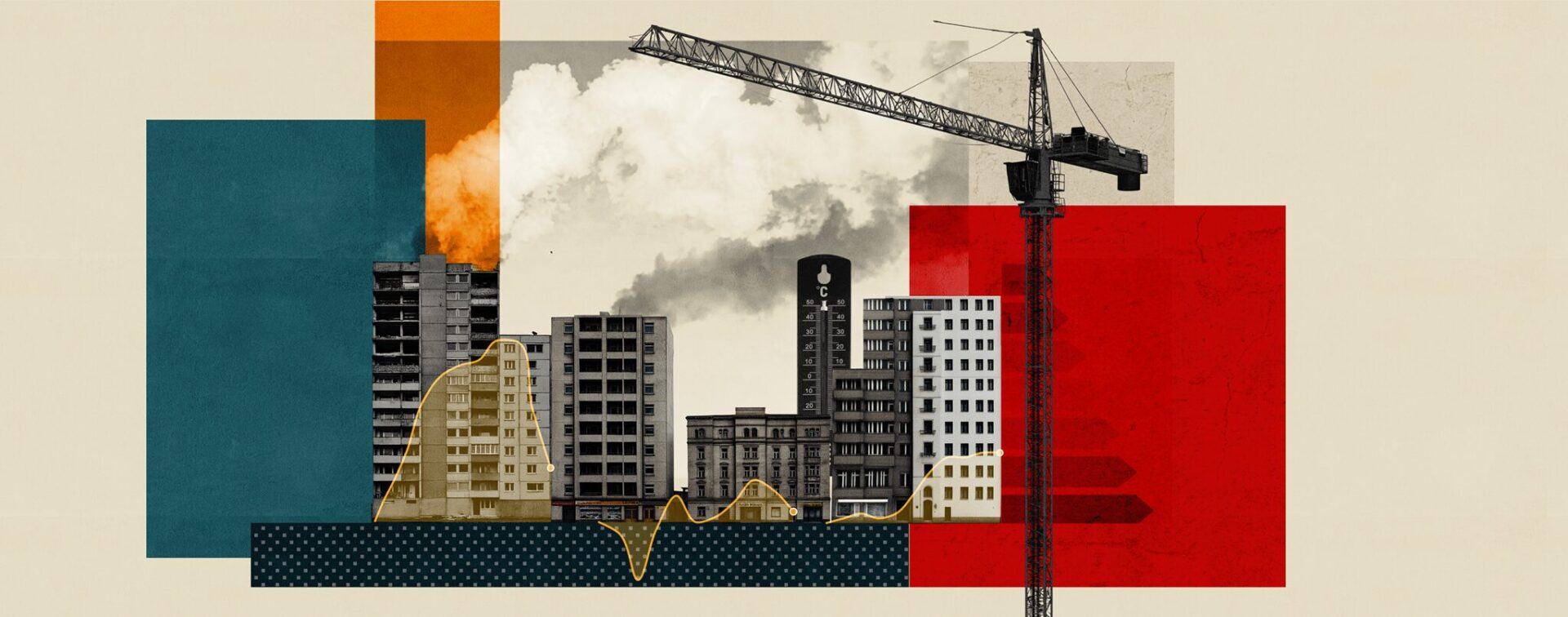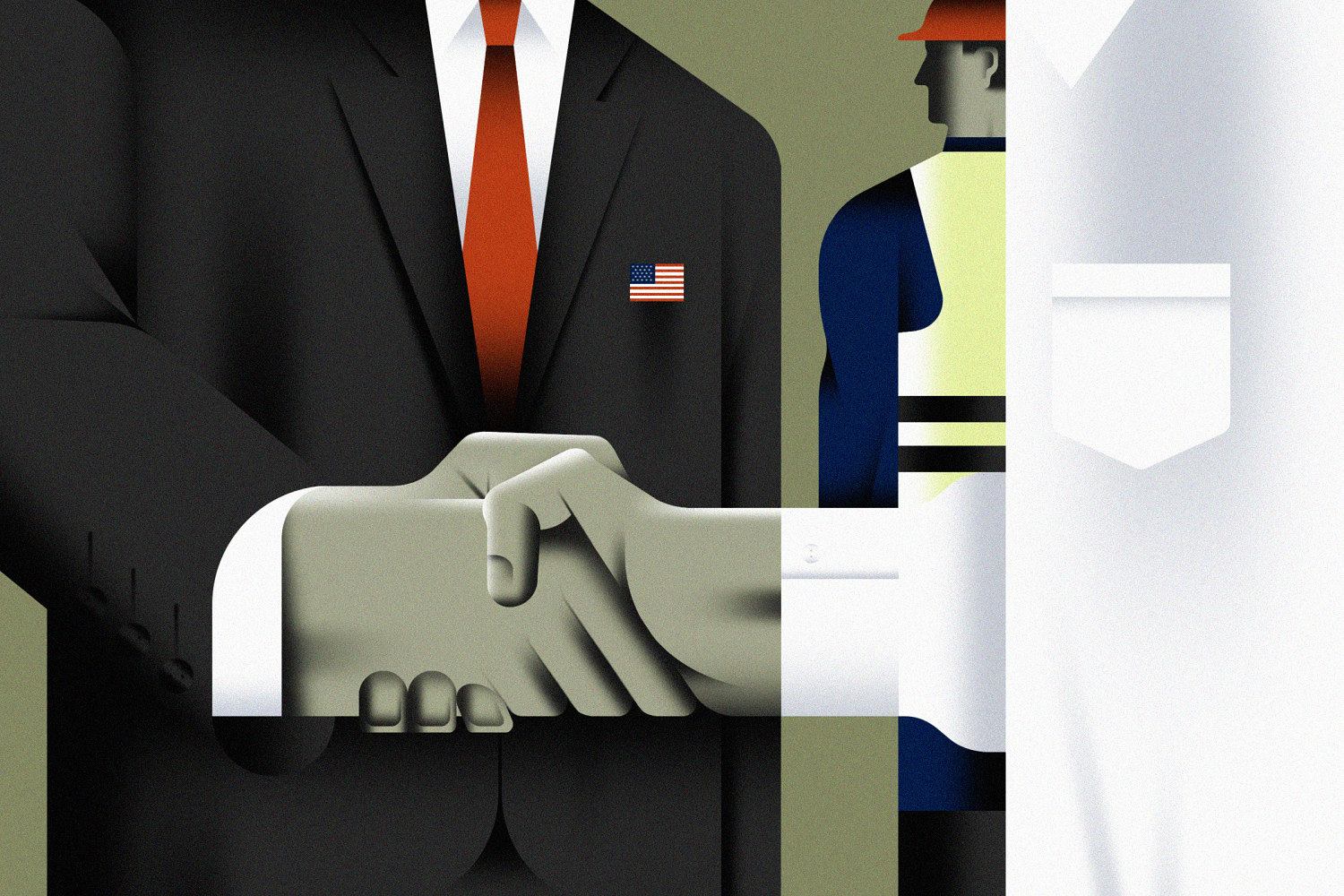
The fluorescent lights of a mid-sized marketing firm in Columbus don’t flicker. They are steady, antiseptic, and relentless. Underneath them sits a man we will call David. David has a master’s degree, fifteen years of experience in digital strategy, and a mortgage that assumes his trajectory will always be upward. For a decade, David was part of the "protected class." He wasn't a factory worker watching his plant move to Monterrey. He wasn't a retail clerk being replaced by a self-checkout kiosk. He was the guy who designed the systems. He was the cognitive elite.
Then, six months ago, the emails started getting shorter. The "syncs" became less frequent. One Tuesday, David was told his role was being "refocused" by an algorithm that could generate three months of his creative output in roughly four seconds.
David is not a statistic yet. He is a ghost in the machine of the modern American economy. But for the first time in nearly half a century, the people who make the laws are starting to hear the rattling of his chains.
For decades, the political consensus on labor was a simple, binary split. On one side, you had the blue-collar heartland—the "forgotten man" in a hard hat whose job was vulnerable to globalization. On the other, you had the white-collar professional—the "knowledge worker" whose education served as an impenetrable suit of armor. If you lost your job at the mill, the advice was always the same: Go back to school. Get a degree. Move into the digital economy.
That armor is now paper-thin.
The Great Leveling
The shift is palpable. It is no longer just the "unskilled" who feel the breath of obsolescence on their necks. When a generative AI model can draft a legal brief, analyze a spreadsheet, or write a functional block of Python code, the traditional hierarchy of labor collapses. We are entering an era where a paralegal and a welder might have more in common than that paralegal has with their firm's senior partners.
Washington is notoriously slow to react to tectonic shifts, but the tremors have reached the capital. Politicians who once focused exclusively on bringing manufacturing back to the Rust Belt are now staring at data that suggests the next wave of displacement will hit the leafy suburbs of Northern Virginia and the tech hubs of Palo Alto. They are realizing that a disaffected middle class isn't just a polling problem; it’s a structural threat to the stability of the tax base.
Consider the numbers. Recent labor studies suggest that up to 80% of the U.S. workforce could have at least 10% of their work tasks affected by the introduction of Large Language Models. For about 19% of workers, that impact could be as high as 50%. We aren't talking about robots replacing arms; we are talking about software replacing minds.
The New Vulnerability
It is a strange sensation for a demographic that has spent its life being told it was "too big to fail." White-collar workers have historically enjoyed a level of political insulation. They are the donors. They are the reliable voters. They are the people who write the op-eds.
But as the "Gilded Cage" of professional security cracks, the political rhetoric is shifting. You can hear it in the way candidates talk about "algorithmic fairness" and "digital sovereignty." These aren't just buzzwords. They are attempts to capture the anxiety of a father who realized his six-figure salary is contingent on a software license fee that costs $20 a month.
The stakes are invisible until they aren't. It’s the silence in the breakroom when a new automation suite is announced. It’s the subtle shift in a job description that now requires "AI orchestration" instead of "original analysis."
The political class is waking up to a terrifying reality: the white-collar worker is the new swing voter. If you lose the people who hold the mortgages, you lose the neighborhood. If you lose the neighborhood, you lose the country.
The Policy of Panic
What does this attention actually look like in practice? It starts with a move away from the "upskilling" myth. For twenty years, the solution to every economic woe was "more education." But when the most educated workers are the ones most vulnerable to the new technology, that narrative dies a quiet death.
We are seeing the early stages of a push for "Human-Centric Labor Protection." This isn't your grandfather’s unionism. This is a movement looking at things like portable benefits that follow a worker from one freelance gig to the next, or tax credits for companies that maintain a certain ratio of human employees to automated processes.
There is also a growing, albeit hushed, conversation about the tax code itself. Currently, the U.S. tax system heavily incentivizes capital investment (like buying a server farm to run AI) over human labor (like paying David’s salary). If a company replaces David with a bot, their tax liability often goes down. Politicians are beginning to ask why we are subsidizing the destruction of the middle-class income tax base.
It’s a logical trap. If the government continues to favor machines, it eventually starves itself of the revenue generated by the people who use those machines.
The Psychological Toll
To understand the human element, you have to look past the policy papers. You have to look at the "Identity Crisis of the Expert."
Imagine a woman named Sarah. Sarah is a radiologist. She spent over a decade in school, accruing hundreds of thousands of dollars in debt to become one of the best in her field at spotting anomalies in lung scans. She is an expert. Her identity is tied to her specialized knowledge.
When an AI system is implemented that can flag those same anomalies with 99% accuracy in a fraction of the time, Sarah isn't just worried about her paycheck. She is worried about her purpose. If the machine does the "thinking," what is Sarah? Is she just a glorified data validator? A rubber stamp for an algorithm?
This loss of agency is the emotional core of the white-collar plight. It is a profound, existential weight. Politicians are realizing that you cannot win an election by telling people their life’s work has been "disrupted." You have to offer them a future where they still matter.
The Shift in the Room
The room has changed. Not long ago, a conference on "The Future of Work" would be filled with optimistic tech evangelists talking about "freeing humans from mundane tasks." Today, those same rooms are filled with labor lawyers, sociologists, and increasingly, very nervous politicians.
They are looking at the "Gig-ification" of the professional class. The rise of the "fractional executive" and the "on-demand consultant" isn't just a lifestyle choice. For many, it’s a desperate scramble to stay relevant in an economy that no longer wants to pay for forty hours of a human brain when it can buy five minutes of a processor.
The safety net, which was originally designed as a hammock for the temporarily unemployed blue-collar worker, is being reimagined as a high-tech trampoline for the permanently displaced professional. We are seeing proposals for "Life-Long Learning Accounts" and state-subsidized "Cognitive Retooling."
But the real movement is happening in the hearts of the workers themselves. There is a burgeoning sense of solidarity that didn't exist five years ago. The architect, the coder, and the copywriter are looking at each other and realizing they are all in the same boat. And that boat is taking on water.
The New Social Contract
We are witnessing the birth of a new social contract, one that isn't written in ink yet, but is being whispered in the corridors of power. It’s a contract that acknowledges that "meritocracy" is a fragile concept when the definition of "merit" can be rewritten by a software update overnight.
The politicians paying attention aren't doing it out of the goodness of their hearts. they are doing it because the math of the old world no longer adds up. If the people who buy the houses, pay the property taxes, and fund the schools are suddenly sidelined, the entire suburban experiment of the 20th century collapses.
David, our strategist in Columbus, doesn't care about the macroeconomics. He cares about the fact that he has to look his daughter in the eye and tell her that the degree he’s still paying for might be a relic by the time she graduates. He cares about the quiet panic that sets in at 2:00 AM when he wonders if he is the last of his kind.
The lights in his office are still steady. But the man sitting under them is finally being seen by the people who have the power to change the rules of the game.
The transition won't be clean. It won't be "seamless." It will be a messy, loud, and deeply human struggle to redefine what it means to be a worker in a world that is rapidly learning to think without us. The politicians are finally listening, not because they have the answers, but because they have finally realized that if David falls, he’s taking the rest of the building with him.
David closes his laptop. The office is empty, save for the hum of the server room down the hall—a low, constant vibration that sounds suspiciously like a countdown.