The ink on a private contract dries just as fast as the ink on a piece of legislation, but it carries a very different weight. When a developer signs a deal for a luxury hotel in Oman or a residential tower in Jeddah, the primary concern is the return on investment. The math is simple. Capital goes in, a structure rises, and profit flows out. But when the person signing that deal—or the family of the person—holds the keys to the most powerful executive office on earth, the math changes. It becomes recursive. Suddenly, the return on investment isn't just measured in riyals or dollars. It is measured in influence.
We have entered an era where the boundary between a brand and a government has not just blurred; it has vanished.
Consider a hypothetical lobbyist sitting in a high-rise office in Dubai. He isn't looking to bribe a politician in the way of the old world—no envelopes of cash, no whispered promises in dark alleys. He doesn't have to. Instead, he looks at a brochure. He sees a name etched in gold across a facade. By investing in that building, by facilitating the permits for that project, or by purchasing a floor of condos, he is engaging in a legal business transaction. Yet, the person on the other end of that transaction is the same person who decides the direction of foreign policy, the placement of military bases, and the severity of economic sanctions.
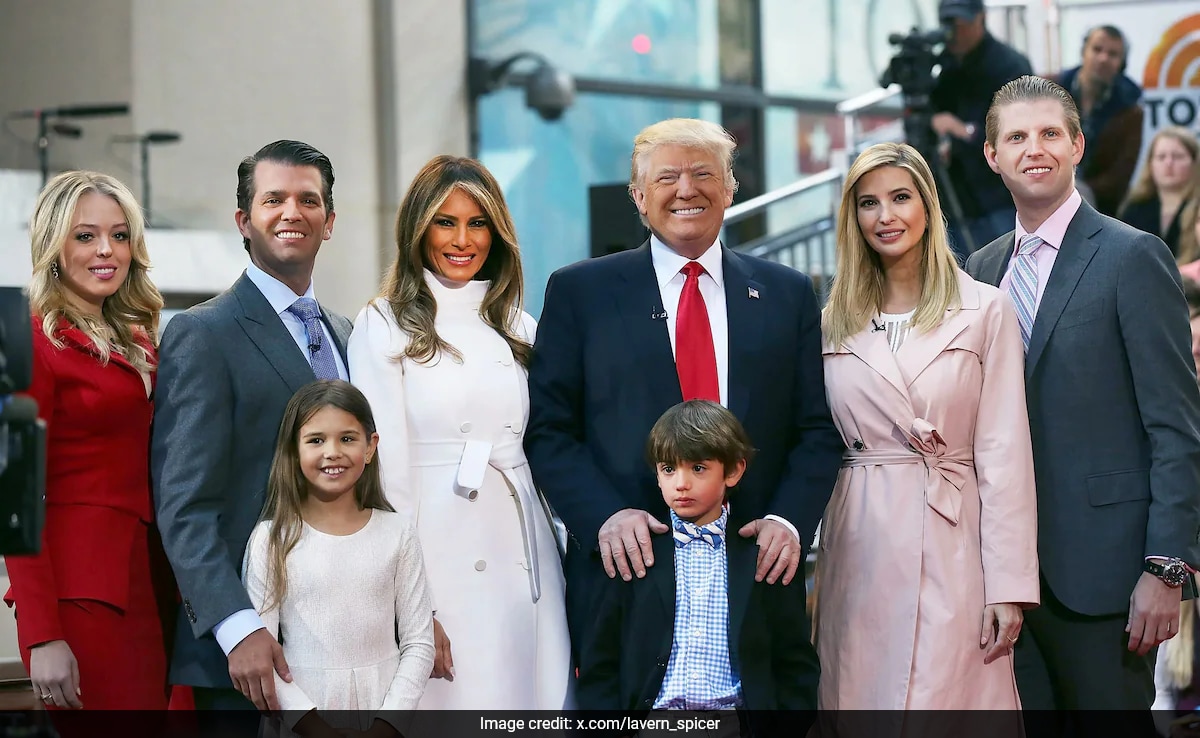
This is the new architecture of power. It is a structure built on the scaffolding of the Trump family’s recent international business spree, a flurry of activity that has sent a tremor through the foundations of American ethics laws.
The Weight of the Name
For decades, the American presidency operated under a gentleman’s agreement. The law didn't strictly require a president to divest from their businesses, but they did it anyway. They did it because the appearance of a conflict of interest was considered as corrosive as the conflict itself. Jimmy Carter famously put his peanut farm into a blind trust to ensure that the price of legumes didn't dictate his diplomatic decisions. It was a humble gesture, perhaps even a quaint one by today’s standards.
But the Trump model operates on a different logic. The brand is the man, and the man is the brand. You cannot put a name into a blind trust when that name is plastered forty feet high on the side of a skyscraper.
Since leaving office, and while campaigning to return to it, the Trump family has expanded its international footprint with a speed that is nothing short of breathtaking. From a $4 billion deal with a Saudi developer for a project in Oman to new licensing agreements in the Middle East and beyond, the machinery of the Trump Organization is humming. This isn't just about making money. It is about creating a global web of obligations.
When a foreign government facilitates a massive real estate deal for the family of a U.S. president, they aren't just buying a building. They are buying a seat at the table. They are buying the kind of access that a traditional diplomat could only dream of.
The Invisible Stakes
Imagine you are an officer in the State Department. You are tasked with negotiating a human rights agreement or a trade deal with a nation that has just handed a multi-million dollar licensing deal to the President’s son. You know that if you push too hard, you might jeopardize the personal wealth of your boss. You also know that if you don't push hard enough, you are failing your country.
There is no manual for this. No training session at the Foreign Service Institute prepares you for the moment where national interest and the Commander-in-Chief’s bank account collide.
The stakes are often invisible until they aren't. They manifest in the silence of a missed critique or the warmth of a sudden policy shift. We saw glimpses of this during the first Trump term—the favoritism toward certain Gulf states, the break with long-standing alliances, the frequenting of Trump-owned properties by foreign dignitaries. But the "deal spree" we see now is a different animal. It is more brazen. It is happening in the open, framed as the natural behavior of a private citizen who just happens to be the frontrunner for the presidency.
The danger isn't just that a president might make a decision to line his own pockets. The danger is that every decision he makes—no matter how noble the intent—will be viewed through the lens of suspicion. If he supports a specific pipeline, is it for energy security or for a business partner? If he pulls troops from a region, is it for strategy or for a skyscraper?
Trust is a fragile currency. Once it is devalued, the cost of governing skyrockets.
The Loophole Large Enough to Drive a Tank Through
The legal framework intended to prevent this is essentially a set of screen doors in a hurricane. The Emoluments Clause of the Constitution was designed to stop federal officials from taking "any present, Emolument, Office, or Title, of any kind whatever, from any King, Prince, or foreign State." It was written by men who were terrified of European monarchs buying the loyalty of American leaders.
But the founders didn't envision the modern multinational corporation. They didn't foresee a world where a "present" could be masked as a licensing fee for a golf course.
Because these deals are structured through various LLCs and corporate layers, proving a direct violation of the law is a legal marathon. While the lawyers argue over the definition of an "emolument," the deals continue. The concrete is poured. The contracts are signed. By the time a court makes a ruling, the policy has already been shifted, the influence has been bought, and the building is already open for business.
This isn't a problem that can be solved by a simple disclosure form. It is a systemic vulnerability. We have allowed the highest office in the land to be treated like a branding opportunity.
The Human Element
At the center of this are the people. Not just the Trumps, but the millions of citizens who need to believe that their government works for them. When a factory worker in Ohio hears about a billion-dollar deal in Muscat, they don't see "smart business." They see a system that is rigged. They see a world where the rules they have to follow—the ethics codes at their own jobs, the taxes they pay, the transparency they are forced to provide—don't apply to the people at the top.
That cynicism is the real cost of these deals. It isn't just about the money. It's about the slow, steady erosion of the idea that the President is a servant of the people.
If we accept that a president can be a global developer simultaneously, we are accepting a fundamental change in the American experiment. We are moving toward a model of governance that looks less like a democracy and more like a family-run conglomerate. In that world, the "national interest" is whatever is good for the bottom line of the parent company.
The Unanswered Question
We often talk about "conflicts of interest" as if they are static things, like a rock in the road. But they are more like a fog. They move. They thicken. They obscure the path ahead until you can't see where you're going.
The Trump family’s international deals are creating a fog that may never lift. Even if every deal is perfectly legal, even if every penny is accounted for, the shadow remains. The shadow of a question that will hang over every summit, every treaty, and every late-night phone call between world leaders:
Who is really being served?
There is no easy way to unwind this. You cannot un-sign a contract once the building is halfway up. You cannot erase the relationship between a developer and the sovereign wealth fund that financed his dream. We are walking into a future where the President’s portfolio is as much a part of the briefing book as the nuclear codes.
The most terrifying part isn't the corruption we can see. It’s the loyalty we can't.
One day, a decision will be made in the Oval Office that changes the course of history. It might be a decision about a war, a trade route, or a climate pact. And in that moment, the world will look at the man behind the desk and wonder if he is thinking about the flag on the wall or the name on the deed.
That doubt is a poison. And right now, the bottle is wide open.
The buildings rise in the desert, gleaming and tall, reflecting a sun that never sets on the family business. They are monuments to a new kind of power—one that doesn't need a vote to be felt. As the ribbons are cut and the champagne is poured, the silence from the halls of justice is deafening. The deals are done. The door is open. And once you let the market into the temple, it’s very hard to get it out.
The price of the presidency used to be the sacrifice of one's private interests for the public good. Now, it seems, the presidency is simply the ultimate acquisition.
The ledger is open. The terms are set. We are all living in the shadow of the skyscraper.