The champagne was still cold when the first cough echoed through the atrium. It was a polite sound, muffled by a silk napkin, easily lost beneath the swell of a string quartet and the gentle hum of the Sovereign’s engines. On a luxury cruise, luxury is the only allowed reality. You pay for the illusion of total control, for a world where the ocean is a backdrop and the air is scrubbed clean.
But biology does not care about your ticket price.
What started as a single guest feeling "under the weather" transformed into a slow-motion catastrophe. This is not a story about statistics or CDC protocols. It is a story about what happens when the most modern marvels of human engineering meet an ancient, microscopic hitchhiker. It is about the week the Sovereign became a floating gilded cage.
The Guest Who Didn't Check In
Hantavirus is not like the flu. It does not drift through the air on a casual breeze in a crowded mall. It is a reclusive killer, usually found in the dust of abandoned cabins or the crawlspaces of rural sheds, shed by rodents in a silent, invisible shedding of viral particles.
How did it get onto a billion-dollar vessel?
http://googleusercontent.com/image_content/205
The investigation would later point to a supply crate from a coastal port, a single stowaway nesting in a pallet of organic linens. But for the three thousand souls on board, the how mattered less than the now. By day three, the "polite cough" had migrated. It was in the dining hall. It was in the engine room.
Consider Elias, a fictional but representative composite of the ship’s skeleton crew. He’s twenty-four, sending money back to a village outside Manila, and his job is to ensure the buffet remains a temple of abundance. He was the first to notice the fatigue. It wasn't the tired bones of a double shift. It was a weight in the lungs, a feeling like breathing through wet wool.
When Elias collapsed near the omelet station, the illusion of the "perfect getaway" shattered.
The Anatomy of Panic
Fear in a closed system has a specific scent. It smells like industrial-grade bleach and stale sweat.
When the Captain announced the "precautionary quarantine," the response wasn't a riot. It was a collective, breathless silence. We are conditioned to believe that money buys distance from the visceral horrors of nature. On the Sovereign, that distance vanished in the time it took to turn a deadbolt.
Hantavirus Pulmonary Syndrome (HPS) is a predatory disease. It mimics the common cold just long enough to make you complacent. You feel the ache in your thighs. You blame the excursions in Cabo or the long walk to the Lido deck. You have a fever. You take an aspirin.
Then, the lungs begin to fill with the body’s own fluids.
The medical bay, designed for seasickness and minor scrapes, became a triage center. The doctors there—overworked, terrified, and low on oxygen canisters—faced a grim reality. HPS has a mortality rate that can hover near 38 percent. To put that in perspective, if a hundred people catch it, nearly forty may never see land again.
The ship was no longer a vessel. It was a laboratory.
Life Behind the Laminated Door
Isolation is a strange teacher. For the guests trapped in Category A suites, the ordeal was gilded. They had balconies. They had mini-bars. But as the days bled together, the ocean started to look less like a playground and more like a moat.
The crew members in the lower decks had it worse.
They lived in communal quarters where the air recycling system—usually a marvel of efficiency—now felt like a delivery mechanism for doom. The very architecture that made the ship a "smart" vessel was now its greatest liability. Every shared surface, every brass railing, every touch-screen kiosk became a potential bridge for the virus.
We often talk about "the human element" in disaster, but we rarely talk about the physical toll of uncertainty. When you are trapped in the middle of the Pacific, the horizon is a lie. It promises an exit that never gets closer.
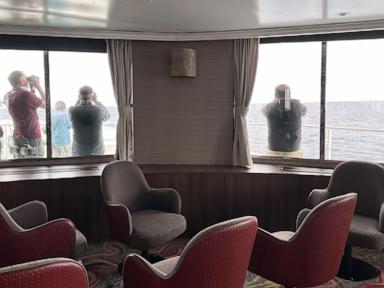
The passengers began to document their own descent. They took photos. Not of the sunsets, but of the trays of cold food left outside their doors. Photos of the hazmat suits moving through the corridors like yellow ghosts. Photos of the empty promenade, where a week ago, children had been chasing bubbles.
These images weren't just records; they were anchors to a world that still made sense.
The Mechanics of the Invisible
To understand why this hit so hard, we have to look at the biology of the threat. Hantavirus isn't a "social" virus. It doesn't want to be on a cruise ship. It wants to be in the lungs of a deer mouse. When it enters a human, it’s a biological dead end. We are accidental hosts, caught in a crossfire between a rodent's immune system and a virus's need to persist.
But "accidental" doesn't mean "gentle."
The virus attacks the endothelium—the thin lining of your blood vessels. It makes them leak. In the lungs, this leakage leads to pulmonary edema. You aren't just sick; you are drowning from the inside out, while sitting in a dry room on a calm sea.
http://googleusercontent.com/image_content/264
On the Sovereign, this meant the difference between life and death was often a matter of who had access to a ventilator. The ship had four. There were sixty people showing symptoms.
The math of tragedy is always simple, and always cruel.
The Sound of Land
The day the ship was finally allowed to dock was not marked by cheering. There were no streamers. There were no families waiting at the pier with "Welcome Home" signs. Instead, there were ambulances. Dozens of them, their lights painting the harbor in rhythmic pulses of red and blue.
Watching the evacuation was like watching a slow-motion funeral procession for a lifestyle. People walked off that ship changed. They didn't look like vacationers. They looked like survivors of a siege.
The "Hantavirus Cruise" became a headline, a blip in the 24-hour news cycle, a set of photos to be clicked through on a lunch break. But for those on board, the story didn't end at the gangway.
It lives on in the way Elias still catches his breath when he climbs a flight of stairs. It lives on in the way a grandmother from Ohio can’t look at a luxury travel brochure without feeling a phantom chill in her chest.
The Cost of the Horizon
We live in an age where we believe we have conquered geography. We fly over mountains and sail over oceans, convinced that our technology has insulated us from the raw, chaotic pulse of the natural world.
The Sovereign reminds us that the barrier is thinner than we think.
We build our glass fortresses. We polish our brass. We filter our air. But the world is small, and the ancient things—the viruses, the bacteria, the tiny hitchhikers—are still here, waiting for a crate of linens or a lapse in a protocol.
The real tragedy wasn't just the illness. It was the realization that even in the heart of a billion-dollar dream, we are never truly alone. The guest who didn't check in is always there, silent and invisible, waiting for the music to stop.
The ocean is vast, and the ship is small, and the air we share is the only thing that truly binds us together.
,jpeg/020/958/142/1280x720.4.jpg)