The Gilded Ghost of Pennsylvania Avenue
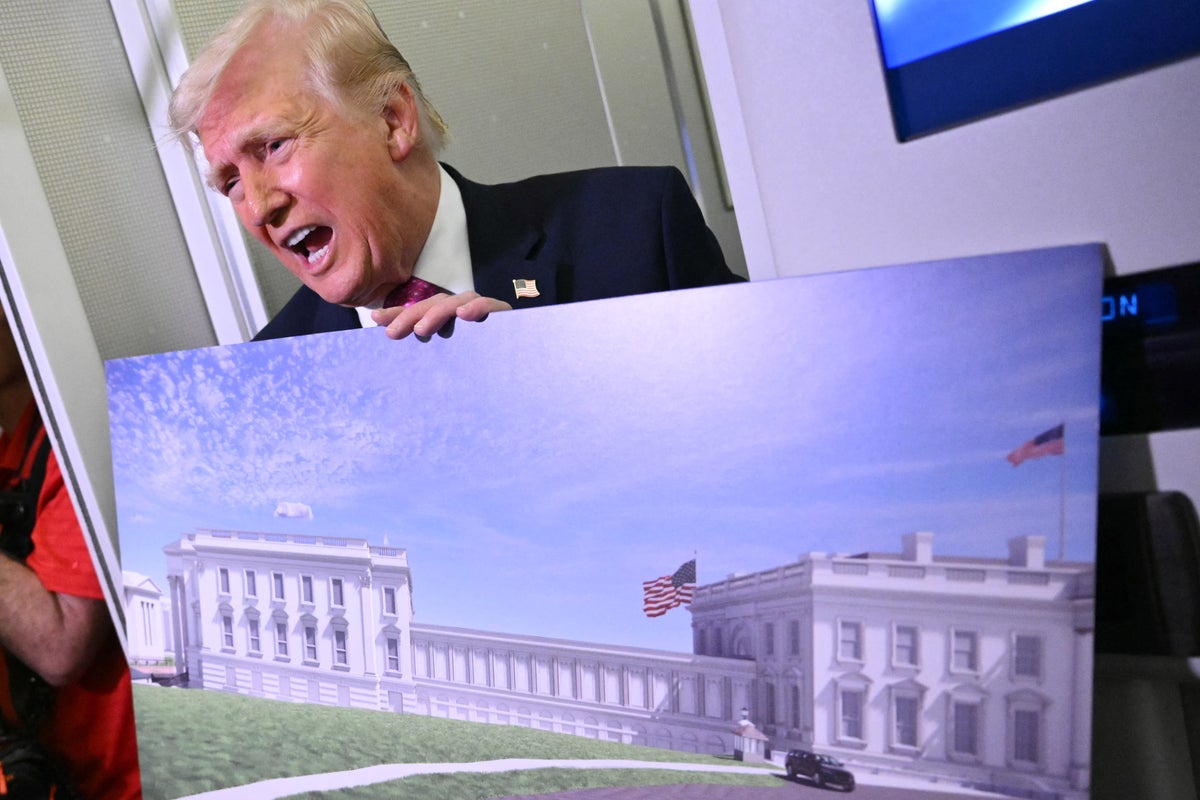
Donald Trump has always viewed the world through the lens of floor plans and finishes. To him, a building is never just a stack of steel and glass; it is a physical manifestation of status, a concrete argument for one’s own importance. For months now, his digital footprint on Truth Social has been dominated by a singular, obsessive architectural vision. He isn't posting about policy white papers or cabinet picks with nearly the same visceral fervor he reserves for a room. He wants a ballroom. Specifically, he wants a massive, high-capacity event space built directly into the fabric of the White House.
The posts come in waves. Late-night bursts of text describe a "grand" and "world-class" space that would supposedly save the government millions in tent rentals. But look past the cost-benefit analysis of party planning. What we are seeing is a man attempting to settle an old score with the limitations of a historical landmark. To Trump, the White House—for all its prestige—is a cramped, "tiny" office building that lacks the cinematic scale of Mar-a-Lago or the soaring atriums of Trump Tower. If you found value in this article, you might want to look at: this related article.
The Problem With History
Historical preservation is often a polite way of telling a developer "no." When you step inside the East Room of the White House, you are standing in a space designed in a different century for a different scale of diplomacy. It is beautiful. It is iconic. It is also, by modern standards of billionaire hospitality, small.
Imagine a hypothetical Chief of Protocol, let’s call her Sarah, tasked with seating 500 world leaders and titans of industry for a state dinner. In the current configuration, Sarah has to deal with "the tent." This is the temporary pavilion erected on the South Lawn, a structure that requires days of labor, climate control systems, and millions of dollars in recurring costs. To a man who built the Taj Mahal in Atlantic City, the very idea of a tent is an insult. It suggests transience. It suggests that the United States of America is "glamping" on its own front lawn because it can't afford a permanent roof. For another angle on this event, see the latest coverage from BBC News.
This is the emotional core of the ballroom blitz. It isn't just about saving money on rentals. It is about the frustration of a builder who feels his "storefront" isn't up to code. He sees the sleek, massive convention centers of modern dictators and the expansive palaces of European monarchs and feels a sense of architectural envy. He wants the White House to compete with the 21st-century aesthetic of "big."
A Digital Blueprint of Desire
The sheer volume of these posts—often dozens in a single week—reveals a specific kind of executive fixation. Most political candidates use their platforms to attack rivals or poll-test slogans. Trump is using his to lobby for a renovation. He frequently compares the proposed space to the greatest ballrooms in the world, arguing that the lack of such a room is a "national embarrassment."
There is a psychological weight to this. For Trump, the ballroom represents a permanent mark. If you pass a bill, a future Congress can repeal it. If you sign an executive order, the next President can pen it away. But if you pour ten thousand tons of concrete and hang a dozen three-ton crystal chandeliers, you have changed the physical reality of the Executive Mansion forever. You have moved the walls.
Consider the logistics of such a project. We aren't talking about a fresh coat of paint in the Lincoln Bedroom. A "grand ballroom" of the scale Trump describes would likely require an underground excavation or a massive addition to the East Wing. It would involve the Secret Service, the National Park Service, and the Commission of Fine Arts. It would be a bureaucratic war. And that, perhaps, is exactly why he is so vocal about it. He is priming his base to see a construction project as a test of national pride.
The Cost of the Crystal
Money is the shield he uses to deflect criticism. By framing the ballroom as a "money-saving" venture, he appeals to the fiscal sensibilities of his followers. He points to the $5 million or $10 million spent on temporary structures and presents a one-time construction cost as a bargain.
But the real cost isn't on the balance sheet. It is in the tension between the White House as a museum and the White House as a seat of power. The building is a living organism, yes, but it is also a symbol of continuity. Every time a President seeks to fundamentally alter its footprint, they are met with the ghosts of the past. When Harry Truman realized the building was literally falling down in the late 1940s, he didn't just renovate; he gutted it. He left only the exterior stone walls standing and rebuilt the interior with a steel frame.
Trump’s ballroom push is a 21st-century echo of that Truman-era ambition, but with a crucial difference. Truman wanted to save the house from collapsing; Trump wants to expand it to match his brand. It is the builder’s itch—the inability to look at a space without thinking about how to make it larger, shinier, and more imposing.
The Invisible Stakes
Why does this matter to the average person? Because the architecture of our institutions dictates how power is exercised. A White House that is a quiet, historical residence encourages a certain type of intimate diplomacy. A White House with a massive, 1,000-person ballroom becomes a different kind of stage. It becomes a theater of spectacle.
In this hypothetical theater, the focus shifts from the private negotiation to the public display. The ballroom becomes a tool for rewarding allies and overawing opponents. It is the ultimate "home-field advantage." If you are a visiting head of state, there is a difference between being invited into a historic parlor and being ushered into a shimmering hall of mirrors designed by your host. The room itself does half the work of intimidation.
The posts on Truth Social aren't just rants; they are the opening salvos of a rebranding campaign. Trump is telling us exactly what he values: scale, permanence, and the ability to host. He is tired of the tent. He is tired of the constraints of 18th-century walls. He wants a space that reflects his version of American greatness—one that is literal, physical, and decorated in 24-karat gold.
The Builder’s Final Word
As the election cycle grinds on, the ballroom remains a recurring theme, a strange architectural obsession nestled between critiques of the border and the economy. It serves as a reminder that for some leaders, the office is a job, but for others, it is a property to be managed and improved.
He looks at the South Lawn and doesn't see grass; he sees a missed opportunity for a foundation. He looks at the East Wing and sees a bottleneck. The "Ballroom Blitz" is the sound of a man who believes that the only way to truly occupy a house is to rebuild it in his own image. The chandeliers are already hanging in his mind. The only question left is whether he will ever get the chance to bolt them to the ceiling.
Every post is a brick. Every "re-truth" is a bucket of mortar. He is building the ballroom one character at a time, long before the first shovel hits the dirt.