The Obsession with Hardware is a Distraction
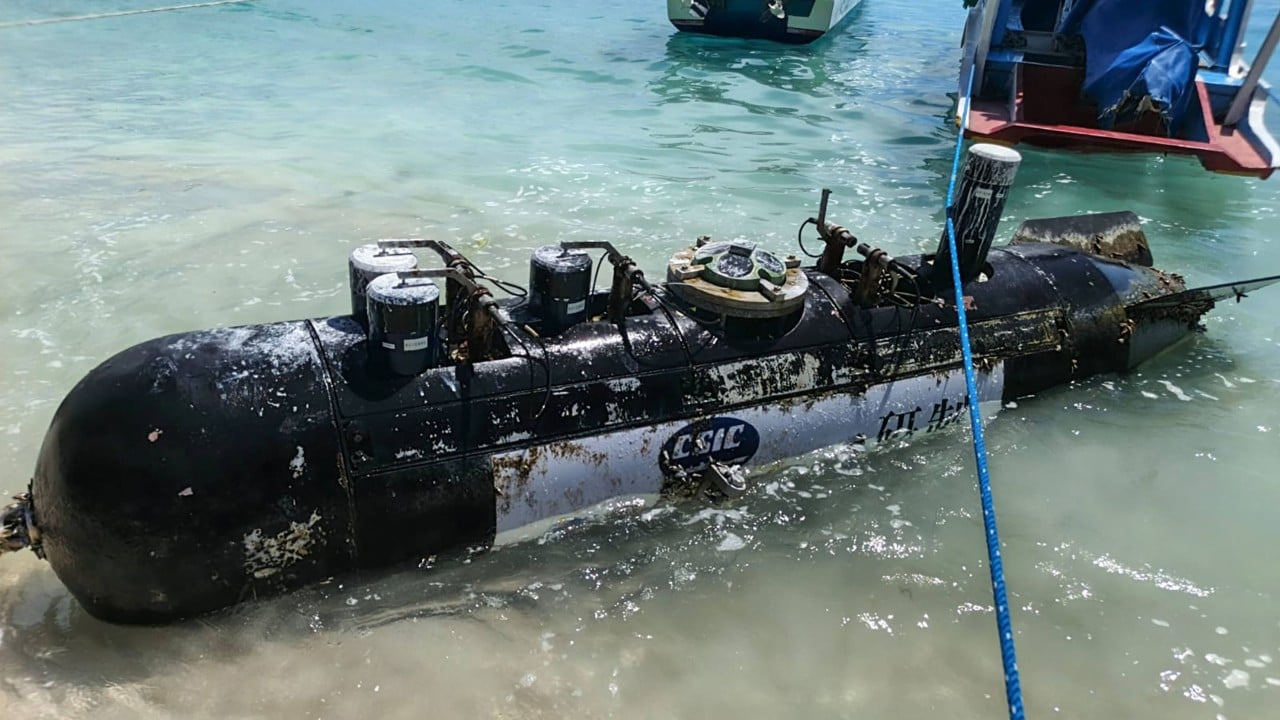
Every few months, a fisherman in the Selayar Islands or the Sunda Strait pulls a sleek, winged cylinder out of the water, and the regional security establishment loses its mind. The headlines write themselves: "Foreign Drones Breach Indonesian Waters" or "Jakarta’s Undersea Blind Spot Exposed." The narrative is tired, predictable, and fundamentally wrong.
The defense community acts as if finding a Chinese Sea Wing (Haiyi) glider is a smoking gun proving Indonesia is defenseless. They demand more attack submarines, more sonar arrays, and more budget for deep-sea interceptors. They are preparing for a 1940s battle in a 2020s data war. You might also find this similar article interesting: The Brazilian Navy MANSUP Obsession is a Masterclass in Sunk Cost Fallacy.
Indonesia doesn't have an "insufficient undersea capability" problem. It has a "misunderstood sovereignty" problem. Chasing every $50,000 autonomous underwater vehicle (AUV) with a multi-million dollar naval response is not a strategy; it’s a slow-motion financial suicide pact.
The Myth of the Stealth Invasion
The panic usually centers on the idea that these gliders are "scouting paths" for Chinese submarines to slip through the Makassar Strait or the Lombok Strait undetected. As reported in detailed articles by Mashable, the implications are notable.
Let's look at the physics. AUVs like the Sea Wing are slow. They move by changing their buoyancy to glide up and down through the water column. They aren't stealthy predators; they are glorified weather balloons that happen to be underwater. They collect salinity, temperature, and oxygen levels.
Yes, this data helps acoustic modeling for submarines. But here is the truth that analysts hate to admit: you cannot stop this data collection in the modern era. The ocean is becoming transparent. Whether it’s via satellite-linked gliders, commercial seabed sensors, or acoustic monitoring arrays disguised as "environmental research," the hydrological profile of the Indonesian archipelagic sea lanes is already out there.
Trying to stop a superpower from mapping the ocean floor with a few patrol boats is like trying to stop a thunderstorm with a flyswatter.
The Submarine Money Pit
The immediate reflex of the "insufficient capability" crowd is to demand a massive expansion of the submarine fleet. Currently, Indonesia operates a handful of Nagapasa-class and Cakra-class boats. The "lazy consensus" says Jakarta needs 12 or more to "secure" its waters.
As someone who has watched defense ministries burn through GDP points on prestige projects, I can tell you: more hulls will not solve this.
- Maintenance is the Silent Killer: A submarine is only a deterrent if it is in the water. Indonesia’s track record with maritime maintenance is patchy at best. Buying a sophisticated fleet from France or South Korea is the easy part. Keeping them operational in high-salinity, tropical waters for thirty years is where the dream dies.
- The Geography Trap: Indonesia’s waters are a nightmare for traditional submarine operations. Shallow transit points and thermal layers make high-end acoustic stealth difficult.
- The Cost-Benefit Math: One Scorpène-class submarine costs roughly $600 million. For that price, you could deploy ten thousand low-cost, disposable sensors and a domestic satellite network that would actually tell you what is happening in your backyard.
Choosing hulls over sensors is choosing ego over intelligence.
Data Sovereignty is the New Maritime Border
If you want to actually "disrupt" the intrusion of foreign AUVs, you don't shoot them. You make their data useless.
The real gap in Indonesia's capability isn't the ability to sink a drone; it’s the ability to dominate the local electromagnetic and acoustic environment. If a foreign glider is transmitting data via a buoy to a satellite, why isn't it being jammed? If it’s recording acoustic signatures, why isn't Jakarta flooding its own strategic choke points with "acoustic noise" that masks the real movement of its assets?
We are obsessed with the physical object—the yellow tube on the beach. We should be obsessed with the packet of data that left that tube three hours before it was found.
The "Research" Fig Leaf
The competitor’s view often laments that these drones are "disguised" as scientific research. This isn't a weakness to be mourned; it’s a blueprint to be copied.
China, the US, and Australia use the "scientific research" label because it provides a legal grey area under UNCLOS (United Nations Convention on the Law of the Sea). Indonesia should stop playing defense and start playing the same game.
Instead of complaining about foreign gliders, Indonesia should be saturating the South China Sea and its own internal waters with thousands of its own "oceanographic" sensors. If you want to know when a foreign actor is in your waters, you don't wait for a fisherman to find a drone. You build a mesh network of low-cost, indigenous tech that makes "stealth" impossible for everyone.
The Hard Truth About Modern Naval Power
We live in an age where a $2,000 aerial drone can sink a billion-dollar cruiser in the Black Sea. The undersea domain is headed the same way.
The traditional naval officers want big, manned platforms because big platforms mean big commands and big budgets. But the future of maritime security in the Indonesian archipelago is small, cheap, and autonomous.
- The Drone Swarm: Instead of one $500 million corvette, build 500 "interceptor" AUVs that can ram or disable intruding gliders.
- The Smart Sea Floor: Invest in fiber-optic hydrophone cables at key choke points. It’s boring. It doesn't look good in a parade. But it works.
- The Cyber Layer: If you find a drone, don't just put it in a museum. Reverse engineer the software and find the command-and-control uplink.
Why We Will Keep Failing
The reason the "insufficient capability" narrative persists is that it serves everyone except the taxpayer. It serves the foreign arms manufacturers who want to sell big-ticket items. It serves the military brass who want to expand their influence. And it serves the politicians who want to look "tough" on sovereignty without actually understanding how 21st-century warfare works.
Every time a Chinese drone is found, the alarmists win. They point at the drone and say, "See? We need more tanks/planes/subs."
They are wrong. The drone isn't a threat. The drone is a symptom of a world where physical borders matter less than data networks.
Indonesia doesn't need to close its "undersea gap" with more steel and diesel. It needs to rethink what a border even is in an era of autonomous machines. Stop trying to catch the ghosts in the water. Start owning the signals that guide them.
Buy the sensors. Build the software. Ignore the shiny hulls.
The ocean is transparent now. Get used to it or get out of the way.