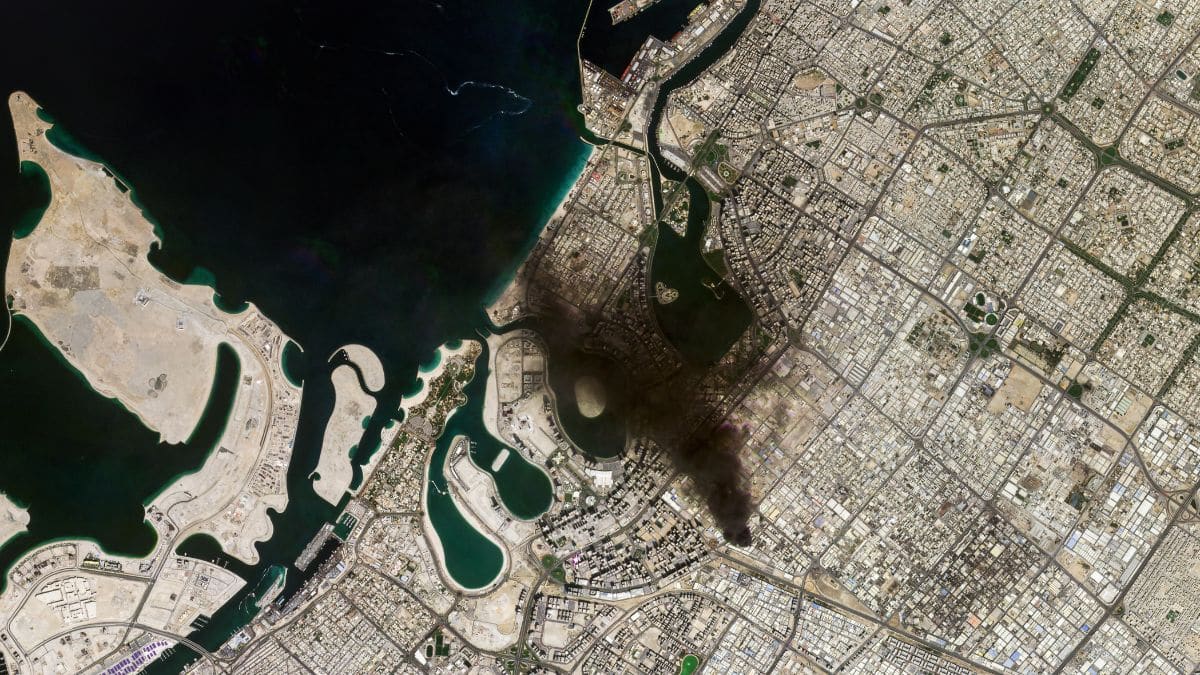
The skyline of Dubai isn't supposed to look like a war zone. For decades, the implicit deal in the Persian Gulf was simple: the U.S. provides the muscle, the Gulf monarchs provide the oil, and everyone stays rich while ignoring the chaos next door. That deal died on February 28, 2026. When the U.S. and Israel launched their decapitation strikes against Tehran, the "neutrality" of Saudi Arabia, the UAE, and Qatar evaporated along with the windows of Zayed International Airport.
If you're wondering whether the Gulf states will join the war, you're asking the wrong question. They're already in it. Between February 28 and March 2, Iran lobbed over 1,000 drones and missiles at its neighbors. They aren't just hitting U.S. bases anymore. They’re hitting luxury hotels, oil refineries, and civilian hubs. The strategic "wait and see" approach from Riyadh and Abu Dhabi is hitting its expiration date. Meanwhile, you can explore other events here: The Calculated Silence Behind the June Strikes on Iran.
The neutrality myth is officially dead
For months leading up to this escalation, the Gulf Cooperation Council (GCC) tried to play both sides. They told Washington they wouldn't allow their airspace to be used for strikes on Iran. They sent diplomats to Tehran to offer olive branches. It was a desperate attempt to keep the "Vision 2030" projects and tourism booms from being scorched.
It didn't work. Iran’s Islamic Revolutionary Guard Corps (IRGC) decided that hosting a U.S. base makes you a target, regardless of whether you gave the "green light" for a strike. To explore the bigger picture, check out the excellent article by TIME.
- The UAE is the front line: Abu Dhabi has already intercepted hundreds of projectiles. The targeting of Dubai International Airport and Al Dhafra Air Base shows Iran is trying to break the UAE’s economy to force them to kick the Americans out.
- Saudi Arabia’s "double game": While Riyadh publicly condemned the strikes, intelligence suggests Mohammed bin Salman has been in frequent contact with the Trump administration. The interception of drones over the Ras Tanura refinery—the world’s largest offshore oil loading facility—was the final straw for the Kingdom.
Why the Gulf will fight back
The standard expert take is that the Gulf states are too fragile for a real war. They have small populations and rely on foreign labor. A few lucky hits on desalination plants could turn Riyadh or Doha into a ghost town in a week. But that's exactly why they might be forced to go on the offensive.
You can't just sit under a missile defense umbrella forever. Systems like the Patriot and THAAD are amazing, but they’re expensive and can be overwhelmed by "saturation attacks." Iran knows this. They’re using cheap drones to bleed the Gulf’s multi-million dollar interceptor stockpiles dry.
If the strikes don't stop this week, expect the UAE and Saudi Air Forces to join the fray. They aren't going to send ground troops into the Iranian mountains—that would be suicide. Instead, they'll use their F-15s and F-35s to help the U.S. dismantle Iran’s coastal missile sites and drone factories. They need to restore deterrence, and you don't do that by just playing goalie.
The Abraham Accords are the new security architecture
The big surprise of 2026 isn't that Iran is aggressive; it's how closely the "Accords" countries are working together. We're seeing real-time intelligence sharing between Israel and the UAE. Bahrain, which hosts the U.S. 5th Fleet, has essentially integrated its radar with the Israeli Defense Forces.
This isn't just about diplomacy anymore. It’s a survival pact. The Gulf states realized that the old U.S. security guarantee is transactional. If they want protection, they have to be part of the solution. This means their "neutrality" was always a polite fiction. When Qatar—long seen as the bridge to Tehran—starts shooting down Iranian Su-24 bombers, as they did on March 2, the bridge is officially burned.
The economic suicide of staying out
Investors are already fleeing. The markets in Dubai and Abu Dhabi took a massive hit the moment the first Iranian drones were intercepted. If the Gulf states stay passive, they look weak. If they look weak, the "safe haven" status that built their modern economies vanishes.
Riyadh knows that if it doesn't act, its ambitious plans for a post-oil future are dead. No one is going to invest in a tech hub that gets buzzed by Iranian Shahed drones every Tuesday. By joining the coalition, they at least get a seat at the table when the new regional order is drawn up.
What happens next
Don't look for a formal declaration of war. That's not how things work in the Middle East. Instead, watch for "coordinated defensive operations" that look suspiciously like offensive strikes.
- Airspace integration: The Gulf states will likely "open" their airspace to U.S. refueling tankers and electronic warfare planes, even if they claim they haven't.
- Targeting the proxies: Expect Saudi-led strikes on Houthi launch sites in Yemen to ramp up. Iran uses the Houthis as a "deniable" way to hit the Kingdom. Riyadh will look to cut that arm off immediately.
- The Strait of Hormuz: If Iran tries to close the Strait, the GCC navies will have no choice but to engage. 20% of the world's oil passes through there. For the Gulf, that’s not a strategic interest—it’s their jugular.
The "nightmare scenario" for the region has arrived. The Gulf states spent a decade trying to prevent this specific war, but now that it's here, they can't afford to lose it.
Keep an eye on the official statements from the GCC emergency meetings. They’re moving from "de-escalation" language to "right to respond" language. That's the diplomatic way of saying the safeties are off. If you're living in or invested in the region, the time for "business as usual" ended four days ago. Prepare for a prolonged conflict where the lines between "defender" and "participant" don't exist anymore.
Check the latest flight advisories for the region before any travel, as airspace closures are now happening with zero warning. If you have assets in the Gulf, look into moving them toward more stable Western markets until the initial "saturation" phase of Iran's retaliation concludes.