The Architecture of a Stuck Mind
Elias lived in a house where the doors had been welded shut. That is how he described his depression to his therapist—not as a sadness, but as a structural failure. For fifteen years, his brain had traveled the same rutted paths. Every thought about his career led to a dead end. Every memory of his father ended in a thicket of guilt.
Our brains are physical objects. They are not ephemeral clouds of "soul" or "spirit." They are three-pound lumps of fatty tissue, electricity, and chemistry. When we get stuck in patterns of trauma or addiction, it isn't just a failure of will. It is a biological fortification. The neural pathways responsible for those dark thoughts become like superhighways—slick, fast, and impossible to exit. Meanwhile, the paths toward joy or novelty grow over with weeds until they disappear entirely.
http://googleusercontent.com/image_content/172
Standard medicine tries to fix this by throwing chemicals at the highway. Selective Serotonin Reuptake Inhibitors (SSRIs) are the workhorses of modern psychiatry. They work for many, but they are subtle. They are like a light drizzle falling on a parched field; they hydrate the soil over weeks and months, hoping to coax a green shoot from the dirt.
But Elias didn't need a drizzle. He needed a tectonic shift.
The Molecular Sledgehammer
A single dose of psilocybin—the active compound in "magic mushrooms"—does something that defies the slow-motion logic of traditional pharmacy. It doesn't just nudge the chemistry. It forces a physical renovation.
To understand this, we have to look at the 5-HT2A receptor. Think of this receptor as a specific lock found in the dense forests of the brain’s cortex. When psilocybin enters the bloodstream, it doesn't just sit in the synapse like an antidepressant. It acts as a master key. It turns the lock and triggers a cascade of protein production.
The most important of these proteins is BDNF, or Brain-Derived Neurotrophic Factor. Scientists often call it "Miracle-Gro" for the brain.
Under the influence of this compound, the brain enters a state of hyper-plasticity. The rigid walls of the "house" begin to soften. The welds on the doors melt away. For a few hours, the brain loses its strictly enforced borders. Areas that haven't spoken to each other in decades—the visual cortex and the emotional centers, for instance—begin a frantic, colorful conversation.
This is the "trip." But the trip is merely the construction noise. The real magic happens in the silence that follows.
The Growth of New Branches
If you look at a neuron under a high-powered microscope before a psychedelic experience, it might look like a winter tree. It has a trunk and some thick branches, but it is sparse. It is efficient, but it is lonely.
Twenty-four hours after a single dose of psilocybin or LSD, that same neuron looks like it has been hit by a sudden, violent spring.
New "dendritic spines" begin to bud. These are tiny protrusions that allow neurons to reach out and touch their neighbors. This process is called spinogenesis. It isn't a metaphor. It is a physical increase in the "gray matter" connectivity of your prefrontal cortex. The brain is literally building new hardware.
Consider the implications. If depression is a rut in a dirt road, the psychedelic experience is a heavy snowfall that fills the rut. Suddenly, you can drive anywhere. You aren't forced into the old, painful grooves. You have the structural capacity to think a new thought.
The Window of Opportunity
Elias sat in a darkened room with a blindfold on, listening to a curated playlist of orchestral music. He wasn't "partying." He was undergoing a controlled biological demolition.
During his journey, he saw his grief as a physical object—a heavy, black stone in his chest. In the heightened state of plasticity, he was able to "pick up" the stone and set it aside. In a normal state, his brain’s rigid hierarchy would have prevented this. His "ego"—the part of the brain called the Default Mode Network—usually acts as a strict border guard, telling him, No, you are a person who carries this stone. This stone is who you are.
But the guard was asleep.
The structural changes—the new spines, the fresh connections—create what researchers call a "critical period." This is a window of time, lasting anywhere from days to weeks, where the brain is as malleable as a child’s. It is a biological do-over.
This is why the "integration" phase of psychedelic therapy is so vital. If you build a thousand new doors but never walk through them, they will eventually shrink back and disappear. The brain is a master of economy; it will not keep hardware it doesn't use.
Elias used those days to talk to his therapist. He used the new connections to forge a different narrative about his father. Because his brain was physically more flexible, his mind could be more forgiving. He wasn't just "feeling better." He was practicing on a new machine.
The Risk of the Open Door
We must be careful. We are talking about rewiring the most complex object in the known universe.
When you increase plasticity, you increase vulnerability. If the brain is a piece of hot wax, it can be molded into a beautiful sculpture, or it can be scarred by a careless thumb. This is why the setting matters. A chaotic environment during this period of physical change can lead to "bad trips" that aren't just scary—they can be encoded into the brain’s new architecture as fresh trauma.
The science is still young. We are learning that these changes happen rapidly—sometimes within hours of ingestion. This is a radical departure from the "chemical imbalance" theory that has dominated medicine for forty years. It suggests that mental health isn't just about having enough of a certain juice in the brain; it’s about the structural integrity of the wiring itself.
The End of the Rut
Six months after his session, Elias wasn't a "new man" in the way a movie might portray it. He still had bad days. He still got frustrated with his job.
But the house was different.
The doors were no longer welded shut. When a dark thought appeared, he noticed it, and he chose a different path. He could see the old ruts in the road, but he no longer fell into them by default.
We used to think the adult brain was a finished product—a statue carved in stone that could only be chipped away by time and decay. We were wrong. We are more like gardens. Even the most neglected, overgrown, and hardened plot of land holds the capacity for a sudden, radical bloom.
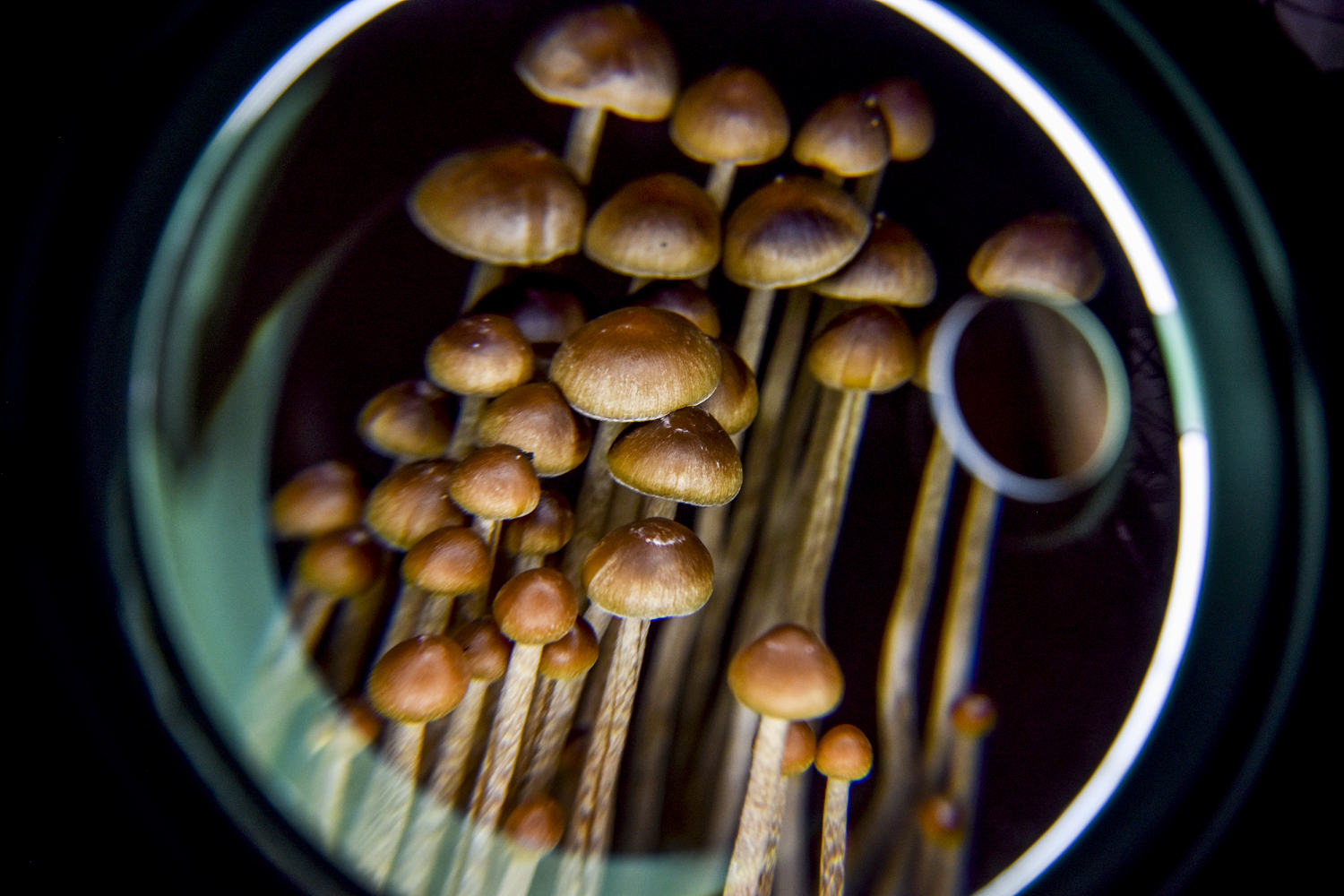
The molecules found in these ancient fungi are simply the gardeners. They arrive with their tools, they break the hardened earth, and they plant the seeds of new connections. The rest is up to us. We have to decide which of those new paths are worth walking, and which ones we will tread until they become the new, healthier highways of our lives.
The brain is not a prison. It is a work in progress. It is a living, breathing, changing landscape that—given the right catalyst—can rewrite its own history in a single, terrifying, beautiful night.
The lights in the laboratory are still on, and the microscopes are revealing a truth we are only beginning to grasp: we are more plastic, more resilient, and more capable of physical rebirth than we ever dared to imagine.