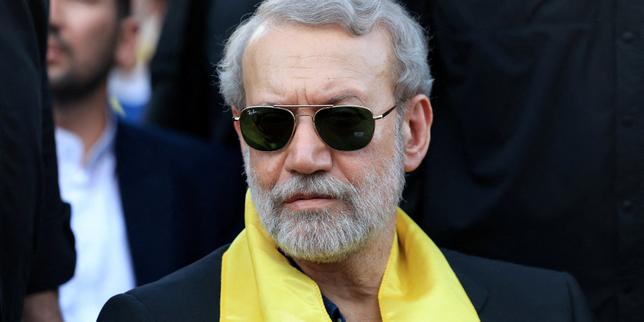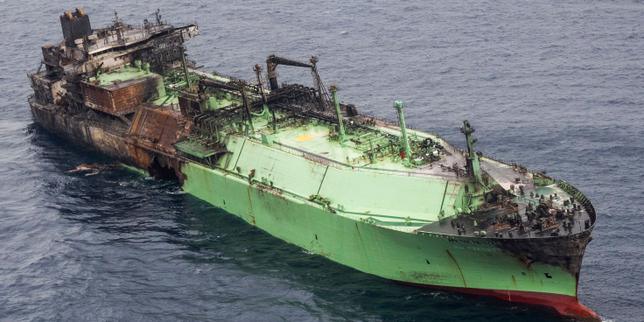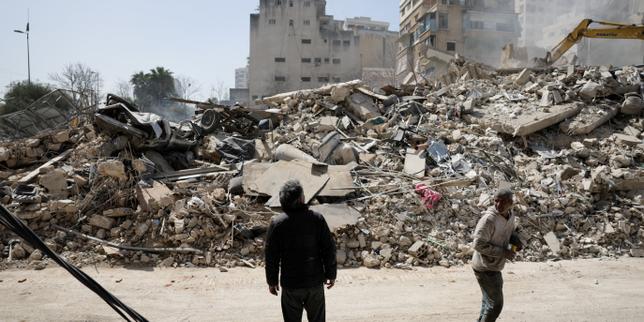
The death of a high-ranking official within the Iranian apparatus is rarely just a matter of biology or bad luck. It is a seismic event that reveals the widening fractures in a system that prides itself on being monolithic. When the state media finally confirms the loss of a figure central to the regime’s survival, the immediate reaction is a carefully choreographed display of mourning. But behind the black banners and the televised weeping, a much more desperate scramble for power is taking place. This is not just about a vacancy in a government office. It is about the accelerating decay of the clerical establishment’s ability to project strength both at home and abroad.
The confirmation of this latest death marks the end of an era for the inner circle that has gripped Tehran since the 1979 revolution. To understand why this matters, one must look past the official titles. In Iran, power does not reside in the visible bureaucracy of the presidency or the parliament. It lives in the shadows, among a handful of men who manage the vast, opaque networks of the Islamic Revolutionary Guard Corps (IRGC) and the office of the Supreme Leader. When one of these pillars falls, the entire roof of the house begins to sag.
The Myth of Seamless Succession
The regime likes to pretend that its leadership is a continuous, unbroken chain. It suggests that when one man dies, another of equal conviction and competence simply steps into the void. This is a lie. The Iranian leadership is currently suffering from a profound talent drought. The first generation of revolutionaries—the men who built this system through blood and purges—is disappearing. Those left behind are often less capable, more prone to infighting, and increasingly disconnected from the reality of a young, angry population.
Replacing a "pillar of power" is not like changing a tire. These individuals manage personal fiefdoms. They control billion-dollar foundations, intelligence cells, and paramilitary groups. These networks are built on personal loyalty, not institutional rules. When the man at the center vanishes, the network often fractures. Subordinates who were once united under a single commander begin to turn on one another, fighting for control of the resources and the influence that have suddenly been left on the table.
The Timing Could Not Be Worse
This death occurs against a backdrop of unprecedented internal and external pressure. The Iranian economy is a ghost of its former self, hollowed out by years of mismanagement and a global sanctions regime that shows no sign of softening. On the streets, the silence is deceptive. The "Woman, Life, Freedom" protests may have been suppressed by brute force, but the underlying resentment has not evaporated. It has merely moved underground, waiting for a moment of perceived weakness at the top.
The loss of a senior strategist at this moment leaves a gap in the regime’s defensive perimeter. For decades, the strategy has been to export conflict—to use proxies in Lebanon, Yemen, and Iraq to keep the fighting far from Tehran’s doorstep. However, this strategy requires a specific kind of management. It requires leaders who have spent decades building relationships with local warlords and militia commanders. You cannot manufacture that kind of institutional memory overnight. The new person stepping into this role will be starting from zero, at a time when Iran’s regional rivals are more emboldened than ever.
Intelligence Failures and the Paranoia of the State
There is also the nagging question of how these high-level figures keep meeting their end. Whether the cause is officially listed as an illness, an accident, or an "unfortunate event," the frequency of these losses points to a terrifying reality for the leadership: they are no longer safe. The security apparatus, once thought to be impenetrable, has been compromised.
Recent years have seen a string of high-profile assassinations and "mysterious" deaths within the Iranian borders. This creates a climate of extreme paranoia. When a top official dies, the first thought among his colleagues isn’t grief; it is suspicion. They wonder if the "natural causes" were aided by a foreign intelligence service or, more dangerously, by a rival faction within their own government. This internal distrust is a slow-acting poison. It prevents effective decision-making because everyone is too busy looking over their shoulder to actually lead.
The Economic Fallout of Political Instability
We often separate geopolitics from the markets, but in Iran, they are inextricably linked. The death of a key power broker sends immediate ripples through the informal economy. The IRGC controls a massive portion of Iran’s GDP, ranging from construction and telecommunications to oil smuggling.
- Market Volatility: The rial often takes a hit when rumors of leadership instability surface.
- Investment Paralysis: Even the few foreign entities willing to skirt sanctions become hesitant when the people they negotiated with are no longer in the picture.
- Resource Hoarding: Factions within the government often begin hoarding hard currency and assets when they sense a shift in the power balance, further starving the general population of resources.
A System Running on Fumes
The fundamental problem for the Iranian state is that it is a gerontocracy trying to manage a twenty-first-century crisis. The men at the top are living in 1979, while the people they rule are living in 2026. This disconnect is terminal. The death of a senior figure highlights the lack of a bridge between these two worlds. There is no "Young Turk" movement within the regime that is capable of modernizing the system without destroying it.
Every time a veteran leader dies, the regime loses a piece of its foundational logic. The survivors double down on repression because it is the only tool they have left. They cannot offer the people economic prosperity, they cannot offer them social freedom, and now, they can barely offer them the illusion of a stable, competent government.
The Shadow of the Supreme Leader
All of this leads back to the most significant vacancy of all. The Supreme Leader is himself an aging man, and the jockeying for his eventual succession is the real story underlying every other political development in Tehran. The death of a "pillar" is often a proxy battle for the ultimate prize.
If the deceased official was a supporter of a certain candidate for the supreme leadership, his death represents a massive blow to that faction. Conversely, it may open a door for a more hardline element to seize even more control. The world watches these funerals not to pay respect, but to see who is standing closest to the coffin. The proximity to the body is a barometer of who is currently winning the internal war.
What Happens When the Center Cannot Hold
The international community often makes the mistake of thinking that the collapse of the Iranian regime would be a clean, swift transition to democracy. History suggests otherwise. When a system built on personal power and paramilitary control starts to lose its key architects, the result is often a messy, protracted fragmentation.
We are seeing the early stages of a transition from a centralized clerical state to a fragmented military state. As the older religious figures die off, the IRGC is moving in to fill the vacuum. They are less interested in the finer points of theology and more interested in the preservation of their own economic interests. This makes the regime more predictable in some ways, but far more violent and desperate in others.
The death of a pillar is not an isolated incident. It is a symptom of a deeper structural failure. The regime is attempting to hold back a tide of history with a wall that is missing more and more bricks every year. You can replace a man, but you cannot replace the legitimacy that died with his generation.
Monitor the movement of IRGC commanders in the provinces over the next forty-eight hours. Their deployments will tell you more about the true state of the regime’s stability than any official statement from Tehran.