The global energy market is currently holding its breath while staring at a twenty-one-mile-wide strip of water that has effectively become a no-go zone. Since the outbreak of hostilities on February 28, the Strait of Hormuz has transformed from a vital trade artery into a graveyard for the "freedom of navigation" doctrine that defined the last eighty years of American naval hegemony.
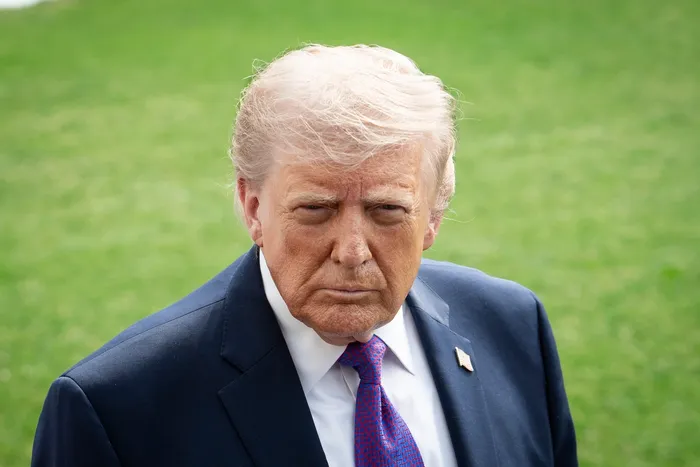
President Donald Trump’s recent demand that China, Japan, South Korea, and the United Kingdom deploy their own warships to escort tankers is not just a tactical request. It is a fundamental shift in the geopolitical contract. For decades, the United States Navy acted as the world’s unpaid security guard for energy transit, a role the current administration is now explicitly resigning. By telling allies and rivals alike that they must protect their "own territory," the White House has signaled that the era of the American maritime umbrella is over.
The immediate result is a paralyzed global economy. Brent crude has surged 40% in two weeks, blowing past $100 per barrel and threatening to upend every inflation forecast for 2026. While the Pentagon claims to have "defeated" Iran’s formal navy and air defenses, the reality on the water suggests a far more complex and dangerous stalemate.
The Mirage of Total Victory
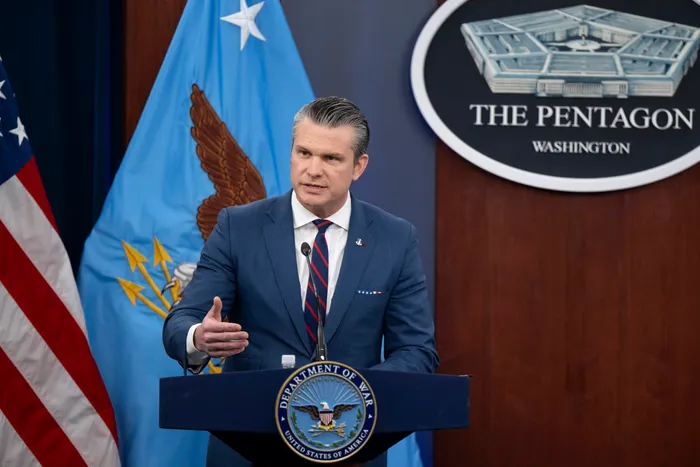
The administration’s rhetoric suggests a war already won. From Air Force One, the President recently claimed that Iran has "no air defense whatsoever" and that their missiles are down to "a low number." On paper, the kinetic destruction of Iran’s conventional assets—including the sinking of the frigate IRIS Dena—has been comprehensive.
However, command of the sea is not the same as control of the water. Iran’s strategy has pivoted to a brutal, asymmetric blockade that does not require a traditional navy. By utilizing shore-based mobile missile batteries, swarms of low-cost "kamikaze" boats, and sophisticated sea mines, Tehran has made the Strait impassable for commercial insurance underwriters.
A modern supertanker is an $80 million asset carrying $200 million in cargo. No shipping line will risk such a loss based on a "mission accomplished" speech when Iranian Revolutionary Guard Corps (IRGC) units are still operating from the rugged, cave-pocked coastline of the Hormuz-Hormozgan province. The US military is currently focused on high-intensity strikes against Iranian territory, leaving a vacuum in the day-to-day policing of the shipping lanes.
Why the Allies Are Hesitating
The request for an international escort coalition has met a wall of diplomatic caution. To understand why, one must look at the legal and domestic constraints of the countries Trump named.
- Japan: Defence Minister Shinjiro Koizumi has already signaled to the Diet that the legal threshold for "maritime security operations" is extremely high. Japan’s pacifist constitution remains a formidable barrier, even with a hawkish administration in Tokyo.
- The United Kingdom: Despite a "special relationship," London is wary. Prime Minister Keir Starmer has reportedly expressed reluctance to put British aircraft carriers into a theater where Iranian "suicide" drones have already proven they can penetrate sophisticated sensor arrays.
- China: This is the ultimate irony of the Trump proposal. China receives nearly 90% of its oil through the Strait. While the US wants Beijing to "police" its own interests, doing so would require a permanent Chinese naval presence in the Persian Gulf—a strategic foothold the US has spent half a century trying to prevent.
The hesitation is also rooted in the "escort" mission itself. Running a convoy through a mine-strewn chokepoint is one of the most difficult naval maneuvers. It requires specialized minesweepers, which are in short supply, and a willingness to accept "collateral" ship losses that could trigger a wider, direct war between the escorting nation and Iran.
The New Face of Persian Gulf Asymmetry
The conflict has entered a phase where traditional military metrics—planes shot down or bunkers destroyed—matter less than the daily "Daily List" of ship positions. Iran’s new Supreme Leader, Ayatollah Mojtaba Khamenei, has been clear: if Iran cannot export its oil due to US strikes on Kharg Island, no one else will export theirs either.
Tehran is leveraging "plausible deniability" through its proxies. While the Houthis in Yemen have remained uncharacteristically quiet during the first two weeks of the war, shipping intelligence suggests they are preparing to reopen the Red Sea front. This would create a dual-chokepoint crisis, effectively cutting off the Suez Canal and the Persian Gulf simultaneously.
The "why" behind the US strategy is increasingly clear. The administration is betting that the economic pain felt by China and Europe will force them to pressure Tehran into a lopsided peace deal. It is a high-stakes gamble using the global economy as a bargaining chip.
The Logistics of a Failed Escort
Even if a coalition forms, the math of maritime protection is unforgiving. Approximately 20 million barrels of oil pass through the Strait daily. To move that volume under escort would require a constant rotation of at least fifty destroyers and frigates.
The US Navy’s current posture is optimized for "strike"—launching Tomahawks and sorties from safe distances. Transitioning to "protection" means putting billion-dollar hulls within range of Iranian shore-based artillery and small-boat ambushes. US Energy Secretary Chris Wright admitted that the Navy won’t even be ready to start these operations for several weeks.
In the meantime, the "ghost fleet" of tankers that used to move sanctioned Iranian oil has vanished. The legitimate market is in shock. Port cities like Dubai and Fujairah are seeing air defenses intercept drones on a nightly basis, driving up the cost of labor and logistics in what were once stable hubs.
The reality of 2026 is that the sea lanes are no longer a global commons. They are contested territory. The President’s demand for allies to "protect their own" is the final admission that the US is no longer willing to underwrite the security of global trade. This isn't just a war in the Middle East; it is the beginning of a fragmented ocean, where every nation must fight for its own energy security or freeze in the dark.
The next forty-eight hours will be telling. If the US proceeds with threatened strikes on "what remains" of Iran’s industrial base, the IRGC will likely deploy its final card: a mass-mining event of the Strait’s deep-water channels. At that point, no amount of naval escorting will matter. You cannot escort a ship through a field of explosives you cannot see.