The Prime-Time Illusion
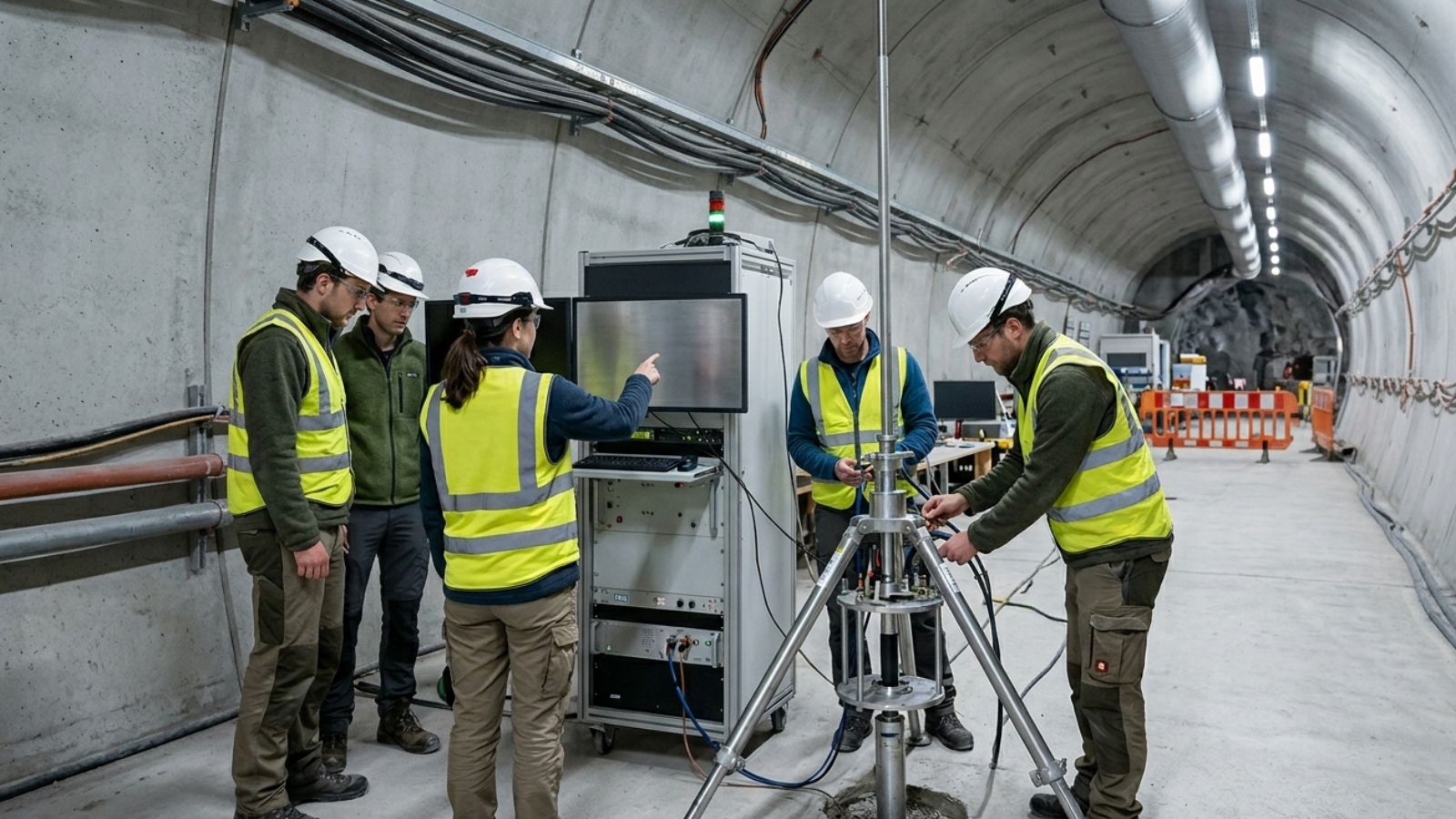
Western media is currently obsessed with a curated glance inside Huawei’s secretive chip laboratories. The narrative is predictably lazy. The consensus suggests that this "leak" or "reveal" is a show of strength meant to intimidate the incoming Trump administration. Most pundits are framing this as a signal that China has already won the semiconductor war despite heavy sanctions.
They are wrong. For a closer look into this area, we recommend: this related article.
If you are seeing it on TV, it is because they want you to see it. Real breakthroughs in 2nm or 3nm lithography happen in sterile silence, not under the warm glow of studio lights for a pre-election news cycle. This isn't a demonstration of technological parity; it is a sophisticated exercise in psychological signaling. Showing off a lab is the ultimate defensive move by a company that knows its current growth trajectory is hitting a hard ceiling.
The Yield Rate Reality Check
Industry analysts love to talk about "capability." They point at a 7nm chip and scream that the sanctions failed. Having spent years analyzing supply chain logistics and fab output, I can tell you that capability is a vanity metric. Efficiency is the only metric that matters. For further background on this topic, detailed reporting is available on Mashable.
Building a handful of advanced chips in a laboratory environment is a high school science project compared to mass-producing them at a 90% yield. When SMIC and Huawei "achieve" these milestones, they often do so using multi-patterning on older DUV (Deep Ultraviolet) machines.
Here is the math the "consensus" ignores:
- ASML EUV Throughput: Roughly 150-200 wafers per hour at high precision.
- Huawei/SMIC Multi-patterning DUV: Requires 3x to 4x the exposures.
- The Result: Costs skyrocket, energy consumption doubles, and the failure rate per wafer makes the chips economically non-viable for anything other than state-subsidized trophies.
By parading these labs on TV, Huawei is trying to shift the conversation away from the fact that they are burning through billions in capital to produce chips that TSMC or Samsung would have considered "low yield" five years ago.
The Trump Strategy Miscalculation
The competitor piece suggests this TV feature is a warning shot for Trump. That fundamentally misunderstands how trade hawks operate. In my experience, showing a hawk that you are "thriving" under pressure does not make them back down; it makes them realize they haven't pressed hard enough yet.
If Huawei truly wanted to de-escalate, they would be emphasizing their pivot to software and cloud services—areas that seem less "threatening" to American hardware hegemony. By leaning into the "secret chip lab" trope, they are handing the next administration a roadmap for exactly which sub-sectors to target next.
Expect the next wave of sanctions to hit the chemicals and gasses required for that very multi-patterning process. Huawei isn't showing off their armor; they are showing the world where the chinks in that armor are.
The Talent Vacuum Nobody Mentions
Everyone talks about the machines. No one talks about the hands running them.
The dirty secret of the semiconductor industry is that it relies on a hyper-mobile, global elite of engineers who move between Eindhoven, Hsinchu, and Santa Clara. By retreating into a nationalist "fortress" model, Huawei is cutting itself off from the global talent pool.
I’ve watched firms try to "in-house" entire scientific ecosystems before. It fails. You cannot innovate in a vacuum. The engineers currently appearing in these propaganda clips are brilliant, but they are working with yesterday's physics. Without access to the global feedback loop of the High-NA EUV community, they are effectively perfecting the art of the vacuum tube while the rest of the world moves to the transistor.
People Also Ask: Is China Self-Sufficient Yet?
The short answer: No.
The honest answer: It depends on how much you are willing to overpay for failure.
If your goal is to put a chip in a phone that works, yes, they are "self-sufficient." If your goal is to lead the AI revolution where compute-per-watt is the only currency that matters, they are falling behind every single day. The "self-sufficiency" narrative is a political comfort blanket, not a technical reality.
Why the "Secret Lab" Reveal is a Weakness
True power is silent.
When Intel or NVIDIA have a genuine architectural leap, they don't invite state television for a tour three days before a major diplomatic shift. They drop a white paper and take over the market. This televised tour is the corporate equivalent of a peacock fanning its feathers. It makes the bird look big, but it also makes it a very easy target for a predator.
Huawei is currently caught in a cycle of "patriotic consumption." Chinese consumers are buying the hardware because of the brand's resilience. But that sentiment has an expiration date. Eventually, the performance gap between a sanctioned Kirin processor and a global Snapdragon or A-series chip becomes too wide to ignore, regardless of how many flags you wave.
The Actionable Truth for Investors and Policy Makers
Stop looking at the laboratory floor and start looking at the shipping docks.
- Monitor the precursors: If the flow of photoresist and specialized etching gases from Japan and Germany tightens, these labs become very expensive museums.
- Ignore the "leak" culture: Secret labs aren't leaked; they are marketed.
- Focus on the 28nm floor: The real threat isn't Huawei making 5nm chips for high-end phones. The threat is them cornering the market on the "boring" 28nm and 45nm chips that run every car, microwave, and medical device on earth.
While the media is distracted by the shiny, high-end "secret labs," the real industrial war is being won in the legacy chip space. Huawei knows this. They are using the prime-time TV spot as a decoy. They want the West to stay obsessed with the high-end "glamour" chips while they build an unshakeable foundation in the foundational silicon that the modern world actually runs on.
The West is playing a game of "who has the fastest CPU." China is playing a game of "who controls the most sockets."
If you’re watching the TV special, you’re looking at the wrong map.
Stop falling for the theater. The most dangerous labs are the ones they’ll never show you—not because they’re advanced, but because they’re already boringly, profitably, and ubiquitously everywhere.
Burn the press release. Watch the supply chain.