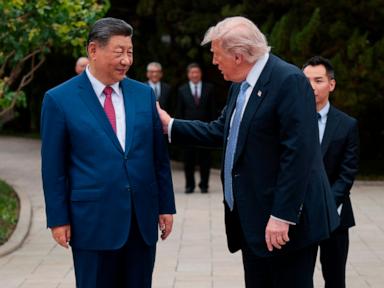
Washington is celebrating a diplomatic victory that exists largely on paper. Following high-stakes talks in Beijing, US Trade Representative Jamieson Greer announced that President Donald Trump secured a firm commitment from Chinese President Xi Jinping that China will not provide material support to Iran. The declaration comes at a critical juncture, with regional conflict threatening global energy corridors and the vital Strait of Hormuz remaining stubbornly closed to regular commerce.
But a closer look at the mechanics of Sino-Iranian trade reveals that this diplomatic breakthrough changes very little on the water.
While Greer assured the public that Beijing is acting in a very pragmatic manner, the reality of the global energy market is that China has already constructed a parallel, sanctions-proof infrastructure that allows it to absorb Iranian crude without technically violating bilateral agreements with the West. The commitment not to provide material support is a carefully worded diplomatic escape hatch. It allows Beijing to maintain strategic stability with Washington while its independent commercial networks continue to bankroll Tehran.
The Shell Game of Technical Compliance
When a superpower promises not to provide material support, the definition of support becomes the ultimate battleground.
For Washington, the phrase implies a halt to the flow of dual-use technologies, missile components, and financial lifelines to the Islamic Revolutionary Guard Corps. For Beijing, the interpretation is legalistic and highly restrictive. State-owned enterprises and central government agencies will not directly transfer weapons or overt military aid to Iranian entities.
The trade of millions of barrels of crude oil, however, does not pass through these official channels. Instead, it relies on a vast, decentralized ecosystem of independent refiners, offshore currency exchanges, and ghost tankers.
Just days before the Trump-Xi summit, the US Treasury Department blacklisted a network of companies based in Hong Kong, the United Arab Emirates, and Oman, all accused of facilitating Iranian oil shipments to China. Among the targets was the Qingdao Haiye Oil Terminal, a mainland facility that has processed tens of millions of barrels of sanctioned crude. The Treasury noted that these networks utilize sophisticated evasion schemes, accepting cargo via illicit ship-to-ship transfers from a shadow fleet that routinely deactivates tracking transponders.
By shifting the logistics to private entities, third-party logistics firms, and localized banks, Beijing can claim perfect compliance at the state level. The central government does not provide material support. Private, disposable front companies do. When Washington identifies and sanctions one of these entities, another rises in its place within forty-eight hours, leaving the underlying trade volume entirely untouched.
The Independent Refiner Lifeline
To understand why the American diplomatic leverage is failing to bite, one must look at China's independent refining sector, known locally as teapots. These small-scale, privately owned refineries clustered predominantly in Shandong province are insulated from international financial pressure.
- No US Dollar Exposure: Unlike state-owned giants like Sinopec or PetroChina, these independent refiners do not operate retail gas stations in Western-aligned nations, nor do they rely on the US dollar clearing system. They settle transactions exclusively in Chinese yuan or through barter arrangements.
- Domestic Isolation: Their product output is consumed entirely within the domestic Chinese market. They have no assets abroad that Western regulators can freeze, making the threat of secondary US sanctions functionally meaningless.
- Deep Discounts: Iranian crude sells at a steep discount compared to global benchmarks like Brent. For a teapot refinery operating on razor-thin margins, this cheap oil is an economic necessity that outweighs any diplomatic warnings issued from Washington.
Treasury Secretary Scott Bessent has promised that the administration's policy of economic fury will continue to target these back-channel financial networks. Yet, the sheer volume of capital moving through these avenues makes enforcement an endless game of whack-a-mole. The three Iranian currency exchange houses recently sanctioned by the US process billions of dollars annually. They convert oil revenues into usable currency right under the nose of global regulators by using local regional banks that do not participate in the SWIFT network.
The Strategic Silence on Tariffs
The diplomatic choreography in Beijing revealed a telling asymmetry in what the two nations prioritize. While Greer and the American delegation focused heavily on securing geopolitical promises regarding Iran and the Strait of Hormuz, the massive elephant in the room—tariffs—was conspicuously left off the main stage.
Trump informed reporters on his return flight that the topic of trade duties did not arise during his direct conversations with Xi. Greer later clarified that trade negotiations did occur, but only at the staff level, involving himself and Secretary Bessent working with Chinese counterparts to manage specific disputes. This segregation of duties allowed both leaders to claim a frictionless summit, but it exposed the leverage mismatch.
Washington chose not to use its ultimate economic weapon—the threat of sweeping new tariffs—to force a verifiable halt to Chinese imports of Iranian energy.
Instead, the US accepted non-confrontational concessions. China agreed to resume imports from several American meat-exporting facilities, review specific biotechnology trades, and move forward with the purchase of 200 Boeing aircraft. These are traditional trade wins that provide immediate political capital back home, but they do little to alter the strategic alignment between Beijing and Tehran.
China's appetite for Iranian oil is driven by an underlying structural reality. Beijing imports roughly seventy percent of its crude oil, and maintaining a diversified portfolio of suppliers—especially those alienated from the Western financial system—is a matter of national security. A compliant Iran ensures that a steady portion of China's energy supply remains immune to American maritime blockades or financial interdiction.
The Strait of Hormuz Calculus
The limits of American diplomacy are nowhere more evident than in the ongoing crisis surrounding the Strait of Hormuz. The choke point is vital for global energy supply, and its disruption has sent ripples through international markets.
Greer conceded that the United States did not explicitly ask China to deploy its navy or take direct military action to reopen the strait. The American calculation is that while Beijing has a clear economic interest in free navigation, Washington has no desire to facilitate joint military operations with the People's Liberation Army Navy in the Middle East.
This hands-off approach suits Beijing perfectly. China can reap the benefits of any American security umbrella that eventually clears the shipping lanes without investing its own military capital or damaging its carefully cultivated relationship with Tehran.
The commitment secured by the Trump administration is not an agreement to alter Chinese foreign policy. It is an agreement to manage appearances. China will continue to offer diplomatic platitudes to Washington, sign major purchase agreements for American agricultural and aerospace goods, and praise the concept of strategic stability. Simultaneously, the dark fleet will keep sailing to Shandong, the currency desks in Hong Kong will keep clearing yuan-denominated oil contracts, and the financial baseline of the Iranian state will remain secure. Washington has bought a promise, but Beijing kept the oil flowing.