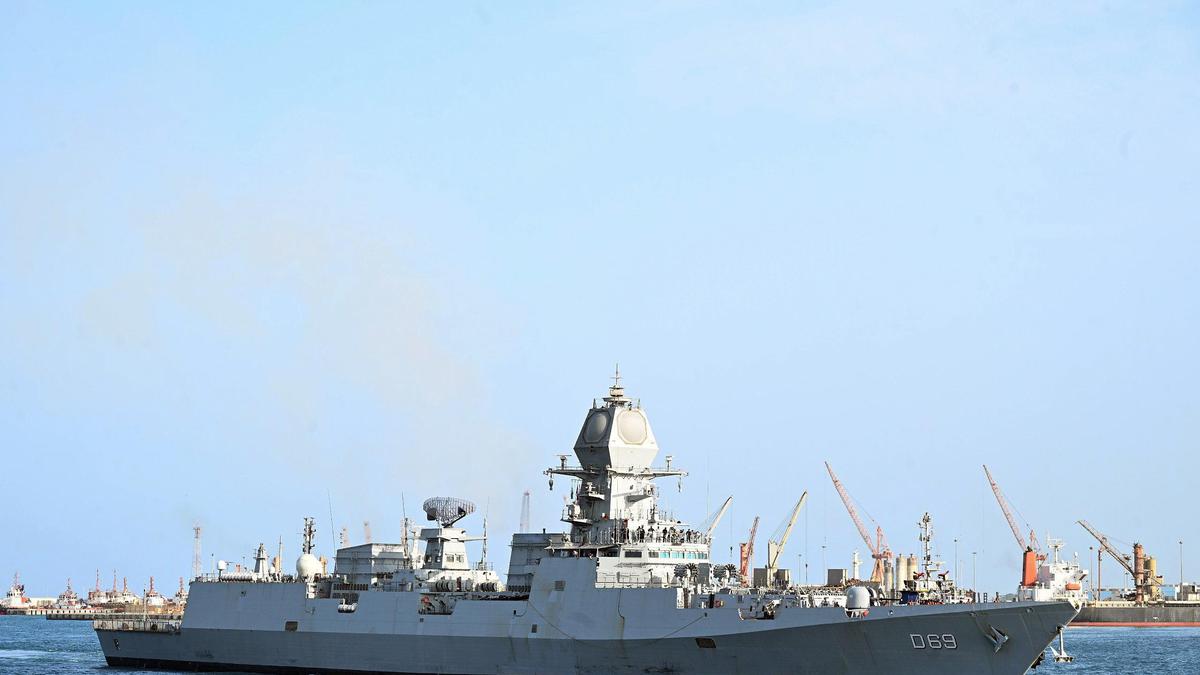
The Indian Navy has quietly transitioned its presence in the Gulf from routine patrols to a high-readiness posture for Non-combatant Evacuation Operations (NEO). While official channels often frame these deployments through the lens of maritime security and anti-piracy, the underlying reality is a calculated preparation for a large-scale humanitarian crisis. With over 8.5 million Indian nationals living and working across the Gulf Cooperation Council (GCC) countries, the stakes are not merely diplomatic. They are existential. New Delhi is no longer waiting for a crisis to break before moving its chess pieces; it is now keeping the board permanently set.
This shift in strategy reflects a hard-learned lesson from past decades. The 1990 airlift from Kuwait remains the gold standard of civilian evacuation, but the modern Middle East is a far more volatile theater. A conflict today would not offer the luxury of a slow-motion diplomatic buildup. It would be fast, kinetic, and digitally chaotic. By positioning frontline destroyers and frigates within striking distance of key ports, the Indian Ministry of Defence is signaling that the era of "reactive rescue" is over. This is the era of the standing humanitarian bridge.
The Logistics of a Million Person Exodus
Planning for a mass evacuation is a nightmare of math and physics. If a regional conflict were to close major international airports in Riyadh, Dubai, or Doha, the burden of extraction falls entirely on the sea lanes. The Indian Navy’s current deployment strategy focuses on maintaining a "persistent presence" near the Strait of Hormuz and the Bab-el-Mandeb. These are the world’s most sensitive choke points. If they close, the global economy shudders, but for millions of Indian workers, a closure means being trapped in a combat zone.
The ships currently on standby are not just platforms for missiles and sensors. They are mobile command centers capable of managing complex ship-to-shore movements. Modern Indian warships like the Kolkata-class destroyers or the Talwar-class frigates are designed with modularity in mind. They can provide emergency medical facilities, desalinated water, and secure communications in environments where local infrastructure has collapsed.
The real challenge is scale. No navy in the world can evacuate 8 million people. The "Humanitarian Assistance and Disaster Relief" (HADR) protocols currently being exercised focus on a tiered extraction model. The Navy secures the ports and provides the initial lift to safer hubs like Salalah in Oman or Djibouti, while the Air Force and commercial carriers handle the long-haul "air bridge" back to the mainland. It is a relay race where any dropped baton results in a catastrophe.
The Role of Integrated Command
Success in these operations depends on the "Bridges of Friendship" policy, which has seen India ink logistics sharing agreements with several regional powers. The most critical is the access to the Duqm port in Oman.
- Strategic Depth: Duqm allows Indian ships to refuel and resupply outside the immediate volatility of the Persian Gulf.
- Rapid Response: It shortens the transit time for ships moving from the Western Fleet in Mumbai to the theater of operations.
- Medical Triage: The port serves as a staging ground for field hospitals, ensuring that injured or sick evacuees are stabilized before the flight home.
Why the Gulf Infrastructure is No Longer Enough
For years, the working assumption was that host nations would facilitate the departure of foreign workers during a crisis. That assumption is dying. The nature of modern warfare—specifically the use of long-range drones and precision-guided missiles—means that civilian infrastructure is often the first thing to go dark. When the power grids fail and the desalination plants stop pumping, a city like Dubai or Kuwait City becomes uninhabitable within forty-eight hours.
India’s analysts are looking closely at the 2015 Operation Raahat in Yemen. In that instance, the Indian Navy sent the INS Sumitra into the port of Aden while it was under fire. It was a high-stakes gamble that paid off, but it highlighted a terrifying gap: the lack of real-time intelligence on ground-level movements of civilians.
Today, the "standby" status of Indian warships includes a heavy emphasis on Network Centric Warfare. The ships are linked to the GSAT-7 series of communication satellites, providing a dedicated "eye in the sky" to track the movement of displaced populations. They aren't just looking for pirates; they are looking for the buses and convoys carrying Indian citizens toward the coast.
The Intelligence Gap
The biggest threat to a successful humanitarian operation isn't a direct attack on a warship. It is misinformation. In the age of social media, a single viral rumor can send a panicked crowd of 100,000 people toward a pier that only has the capacity for 1,000.
To counter this, the Navy has integrated "Information Officers" into the mission profile of ships on Gulf standby. These teams are tasked with monitoring local digital traffic and pushing out verified instructions via encrypted and open channels. The goal is to manage the flow of people long before they reach the gangplank. If the crowd becomes unmanageable, the mission shifts from a rescue to a riot control scenario, something no commander wants to face during a humanitarian crisis.
The Hidden Cost of Naval Diplomacy
Keeping a flotilla on high alert in the Gulf is an expensive endeavor. It isn't just the fuel or the wear and tear on the hulls; it is the opportunity cost. Every destroyer sitting off the coast of Oman is a destroyer that isn't patrolling the Malacca Strait or monitoring Chinese submarine activity in the Bay of Bengal.
The Indian government has made a calculated decision that the domestic political fallout of a failed evacuation far outweighs the risks of a reduced presence in the Eastern Indian Ocean. The "Indian Diaspora" is a potent political force. Their safety is a core pillar of the current administration’s foreign policy. This creates a unique pressure on the Navy: they are being used as a tool of domestic reassurance as much as a tool of international deterrence.
China's Growing Shadow
India is also looking over its shoulder. The People’s Liberation Army Navy (PLAN) has been aggressively expanding its footprint in the region, centered around its base in Djibouti. If a regional crisis erupts, China will also be looking to evacuate its citizens.
This creates a crowded and dangerous operational environment. Two rival navies, both trying to conduct high-stakes humanitarian missions in the same narrow corridors, increases the risk of accidental friction. The Indian Navy’s "standby" status is partly about staking a claim to the maritime space—ensuring that when the time comes, it is New Delhi, not Beijing, that controls the tempo of operations in the Northern Arabian Sea.
Technical Superiority in Hostile Waters
The vessels currently deployed are equipped with advanced electronic warfare (EW) suites. This is critical because a humanitarian mission in the Gulf will likely take place under a "contested" sky. Even if India is not a party to the conflict, its ships must be able to defend themselves against stray missiles or drone swarms launched by non-state actors.
The Barak-8 surface-to-air missile system, a joint venture between India and Israel, provides a 70-kilometer "bubble" of protection around these ships. This allows them to operate close to shore, providing a protective umbrella for the merchant vessels and ferries that would be pressed into service for a mass evacuation. Without this technical edge, a humanitarian mission is just a sitting duck.
The Problem of "Dark" Ships
In a real-world crisis, the Navy would likely seize or charter commercial "ships of opportunity." However, many of these vessels lack the communication hardware to integrate with naval command. The current standby protocols include the pre-positioning of "fly-away" kits—portable communication and GPS packages that can be dropped onto a civilian tanker or cargo ship to bring it into the Navy’s tactical network.
The Economic Reality of the Arabian Sea
The Gulf isn't just a place where Indians work; it is the artery for India’s energy security. A humanitarian crisis that necessitates a naval evacuation would almost certainly coincide with a spike in oil prices and a threat to tanker traffic.
The Indian Navy’s mission is therefore bifurcated. It must protect the "human capital" (the workers) and the "energy capital" (the tankers) simultaneously. This requires a level of coordination between the Ministry of External Affairs, the Ministry of Shipping, and the Naval Headquarters that has historically been difficult to achieve. The current high-alert status suggests that the "silo" mentality is finally being broken down in favor of a unified maritime strategy.
Future Proofing the Fleet
Looking forward, the Navy is pushing for more Landing Platform Docks (LPDs). While destroyers are good for protection, they are terrible for moving people. An LPD can carry hundreds of troops, multiple helicopters, and thousands of tons of supplies. It can also dock smaller landing craft that can reach shallow beaches where large ships cannot go.
Until India expands its LPD fleet, the destroyers and frigates on standby are essentially the "first responders." They arrive to secure the area, provide immediate aid, and wait for the heavy lifters to arrive. It is a precarious way to run an evacuation, relying on speed and agility rather than raw capacity.
The Hard Truth of Maritime Rescues
No matter how many ships are on standby, a total evacuation of the Gulf is impossible. The geography is too vast, the numbers are too high, and the timelines are too short. The Navy knows this. The government knows this.
The current deployment is about mitigation and triage. It is about ensuring that the most vulnerable populations in the most dangerous zones have a way out. It is about maintaining a visible presence to prevent panic and to remind regional actors that India has the "reach" to protect its interests.
The ships are in the Gulf because the world is getting louder and more unpredictable. The quietude of the "peaceful" Arabian Sea is a ghost of the past. By keeping its warships on a permanent humanitarian footing, India is admitting that the next crisis isn't a matter of "if," but "when." The focus now is on the "how," and the "how" is a massive, coordinated, and technologically sophisticated bridge of steel across the water.
The ships will remain. The crews will continue their drills. The satellites will keep their sensors fixed on the ports of the Gulf. In the theater of modern maritime strategy, being "on standby" is the only way to ensure that when the curtain rises on the next conflict, the ending isn't a tragedy for millions of people.
Pay close attention to the movements of the Western Fleet over the next six months. The frequency of port calls in Oman and the UAE will tell you exactly how high the temperature is rising in the diplomatic corridors of New Delhi.


