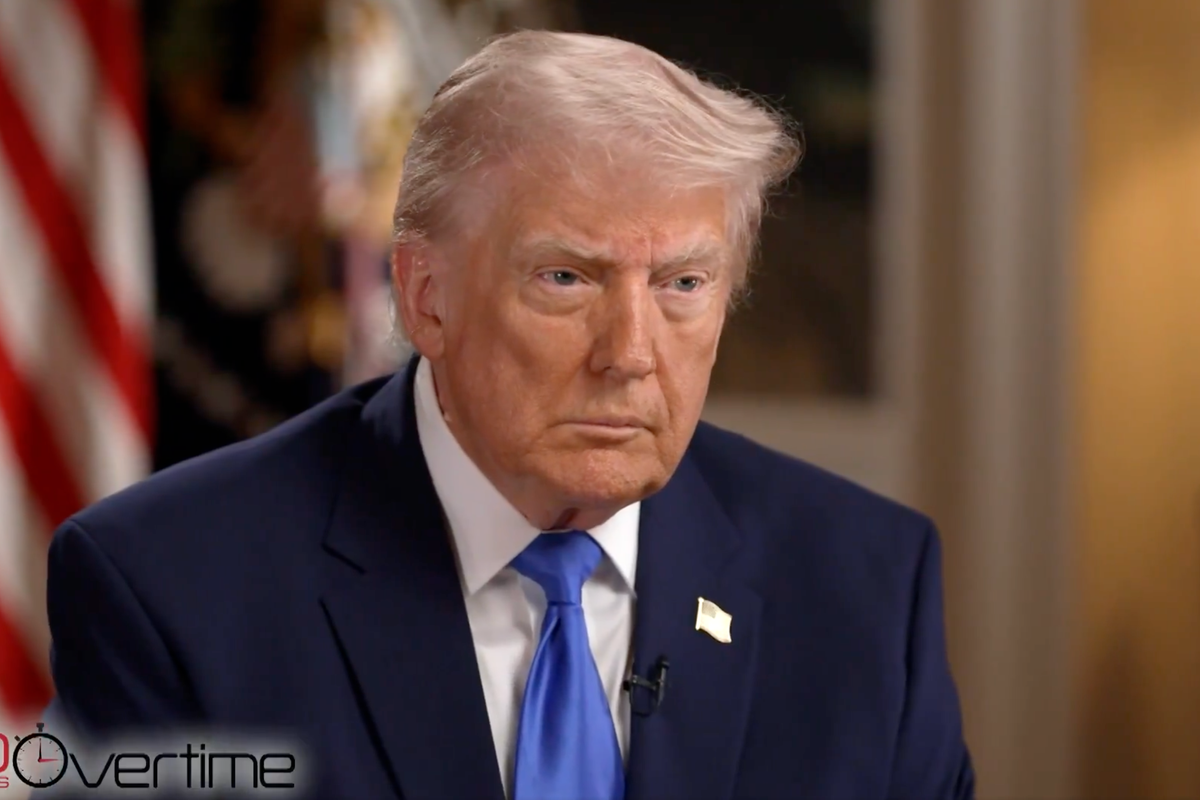
The proliferation of "staged" narratives following high-stakes political violence is not a statistical anomaly or a simple byproduct of partisan malice; it is a predictable response to the lag between a catastrophic event and the release of verified forensic data. When a chaotic event—such as the shooting at the Correspondents’ Dinner—occurs, an "information vacuum" is created. In this high-entropy state, the human cognitive architecture prioritizes pattern recognition over evidence, filling gaps with familiar frameworks to reduce psychological dissonance. Donald Trump’s public condemnation of these conspiracy theories serves as a critical case study in the management of narrative contagion and the limits of institutional trust.
The Architecture of Narrative Contagion
The rapid ascent of "staged" trends on social media platforms reveals three structural vulnerabilities in the modern information ecosystem. These pillars support the rapid scaling of skepticism before official investigations can establish a baseline of facts.
- Asymmetric Information Velocity: Raw footage and eyewitness accounts travel at the speed of fiber optics, whereas investigative verification operates on a timeline of days or weeks. This delta allows speculative narratives to achieve "first-mover advantage" in the mental models of the public.
- The Incentive Structure of Algorithmic Amplification: Social media algorithms are tuned for engagement, not accuracy. Content that evokes high-arousal emotions—outrage, suspicion, or fear—receives a disproportionate share of the "digital shelf space." A post claiming an event is a "false flag" generates significantly more interaction than a post stating that facts are currently being gathered.
- Confirmation Bias as a Cognitive Shortcut: For individuals with deep-seated distrust of state institutions or political opponents, the "staged" narrative functions as a utility. It resolves the cognitive tension of a complex event by folding it into a pre-existing worldview where the "other" is always the architect of deception.
The Calculus of Political Denunciation
Donald Trump’s decision to aggressively "slam" these theories represents a strategic pivot designed to protect political capital. By distancing himself from the fringe elements of his own base, he executes a two-fold maneuver: maintaining credibility with moderate voters who are repelled by extreme conspiracism and preventing the opposition from successfully tethering his brand to radical misinformation.
The "cost function" of ignoring these theories is high. If a political leader remains silent while their supporters circulate debunked claims, the silence is interpreted as tacit endorsement. This creates a liability that can be exploited by adversaries to frame the leader as a threat to objective reality. By intervening, Trump attempts to re-establish the "Guardrails of Discourse," signaling that certain narratives are too volatile even for the populist arena.
Forensic Reality vs. Perceptual Processing
The divergence between what is seen on a compressed, low-resolution social media clip and what occurs in a physical, 360-degree environment is the primary engine of the "staged" theory.
- The Perspective Distortion: Smartphone cameras provide a narrow field of view. Viewers miss the peripheral activity—security details moving, the trajectory of missed shots, or the reaction of the crowd behind the lens. This "tunnel vision" allows observers to claim things "look fake" because they lack the full spatial context of the scene.
- The Acoustic Lag: Sound travels slower than light. In large venues like those hosting a Correspondents’ Dinner, the synchronization of a muzzle flash and the report of a rifle can appear "off" to a remote viewer, leading to claims of audio manipulation or pyrotechnic "squibs."
- Biological Stress Responses: Skeptics often point to the "unusual" behavior of victims or targets—such as a lack of immediate panic or a specific physical stance—as evidence of acting. This ignores the physiological reality of the startle response and the "freeze" state of the sympathetic nervous system. Human behavior under extreme stress rarely aligns with the polished, cinematic depictions of violence that the public uses as a reference point.
The Institutional Trust Deficit
The "staged" trend is a symptom of a broader "Trust Decay Constant." When the public perceives that traditional gatekeepers—media, government agencies, and tech platforms—have previously misled them, the threshold for believing a conspiracy theory drops significantly.
The current environment operates under a "Verification Tax." To convince a skeptical public of the truth, institutions must provide a level of transparency and data density that far exceeds what was required twenty years ago. Every redacted line in a report or delayed press conference is treated as a "signal" of cover-up, regardless of legitimate security concerns.
This skepticism creates a feedback loop. As institutions become more defensive and secretive to avoid being misinterpreted, the public becomes more suspicious of the secrecy. The resulting friction slows down the stabilization of the national psyche following a crisis.
Narrative Arbitrage and State Actors
Beyond domestic skepticism, the "staged" narrative is a prime asset for foreign intelligence services. Adversarial actors engage in "narrative arbitrage," taking a small, organic kernel of doubt and using bot networks to inflate its prominence. The goal is not necessarily to make people believe the event was fake, but to induce a state of "epistemic exhaustion" where the average citizen decides that the truth is unknowable.
When the truth becomes a matter of opinion, the social contract begins to fray. Logic frameworks suggest that the only way to counter this is through "Pre-bunking"—educating the public on the tactics of misinformation before an event occurs—rather than trying to "de-bunk" a theory once it has already gone viral.
Trump’s intervention is an attempt to manually reset the narrative, but it highlights the fragility of a system where the word of a single individual carries more weight than the collective findings of investigative bodies. This reliance on "Charismatic Authority" over "Legal-Rational Authority" (as defined by Max Weber) indicates a shift in how truth is validated in the 21st century.
Systematic Deconstruction of Misinformation Nodes
To understand how a "staged" theory gains traction, one must analyze the specific nodes through which it passes.
- The Influencer Node: High-reach accounts that "just ask questions." They avoid direct claims to maintain plausible deniability while seeding doubt.
- The "Expert" Node: Individuals with tangentially related credentials (e.g., an ex-police officer from a different jurisdiction) who provide a veneer of technical legitimacy to speculative claims.
- The Aggregator Node: Platforms or forums that compile "anomalies"—stilled frames, looped gifs, and out-of-context quotes—into a cohesive, albeit flawed, dossier of "evidence."
Each of these nodes adds a layer of "social proof," making the theory appear more robust than it is. The correction of this requires a multi-layered response that addresses the technical, psychological, and political drivers of the misinformation.
The primary bottleneck in resolving these crises is the "Latency of Truth." Until forensic evidence can be processed and communicated with the same friction-less speed as a viral tweet, the "staged" narrative will remain a permanent feature of the political landscape.
Leaders must adopt a "Radical Transparency" model. This involves releasing raw, unedited data streams as quickly as possible, even if the data is incomplete. The risk of providing a "messy" truth is lower than the risk of allowing a "polished" lie to fill the void. The strategy for the next cycle of political communication must prioritize the hardening of information infrastructure against speculative attacks by treating narrative defense as a core component of national security.
Stop treating conspiracy theories as a fringe intellectual failure. Start treating them as a predictable output of a high-speed, low-trust information system. The move is to accelerate the production of verifiable facts to outpace the decay of public consensus. Failure to close this gap ensures that every subsequent national trauma will be met not with collective mourning, but with a digital forensic civil war.