The lights are going out across Havana, and this time, the cause is not a failing grid or a seasonal hurricane. It is a deliberate, precision-engineered squeeze on the island’s jugular. On May 1, 2026, the Trump administration escalated its "maximum pressure" campaign by signing a sweeping executive order targeting the remaining pillars of the Cuban economy: energy, mining, and financial services. By broadening the definition of those who "operate in" these sectors to include virtually any entity facilitating trade with the island, Washington has effectively moved from a trade embargo to a total fuel blockade.
Cuban Foreign Minister Bruno Rodriguez has termed this "collective punishment." In the world of international diplomacy, that phrase is usually reserved for war crimes. Here, it describes a policy intended to starve a regime of resources by making life unbearable for its 11 million citizens. This is not just a diplomatic spat. It is the final act in a decades-long effort to force a collapse, now supercharged by the removal of Cuba’s regional lifelines.
The Weaponization of the Empty Tank
To understand why the latest sanctions are hitting differently, one must look at the calendar and the map. In January 2026, Washington declared a national emergency regarding Cuba, invoking the International Emergency Economic Powers Act (IEEPA). This move authorized the U.S. to impose tariffs and penalties on third-party countries—like Mexico or Algeria—that dare to sell oil to the island.
The strategy is clear: isolate the island by threatening its suppliers with exclusion from the American market. It worked. Following the capture of Nicolás Maduro in Venezuela earlier this year, Cuba lost its primary source of subsidized crude. Mexico, fearing retaliatory tariffs under the new U.S. executive order, has largely stepped back. The result is an estimated 90% reduction in Cuba's fuel supply since the start of the year.
- Hospitals in Crisis: Over 96,000 people are currently on waiting lists for surgeries that cannot be performed because of erratic power and a lack of sterilized supplies.
- Infrastructure Collapse: Public transport has effectively ceased in rural provinces. Families are reverting to horse-drawn carriages and wood-fired cooking.
- The Tourism Death Spiral: Once the island’s primary source of hard currency, tourism has cratered as airlines cancel flights due to a lack of jet fuel.
The Trump administration argues these measures are necessary to counter "malign influence" and security threats, citing Cuba’s ties to Russia and Iran. From a geopolitical standpoint, the White House sees Cuba as a platform for foreign intelligence operations just 90 miles from Florida. By cutting off the energy supply, they aim to make the "communist experiment" too expensive for its sponsors to maintain.
A Legacy of Economic Attrition
This is not a new war, but it is being fought with new, more aggressive tools. Since 2017, the policy shift has been a steady dismantling of the Obama-era thaw. The "Cuba Restricted List" has grown to include almost every hotel and shop owned by the Cuban military’s business arm, GAESA. But the 2026 sanctions go further by targeting the individuals who staff these sectors.
Under the new order, any official or "material supporter" of the Cuban government can be hit with asset freezes and travel bans. In practice, because the Cuban state employs the vast majority of the population, the line between "regime official" and "civil servant" has blurred into irrelevance. This is the heart of the "collective punishment" argument. When you sanction the energy sector in a country where the state provides all the electricity, you aren't just hitting a general; you are hitting the person trying to keep a vaccine refrigerator running in a village clinic.
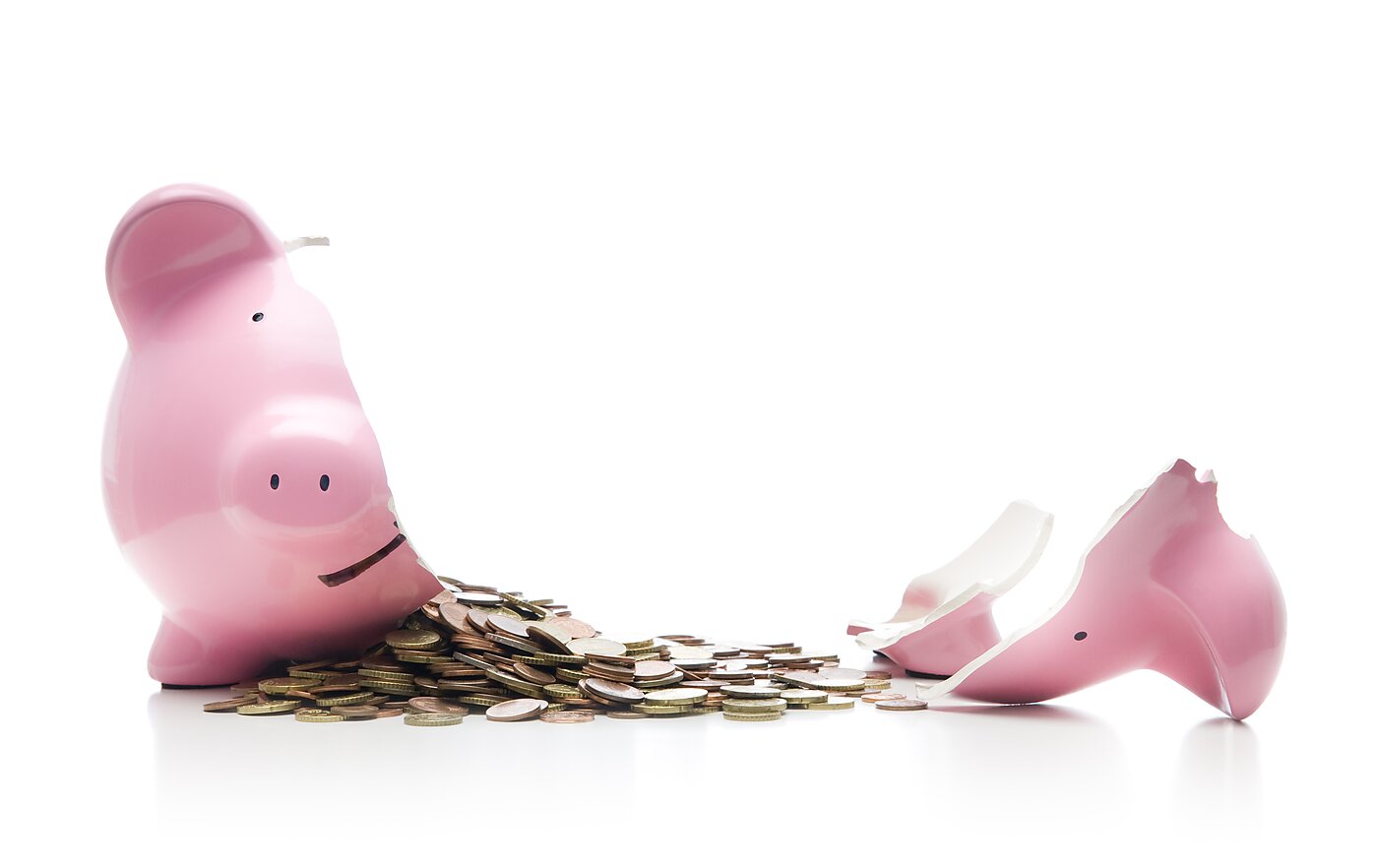
Recent data from the Center for Economic and Policy Research (CEPR) suggests the human cost is already measurable. Between 2018 and late 2025, the infant mortality rate in Cuba—long a point of pride for the revolution—climbed from 5 per 1,000 live births to 9.9. While the Cuban government bears responsibility for its own internal mismanagement and lack of diversification, the sudden withdrawal of foreign exchange and fuel has acted as a massive accelerant to this decline.
The Legal and Geopolitical Blowback
Not everyone in Washington is on board with the severity of the blockade. In February 2026, the U.S. Supreme Court issued a nuanced ruling in Learning Resources, Inc. v. Trump, suggesting that while the President has broad power to regulate trade during an emergency, using IEEPA to unilaterally impose tariffs on third countries might exceed executive authority. This creates a legal gray area. If a country like Spain or Canada decides to challenge these secondary sanctions in international courts, the U.S. could find its economic statecraft under fire.
Furthermore, the "oil for democracy" trade-off is a high-stakes gamble. History shows that populations under extreme economic siege often become more dependent on the state for survival rations, rather than rising up to overthrow it. By squeezing the private sector—the small mipymes (small businesses) that emerged during the brief opening—the U.S. may be inadvertently destroying the very entrepreneurial class it claims to support.
The Endgame in Havana
As of May 2026, the Cuban government remains defiant. During the May Day marches, President Miguel Díaz-Canel and the aging Raúl Castro stood before thousands of workers in Havana, framed by the slogan "Defend the Homeland." It was a show of theater, certainly, but it also reflected a grim reality: the regime has survived sixty years of embargo, and it is prepared to preside over a "Special Period" of even greater austerity if it means retaining control.
The U.S. position is that the regime is on its last legs, weakened by the loss of Venezuelan oil and Russian distraction in Europe. The White House is betting that the total evaporation of the Cuban economy will leave the leadership with no choice but to negotiate a total exit. But "maximum pressure" has a habit of creating "maximum resistance."
For the average Cuban, the debate over "malign influence" or "national security threats" is an abstraction. Their reality is the search for a liter of cooking oil or a single gallon of gasoline. If the goal of these sanctions is to liberate the Cuban people, the current methods are doing so by stripping away the very infrastructure of their daily lives.
The world is watching to see if the Supreme Court or international pressure will blink first. Until then, the fuel blockade remains the most aggressive use of American economic power in the Western Hemisphere in a generation. The lights in Havana may stay off for a long time.