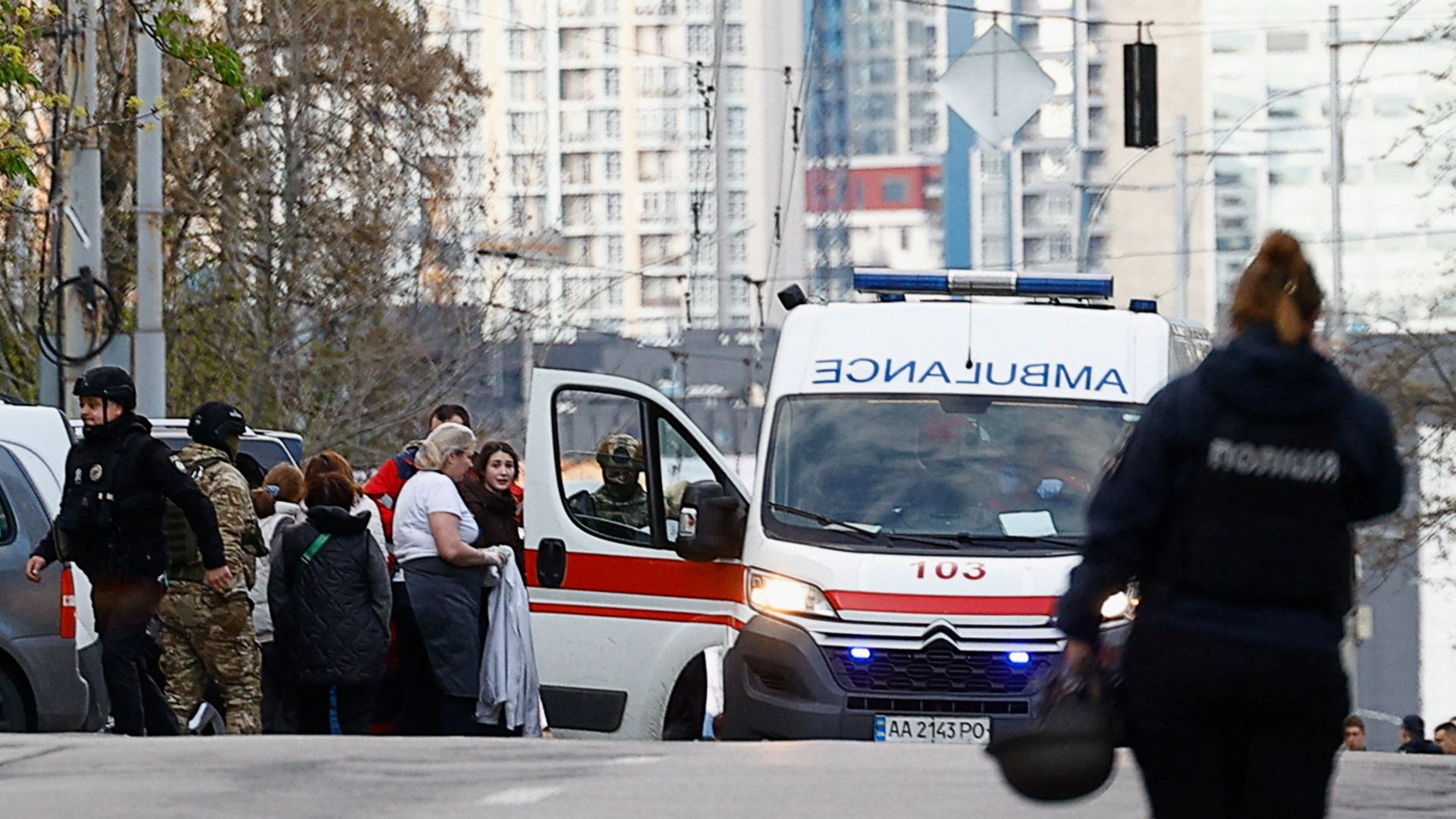
The resignation of a national police chief following an operational desertion by subordinates is not merely a personnel change; it is a definitive signal of a fractured command-and-control architecture. When law enforcement officers flee a kinetic engagement—specifically a shooting in a capital city—the failure is rarely individual. It is systemic. This event exposes a breakdown in the three fundamental pillars of state security: tactical doctrine, the psychological contract of service, and the accountability loop.
The Mechanics of Tactical Abandonment
Standard law enforcement operations rely on a predictable escalation of force and a rigid hierarchy. In the Kyiv incident, the reported flight of officers suggests a catastrophic failure in the "OODA Loop" (Observe, Orient, Decide, Act). When subordinates bypass their training to engage in self-preservation over mission objectives, the institutional damage is categorized by three primary vectors. Recently making headlines in related news: Structural Mechanics of Media Regulation in Nigeria and the Cost of Political Stabilization.
1. The Erosion of the Psychological Contract
Officers operate under an implicit agreement: they accept physical risk in exchange for institutional legitimacy, legal protection, and clear leadership. If officers perceive that the risks of an engagement (death or legal prosecution) outweigh the benefits of adherence to the chain of command, the contract is void. The resignation of the police chief confirms that the leadership could no longer guarantee the integrity of this contract.
2. Information Asymmetry and Panic
Panic in a high-stress environment like a shooting is often the result of information gaps. If ground units lacked real-time intelligence or clear Rules of Engagement (ROE), the cognitive load shifted from "execution" to "survival." The abandonment of the scene indicates that the centralized command failed to provide a viable tactical path, leaving officers to conclude that the only rational choice was retreat. Additional details on this are covered by Associated Press.
3. Failure of the Accountability Loop
A robust security organization maintains discipline through the certainty of consequences. When an entire unit chooses to flee, it implies a belief that the risk of disciplinary action for desertion is preferable to the immediate danger of the encounter. This occurs when the internal affairs mechanisms are perceived as weak, inconsistent, or politically compromised.
Structural Incentives for Institutional Resignation
The chief of police resigning serves as a release valve for political pressure, yet it does little to address the underlying rot in the operational layers. Leadership changes in these contexts usually follow a predictable logic of institutional preservation.
- Political Shielding: By stepping down, the chief prevents the investigation from climbing higher into the Ministry of Internal Affairs or the executive branch.
- Symbolic Accountability: Resignation offers a public "reset" without requiring the immediate, messy work of purging and retraining the rank-and-file who actually failed on the ground.
- Signaling to International Partners: In states receiving foreign security assistance, a high-level resignation is a required performance to maintain the flow of aid and technical support.
The Cost Function of Security Failure
The immediate cost of this failure is measured in the loss of public trust, but the long-term economic and social costs are far more taxing.
The Legitimacy Deficit
Statehood is defined by a monopoly on the legitimate use of force. If the state’s primary domestic security organ cannot or will not exercise that force during a crisis, a power vacuum is created. This vacuum is inevitably filled by paramilitary groups, private security firms, or organized crime, each of which operates outside the democratic framework.
Recruitment and Retention Degradation
A "failed" police force becomes a self-fulfilling prophecy. High-caliber individuals—those with the intelligence and moral fiber required for effective policing—avoid joining an organization known for cowardice or leadership vacuums. This leaves the force with a higher concentration of "rent-seekers"—individuals who joined for the paycheck or the perceived power, but who lack the fortitude to execute their duties when the costs of those duties escalate.
Optimizing the Command Architecture
To prevent a recurrence of the Kyiv scenario, the focus must shift from "leadership optics" to "operational resilience." This requires a cold-eyed audit of the following systems:
Decentralized Decision Making
The reliance on a top-down, centralized command structure is a vulnerability in urban warfare or high-intensity shootings. Units must be trained in mission-type tactics (Auftragstaktik), where the commander’s intent is understood, but the specific actions are determined by the officers on the ground based on the evolving situation.
Radical Transparency in Post-Incident Analysis
The current culture of silence and resignation must be replaced by a technical "After-Action Review" (AAR). This is not a witch hunt but a forensic analysis of why the breakdown occurred. Was the radio equipment faulty? Was the ROE ambiguous? Did the officers receive adequate stress-response training in the previous 24 months?
Performance-Based Tenure
Leadership positions in the police force should be tied to measurable metrics of unit discipline and operational success. The current system, which often prioritizes political loyalty, creates a leadership class that is ill-equipped to handle the psychological demands of a kinetic crisis.
Strategic Forecast
The resignation of the police chief will likely result in a temporary stabilization of public discourse, but the underlying operational risks remain. Within the next 12 to 18 months, the Ukrainian domestic security apparatus will face a choice: undergo a painful, bottom-up restructuring of its tactical training and accountability protocols, or continue to suffer from periodic "system crashes" where the state's defenders choose flight over fight.
The most probable outcome is a hybrid response. Expect a flurry of "modernization" announcements fueled by Western grants, while the core issues of patronage and inadequate tactical conditioning persist in the peripheral units. True reform will only be signaled when a crisis occurs and the responding officers do not flee, but rather execute a disciplined, coordinated response that reflects a restored belief in the institutional chain of command. The failure in Kyiv was not a lack of bravery; it was a lack of a system worth being brave for.