The Thermodynamics of a Dying Region
South Asia is currently trapped in a thermal prison. For weeks, temperatures across India, Pakistan, and Bangladesh have surged past 45°C, with "real feel" indices pushing toward the limits of human biology. While standard reporting blames a vague mix of climate change and seasonal shifts, the truth is far more structural. This isn't just a weather event. It is a collision between an intensifying Wet Bulb Temperature crisis and an aging, coal-dependent urban infrastructure that was never designed to cool a billion people.
The immediate culprit is a persistent "heat dome"—a high-pressure system that traps hot air in a specific geographic area. But the reason this particular dome is lethal involves the unique geography of the Indo-Gangetic Plain. The moisture from the Bay of Bengal and the Arabian Sea meets the blistering heat of the Thar Desert, creating a humid, stagnant air mass. When the humidity is high, the body cannot evaporate sweat. When you cannot evaporate sweat, your internal temperature rises until your organs fail. We are no longer talking about "hot days." We are talking about the onset of a regional uninhabitability.
The Lethal Physics of 35 Degrees Celsius
Meteorologists often focus on the mercury, but the metric that actually matters for survival is the Wet Bulb Temperature. This is measured by wrapping a wet cloth around a thermometer; it accounts for how effectively evaporation can cool a surface.
The human body has a hard physiological limit. If the wet-bulb temperature reaches $35°C$ ($95°F$), a healthy person sitting in the shade with plenty of water will die of heatstroke within six hours. At this point, the air is so saturated with moisture that the skin's cooling mechanism ceases to function. During this record-breaking stretch, parts of Pakistan and coastal India have flirted with this threshold.
It is a silent killer. Unlike a flood or a hurricane, there is no debris to film. There are only quiet ER rooms filled with laborers suffering from kidney failure and heat exhaustion. This is the "invisible ceiling" of South Asian development. You cannot build a modern economy when it is physically impossible to work outdoors for four months of the year.
Why the Cities are Heat Magnets
The crisis is being hyper-charged by a phenomenon known as the Urban Heat Island (UHI) effect. While the countryside is hot, the cities are furnaces. This happens because of three specific failures in South Asian urban planning.
The Concrete Trap
The rapid, often unregulated expansion of cities like Delhi, Dhaka, and Karachi has replaced vegetation with heat-absorbing materials. Dark asphalt and concrete act as thermal batteries. They soak up solar radiation all day and bleed it back into the atmosphere all night. This prevents the "night-time reset" that the human body requires to recover from daytime heat stress. In many South Asian metros, nighttime temperatures are now staying above $30°C$, offering zero physiological relief.
The Air Conditioning Paradox
There is a brutal irony at play in the region's cooling strategy. As the middle class grows, millions of air conditioning units are installed. These machines cool interiors by pumping heat directly into the streets. In dense neighborhoods, the collective exhaust from AC units can raise the local outdoor temperature by an additional $2°C$ to $3°C$. We are cooling the few by cooking the many.
The Loss of Blue-Green Infrastructure
Historically, South Asian cities were dotted with "tanks" or man-made ponds and lush gardens. These provided natural evaporative cooling. In the race to monetize every square inch of real estate, these blue and green spaces have been paved over. The result is a landscape that is thermally optimized for disaster.
The Energy Grid on the Brink
The heatwave is not just a health crisis; it is a systemic threat to the region's energy security. As temperatures climb, the demand for electricity to power fans and cooling systems hits record highs. This creates a feedback loop that leads to Grid Instability.
South Asia still relies heavily on coal. Ironically, thermal power plants become less efficient as the ambient temperature rises. They require massive amounts of water for cooling—water that is currently evaporating at record rates or being diverted for human consumption. When the grid fails, as it has repeatedly in Pakistan’s Sindh province and parts of Northern India, the cooling stops.
Without power, the death toll among the elderly and the "energy poor" skyrockets. Those who cannot afford generators or solar backups are left in homes that have become literal ovens. This creates a deepening divide between those who can buy a habitable climate and those who are left to the elements.
The Myth of Adaptation
Policy experts often talk about "adaptation" as if it is a simple matter of changing work hours or painting roofs white. This ignores the economic reality of the region.
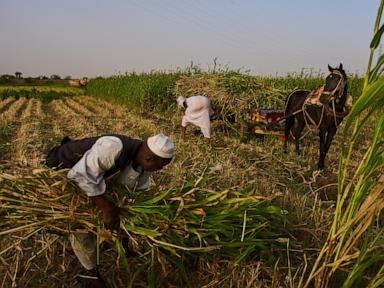
A significant portion of the South Asian workforce is in the informal sector. Construction workers, street vendors, and farmers do not have the luxury of "remote work" or air-conditioned offices. For them, a day without sun exposure is a day without food. Current heat action plans (HAPs) usually involve setting up water stations or changing school timings. While helpful, these are band-aids on a gunshot wound.
True adaptation would require a radical overhaul of the region's architecture. We are currently building glass-and-steel towers designed for London or New York in climates that require thick-walled, high-ceilinged structures with natural cross-ventilation. We are importing Western architectural failures into a tropical emergency.
The Agricultural Fallout
Beyond the cities, the heatwave is devastating the "breadbasket" of the region. The timing of these heat spikes often coincides with the final stages of the wheat harvest. Extreme heat causes the grain to shrivel, leading to significant yield losses.
In recent years, India has been forced to ban wheat exports to ensure domestic food security after heatwaves decimated crops. This has global repercussions. When the Indo-Gangetic Plain suffers, global food prices twitch. The heat is not just making people sick; it is threatening the caloric intake of the world's most populous region. The water table is also dropping at an alarming rate as farmers pump more groundwater to save dying crops, leading to a long-term depletion of aquifers that took millennia to fill.
The Geopolitical Pressure Cooker
Heat does not respect borders. The Indus Water Treaty, which governs water sharing between India and Pakistan, is under increasing strain. As water becomes scarcer and heat more intense, the temptation to weaponize water flow increases.
We are seeing the birth of a new kind of "climate migration." People are not just moving because of rising sea levels in the Maldives or Bangladesh; they are moving because their ancestral lands have become too hot to survive. This internal and cross-border migration will define the next two decades of South Asian politics. Governments that cannot provide the basic "utility" of a livable temperature will face existential unrest.
The Immediate Engineering Fixes
To stop the body count, the approach must shift from "disaster management" to "thermal engineering."
- Cool Roofs: Aggressive mandates for reflective, white-painted roofs can reduce indoor temperatures by $2°C$ to $5°C$. This is a low-tech, high-impact solution that should be subsidized for every slum and low-income housing block.
- District Cooling: Moving away from individual AC units toward centralized, water-cooled systems for entire neighborhoods. This is significantly more efficient and prevents the "exhaust heat" problem in streets.
- Restoring the Commons: Mandatory "green corridors" and the reopening of paved-over water bodies. Cities must be forced to breathe again.
The record heatwave in South Asia is a warning. It is the first major test of how a modern civilization survives the breach of its own biological limits. If the region continues to build, power, and plan as it has for the last thirty years, the "invisible ceiling" will simply collapse.
The primary task now is to decouple survival from the grid. Every building that cannot maintain a safe internal temperature without a constant flow of electricity is a future tomb. The solution isn't just more fans; it’s a total rejection of the concrete-and-glass obsession that has turned the region's greatest cities into thermal traps. Stop building for a climate that no longer exists.