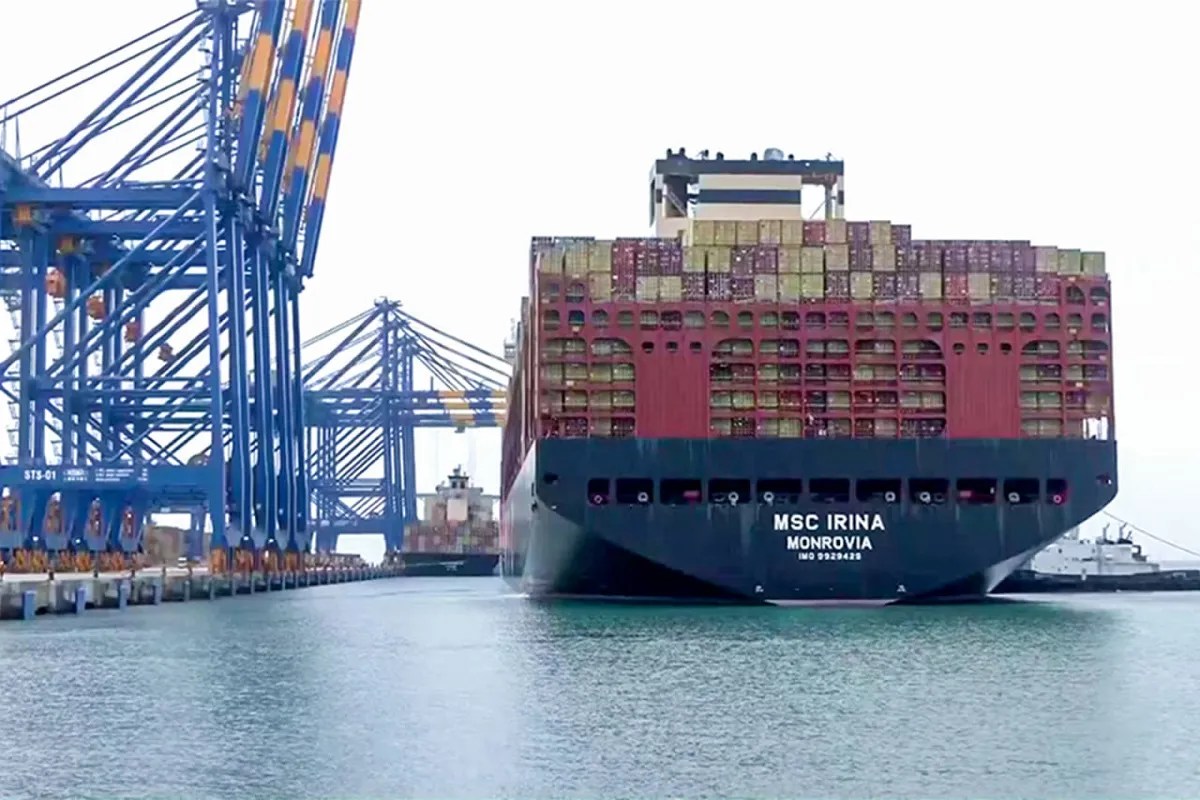
The water in the Strait of Hormuz does not look like a battlefield. To the naked eye, it is a shimmering expanse of turquoise and deep cobalt, a salt-crusted gateway where the Gulf of Oman meets the Persian Gulf. But look closer at the digital maps—the ones tracked by satellite transponders and whispered about in the high-rise offices of Singapore and London—and you will see a frantic, high-stakes pulse.
A shadow moves through the blue.
It is a massive oil tanker, its hull riding low in the water, heavy with millions of barrels of crude. It is not alone. Despite the drums of war beating across the Middle East, despite the fiery rhetoric and the looming threat of regional escalation, the oil is moving. It is moving in record volumes.
Consider the captain of a vessel we’ll call the Aria. She is a hypothetical composite of the mariners currently navigating these waters, a professional who knows that her 300-meter ship is essentially a floating fortress of energy—and a sitting duck. As she approaches the 21-mile-wide choke point of the Strait, she isn't thinking about geopolitics or the abstract price of Brent Crude. She is thinking about the radar. She is thinking about the gray hulls of Iranian patrol boats that weave through the traffic like hornets.
She knows that beneath the surface of the "conflict," business is booming.
The Pulse of the Choke Point
While the world watches news tickers for signs of the next missile launch, the real story is written in the wake of 90 specific ships. These vessels, many of them destined for ports in India and beyond, are the lifeblood of a global economy that refuses to stop for a fight. Since the start of the year, even as tensions between Iran and its neighbors reached a fever pitch, the flow of black gold has not just continued; it has accelerated.
Iran is exporting oil at levels not seen in years. This isn't a fluke. It is a calculated, cold-blooded success.
The numbers tell a story of defiance. Data suggests that Iranian exports have surged to approximately 1.5 million barrels per day. To put that in perspective, imagine a line of tankers stretching toward the horizon, each one carrying the concentrated energy of a small city. This isn't just "survival" for a sanctioned nation. This is a windfall.
The irony is thick enough to choke on. The very tension that makes the Strait of Hormuz a "danger zone" also drives the global anxiety that keeps oil prices profitable. Iran is playing a double game: maintaining the threat of closing the world's most vital energy artery while simultaneously using that artery to pump its own economy back to health.
The Mechanics of the Shadow Market
How does a country under some of the most stringent sanctions in human history manage to move 90 ships through a narrow corridor patrolled by the world's most powerful navies?
It happens through a process that feels more like a spy novel than a logistics manual.
Ships "go dark." They flip off their Automatic Identification System (AIS) transponders, disappearing from public tracking maps like ghosts in the machine. They engage in ship-to-ship transfers in the middle of the night, hosing millions of gallons of oil from one vessel to another to mask the origin of the cargo. They change their names. They change their flags.
The Aria, or ships like her, might leave an Iranian terminal under one identity and arrive at a refinery in East Asia under another. It is a shell game played with thousand-ton objects.
But why does India, along with dozens of other nations, keep buying?
The answer is found in the brutal reality of the bottom line. Iranian oil is often sold at a steep discount to compensate for the "risk" of the journey. For a developing economy, that discount is the difference between a stable power grid and rolling blackouts. It is the difference between affordable transport for millions and a cost-of-living crisis that could topple a government.
We often speak of "energy security" as a sterile, academic term. In reality, it is the heat in a kitchen in Mumbai. It is the fuel in a delivery truck in Delhi. The stakes are not just digits on a screen; they are the fundamental building blocks of modern life.
The Silent Agreement
There is a quiet understanding that permeates the Strait. The United States and its allies maintain a massive naval presence to "ensure the freedom of navigation." Iran maintains its Revolutionary Guard outposts to "protect its sovereignty."
On the surface, they are at an impasse. In the depths, they are both watching the same tankers pass through.
If the Strait were truly closed—if a single spark turned the cold war into a hot one—the global economy would experience a cardiac arrest. A 20% drop in global oil supply would happen overnight. Prices would quadruple. The "90 ships" we discuss today would become the "90 ghosts" of a lost era.
This creates a strange, paradoxical stability. Iran needs the oil revenue to fund its proxy interests and domestic stability. The West needs the oil to flow to prevent a global depression. So, the ships continue their dance. The patrol boats buzz the tankers, the tankers signal their intent, and the oil moves.
But there is a human cost to this high-wire act.
Every sailor on those 90 ships lives with the knowledge that they are the primary targets if the "silent agreement" ever fails. They are the ones who would feel the heat of the explosion first. They are the ones navigating through a sea of invisible red lines, hoping that the diplomats in faraway capitals don't lose their tempers.
The India Connection
India’s role in this narrative is particularly fascinating. As one of the world’s fastest-growing energy consumers, its thirst is unquenchable. For the Indian government, the Strait of Hormuz is more than a geographic feature; it is a vital organ.
The 90 ships aren't just an Iranian success story; they are an Indian necessity.
By maintaining a pragmatic relationship with Tehran while balancing its strategic partnership with Washington, New Delhi has managed to keep its energy channels open. It is a masterclass in "strategic autonomy." While Western nations might view the Iranian oil trade through a lens of moral or legal restriction, India views it through the lens of national survival.
When you see a headline about "90 ships crossing the Strait despite the war," you are seeing the failure of isolation as a political tool. You are seeing the triumph of demand over decree.
The Friction of the Future
Nothing lasts forever. The current equilibrium is brittle.
The shadow fleet is aging. These tankers, often decades old and poorly maintained to avoid detection, are ticking ecological time bombs. A major spill in the Strait of Hormuz wouldn't just be a political disaster; it would be an environmental catastrophe that could desalinization plants across the Gulf, leaving millions without fresh water.
Yet, the trade persists. It persists because the world is hungry, and Iran is desperate.
The 90 ships represent a crack in the wall of global sanctions. They represent the reality that in the 21st century, it is almost impossible to truly "unplug" a major oil producer from the grid. The veins are too interconnected. The dependencies are too deep.
As the sun sets over the Strait, the Aria finally clears the narrowest point. The captain feels a slight loosening in her chest. The tension remains, but for today, the cargo is safe. The profit is secured. The lights in a city thousands of miles away will stay on for another night.
Behind her, another ship is already entering the mouth of the Strait. Then another. Then another.
The shadow moves through the blue, and the world keeps turning, fueled by a secret that everyone knows but no one wants to admit: the war is real, but the oil is more real.
The waves close over the wake of the 90th ship, leaving no trace of the billions of dollars that just passed through the eye of the needle. There is only the sound of the sea, the hum of the engines, and the lingering scent of salt and crude.