The coffee in your hand is traveled. It has seen more of the world than most humans will in a lifetime. But right now, that bean is part of a silent, high-stakes drama playing out in wood-paneled rooms in Beijing and across the churning, gray-green waters of the Red Sea. We think of global trade as a series of lines on a map. We see arrows moving from Port A to Port B. In reality, it is a fragile, pulsing nervous system. And lately, that system has been screaming.
When the Chinese Ministry of Transport recently summoned the executives of Maersk and Mediterranean Shipping Company (MSC), it wasn't for a polite exchange of business cards. It was a summons born of a mounting, quiet desperation. Two of the world’s largest ocean carriers were being asked to explain why the gears of the world are grinding to a halt.
To understand why this matters to someone sitting in a kitchen in London or a warehouse in Ohio, you have to look at the water. Specifically, you have to look at the water that isn't there and the water that is too dangerous to touch.
The Choke Points of a Thirsty World
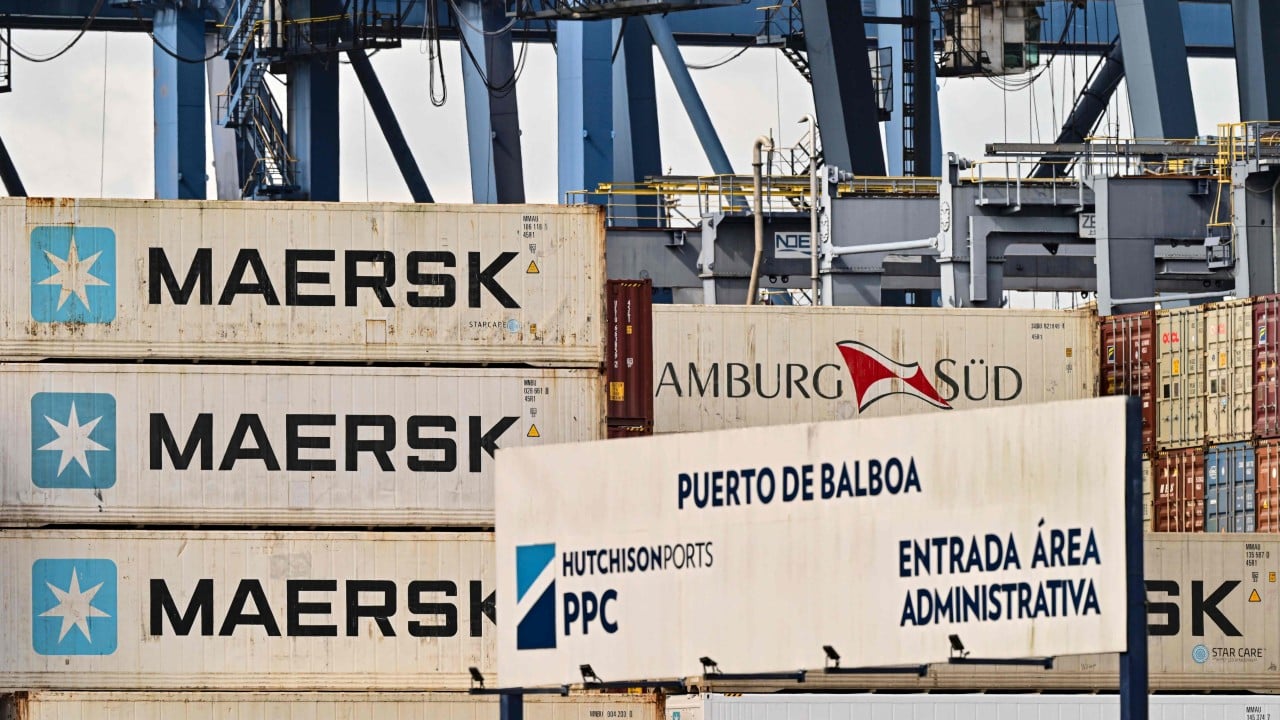
Imagine a giant, multi-billion-dollar puzzle where the pieces are constantly shrinking. That is the Panama Canal right now. A historic drought has turned one of the world’s most vital shortcuts into a bottleneck of epic proportions. Gatun Lake, the freshwater reservoir that feeds the canal’s locks, is parched.
Because the canal relies on fresh water to lift ships over the continental divide, every inch of lost depth translates to millions of dollars in lost cargo. To keep the ships from scraping the bottom, carriers have to lighten the load. They leave containers behind. They wait in lines that stretch for days, burning fuel and patience.
But the Panama saga is only half the story. While the drought slows the West, the East is on fire.
The Red Sea, once the reliable artery connecting Asia to Europe via the Suez Canal, has become a shooting gallery. Houthi rebels, fueled by the spillover of regional conflicts, are targeting commercial vessels. The risk isn't just a line item on an insurance adjustment anymore. It is a literal matter of life and death for the crews standing watch on the bridge.
When a captain looks at the radar and sees a drone heading toward their bridge, the "efficiency of global logistics" ceases to be a boardroom buzzword. It becomes a visceral, heart-pounding reality.
The Great Detour
Maersk and MSC faced a choice: risk the missiles or take the long way around. Most have chosen the latter. They are now rounding the Cape of Good Hope at the southern tip of Africa. This adds ten days to the journey. It adds thousands of miles. It consumes astronomical amounts of low-sulfur fuel.
China, the "factory of the world," cannot afford ten-day delays. Their entire economic engine is built on the concept of "just-in-time" manufacturing. When ships are diverted or stuck in a Panamanian queue, the ripples turn into tsunamis. Factories in Ningbo and Shenzhen find their docks overflowing with goods that have nowhere to go. Meanwhile, shelves in Europe and the Americas go empty.
The Ministry of Transport’s "summons" is a signal. It is Beijing asserting that the "shipping operations" of these private European giants are now a matter of Chinese national security. They are demanding transparency on freight rates, which have skyrocketed as carriers try to recoup the costs of the African detour.
It is a classic tug-of-war. The carriers are trying to survive a geopolitical and environmental nightmare. The regulators are trying to ensure that the cost of that survival isn't passed entirely onto a fragile global economy already reeling from inflation.
The Human Cost of a Late Container
Consider a hypothetical floor manager named Elena. She runs a small electronics assembly plant in Germany. She doesn't track the water levels of Gatun Lake. She doesn't follow the intricacies of Iranian-backed militia movements in Yemen.
But Elena knows that the specialized microchips she needs were supposed to arrive three weeks ago. Without them, her assembly line sits silent. Her workers are sent home early. Her contracts are at risk. For Elena, the "shipping operations" discussed in Beijing are not abstract. They are the difference between a profitable quarter and a shuttered business.
This is the invisible stake. Every time a Maersk vessel is diverted, a thousands-of-miles-long chain of human effort is yanked. The truck driver waiting at the Port of Felixstowe, the warehouse picker in Memphis, the small business owner waiting for their inventory—they are all tethered to the movements of these steel leviathans.
The Pricing Paradox
There is a tension here that is hard to resolve. Carriers like MSC and Maersk are businesses, not charities. When they have to sail around a continent to avoid being blown up, their costs explode. Naturally, they raise their rates. They apply "Peak Season Surcharges" and "Contingency Adjustment Factors."
From the perspective of the Chinese regulators, these price hikes look like opportunism. They see a world in crisis and wonder if the shipping giants are padding their bottom lines under the guise of "operational necessity." This is why the summons happened. It was an interrogation into the math of the crisis.
The math is brutal.
$$C_{total} = C_{fuel} + C_{insurance} + C_{time}$$
When $C_{time}$ increases by 25% due to the African detour, and $C_{insurance}$ spikes because of the war risk in the Red Sea, the final price to the consumer $C_{total}$ moves in only one direction. Up.
The End of the Certainty Era
For thirty years, we lived in an era of "frictionless" trade. We assumed the oceans were a neutral, infinite highway. We assumed the weather would cooperate. We assumed that a ship leaving Shanghai would arrive in Rotterdam with the precision of a Swiss watch.
That era is over.
We are entering a period of "High Friction" trade. The climate is no longer a backdrop; it is an active protagonist that can dry up a canal. Geopolitics is no longer a distant concern for diplomats; it is a tactical reality for merchant sailors.
The meeting in Beijing wasn't just about shipping schedules. It was an admission that the old ways of managing the world's flow are breaking down. The "Panama saga" and the "Iran war shock" are not isolated incidents. They are symptoms of a world where the margins for error have vanished.
Maersk and MSC are navigating a world where the map is being redrawn in real-time. They are caught between the demands of powerful states, the reality of a changing planet, and the cold, hard requirements of their own balance sheets.
As the sun sets over the Port of Shanghai, thousands of containers sit stacked like colorful Lego bricks, waiting for a spot on a vessel that might be thousands of miles off course. Somewhere in those containers is a toy for a birthday, a part for a hospital ventilator, and the components for a new green energy grid. They are all waiting on a resolution that hasn't come yet.
The sea has always been a place of mystery and danger. We just forgot that for a little while, lulled into a false sense of security by the miracle of the modern container. Now, as the giants of the industry are called to account, we are being reminded that our comfortable, modern lives are built on the backs of steel hulls navigating a world that is becoming increasingly unpredictable.
The next time you look at a simple product on a shelf, try to see the ghost of the ship that brought it there. Try to see the captain eyeing the horizon for drones, and the engineer in Panama watching the water levels recede. The gridlock is invisible until it isn't, and by then, the price of everything has already changed.
The water is low, the horizon is red, and the world is waiting for the ships to come home.