The floor of the Chicago Mercantile Exchange doesn’t care about ideology. It doesn’t care about the long, scarred history of the Persian Gulf or the nuances of theological governance in Tehran. It cares about the price of a barrel of crude and the cost of an insurance premium on a tanker navigating the Strait of Hormuz. For months, those numbers have been screaming a message that contradicts almost every headline on your news feed.
While pundits discuss the terrifying possibility of an "eternal war" and the rhetoric between Washington and Iran reaches a fever pitch, the money is moving in the opposite direction. The smart money is betting on a handshake.
Consider a hypothetical trader named Elias. He sits in a glass-walled office in Lower Manhattan, surrounded by screens that flicker with the pulse of global anxiety. If Elias believed the Middle East was about to descend into a decade-long conflagration, he would be buying gold and oil futures as if his life depended on it. He would be hedging against a world where supply chains snap and energy costs melt the global economy. Instead, Elias is watching the "Trump trade" solidify. He is watching the markets price in a sudden, jarring outbreak of pragmatism.
The narrative of the "forever war" is being dismantled by the cold, hard logic of the ledger.
The Art of the Transactional Peace
History is rarely a straight line. It is a series of zig-zags driven by ego, necessity, and the bottom line. To understand why the markets believe Donald Trump will end the standoff with Iran, you have to look past the "Maximum Pressure" slogans of his first term and look at the man’s fundamental DNA. He is not an interventionist; he is a dealmaker who views military spending as a bad investment with a terrible ROI.
The market has a memory. It remembers 2019, when tensions were high, and yet the missiles didn't fly in a sustained campaign. It remembers the specific brand of isolationism that defines the current Republican platform. Investors are betting that Trump 2.0 isn't about regime change—it’s about a grand bargain.
They see a path where the threat of overwhelming force is used not to start a war, but to force a seat at the table. For a country like Iran, currently suffocating under the weight of a collapsed rial and a restive, young population, the prospect of a "business-first" American president offers a strange, paradoxical kind of hope. It is the hope of the desperate. If the sanctions can be traded for a freeze on nuclear ambitions, the Iranian economy might finally breathe.
The Human Cost of the Wait
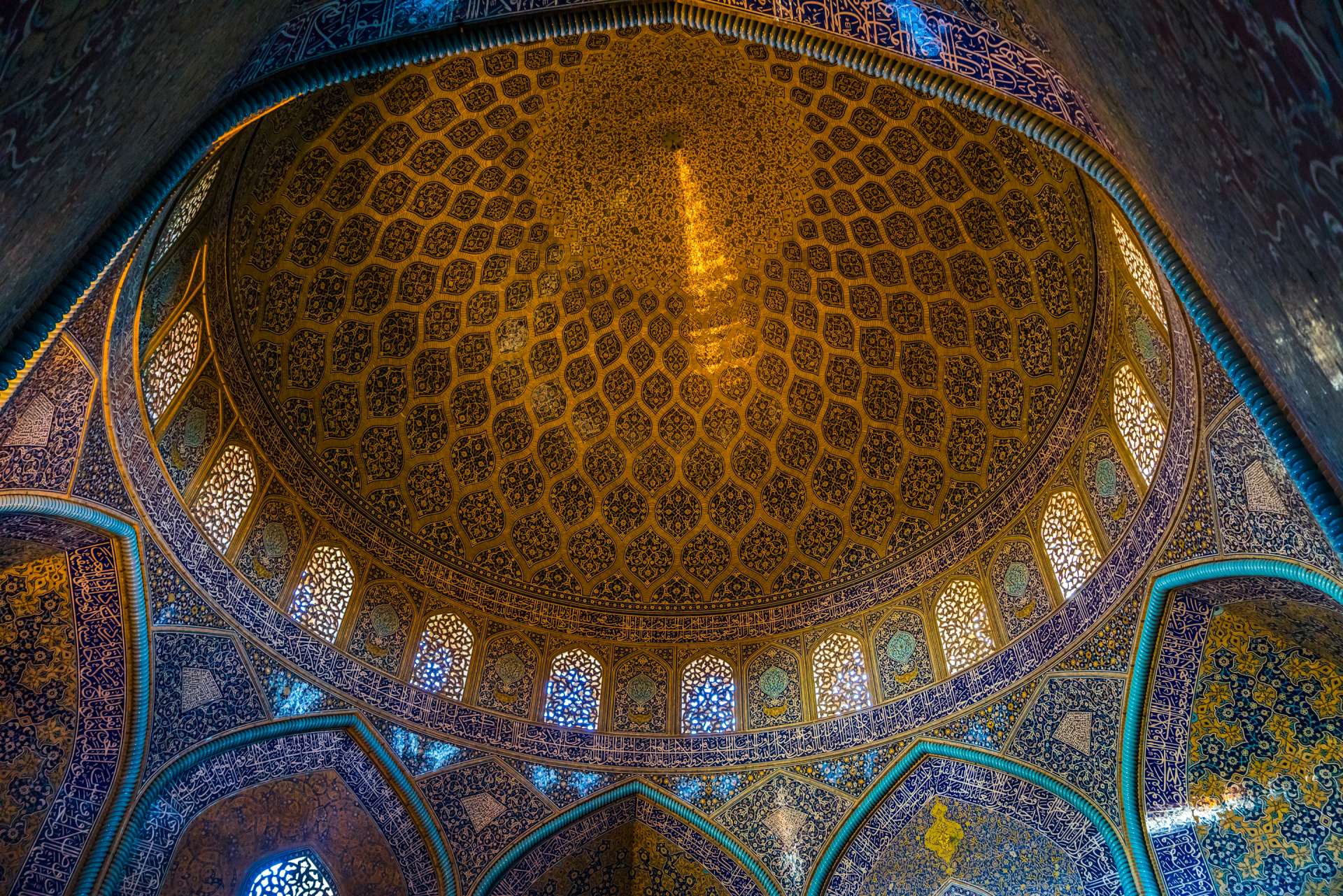
But let’s step away from the trading floors and look at the streets of Isfahan.
Imagine a shopkeeper named Farah. She doesn't have a Bloomberg terminal. She has a shelf of imported goods that doubles in price every few weeks. To her, the "geopolitical risk premium" isn't a chart; it’s the reason she can’t afford her daughter’s university tuition. For millions like her, the saber-rattling in Washington and the defiant sermons in Tehran are a background noise that has defined her entire adult life.
When the markets bet on an end to the conflict, they are betting on the breaking point of people like Farah. They are betting that the Iranian leadership knows it cannot survive another decade of total isolation. The tension has a physical weight. You can feel it in the way people hold their breath when a new set of sanctions is announced.
The market is essentially gambling that the "Iron Fist" of American policy will eventually open into a "Handshake," because both sides are running out of chips.
The Mathematics of Restraint
There is a specific set of numbers that dictates this optimism. Let’s look at the Brent Crude oil price. In a world of guaranteed war, oil stays above $100 a barrel. It stays there because the risk of a closed Strait of Hormuz—the world’s most important oil transit point—is too high to ignore.
Yet, oil prices have remained remarkably disciplined. Why? Because the supply-demand curve is being rewritten by American shale and a cooling Chinese economy. The United States no longer needs Middle Eastern oil to keep the lights on. This shift changes the gravity of the entire region.
$Price = Reality - Fear$
If the "Fear" component of that equation is shrinking, it’s because the world perceives that the United States is no longer interested in being the policeman of the Levant. The market sees a future where the U.S. draws a hard line around its interests and tells everyone else to figure it out.
It’s a brutal, transactional kind of peace. It’s a peace that says: "We won't bomb you if you don't mess with our trade routes, and in exchange, we'll let you sell your oil again."
The Risk of the "Black Swan"
Of course, the markets are often wrong. They were wrong in 1914, when investors believed the interconnectedness of European banking made a Great War impossible. They were wrong in 2008, when they believed housing prices were a ladder that only went up.
The danger lies in the "pride factor." While Trump views the world as a series of balance sheets, the leadership in Tehran views it through the lens of revolutionary survival and regional hegemony. A single miscalculation—a drone strike that hits the wrong target, a cyberattack that goes too far—can shatter the market’s glass-half-full outlook in seconds.
We are living in a moment of profound cognitive dissonance. On one side, we have the rhetoric of total destruction. On the other, we have the quiet, steady movement of capital toward a resolution.
Consider the implications for a moment. If the markets are right, we are about to witness one of the most significant diplomatic pivots of the 21st century. It wouldn't be a peace built on shared values or mutual respect. It would be a peace built on exhaustion.
The Quiet Room
Imagine a room in a neutral city—perhaps Muscat or Geneva. In this room, there are no cameras. There are only two delegations and a stack of papers. One side wants to survive; the other wants to claim a "win" and go home.
This is the scene the market is currently pricing in. They are betting on the exhaustion of the old guard and the ambition of the new. They are betting that the "war" will end not with a bang, but with a series of signatures on a document that focuses on trade quotas and nuclear inspections rather than ideology.
The invisible stakes are the lives of the soldiers who won't have to deploy and the families who will finally see the price of bread stabilize. But the emotional core is even simpler: it is the realization that everyone has a price.
The noise on the news is loud, but the silence of the money is deafening.
In the end, the most powerful force in the Middle East might not be a carrier strike group or a ballistic missile battery. It might just be the simple, relentless desire for a return to normalcy. The market isn't betting on a hero; it's betting on the fact that eventually, everyone gets tired of fighting a war they can't afford to win.
The ledger is waiting. The pen is hovering. And the world is holding its breath to see if the deal of the century is actually a deal for a quiet life.