The air in the Hormuz Strait doesn't just smell of salt. It smells of crude oil and the heavy, metallic heat of engines. Every few minutes, a massive vessel—a floating island of steel—plows through these waters, carrying the literal lifeblood of global industry. If you stand on the coast of Qeshm Island and look out, the horizon is a jagged line of tankers. They are the gears of a machine we all live inside, but rarely notice until the grinding stops.
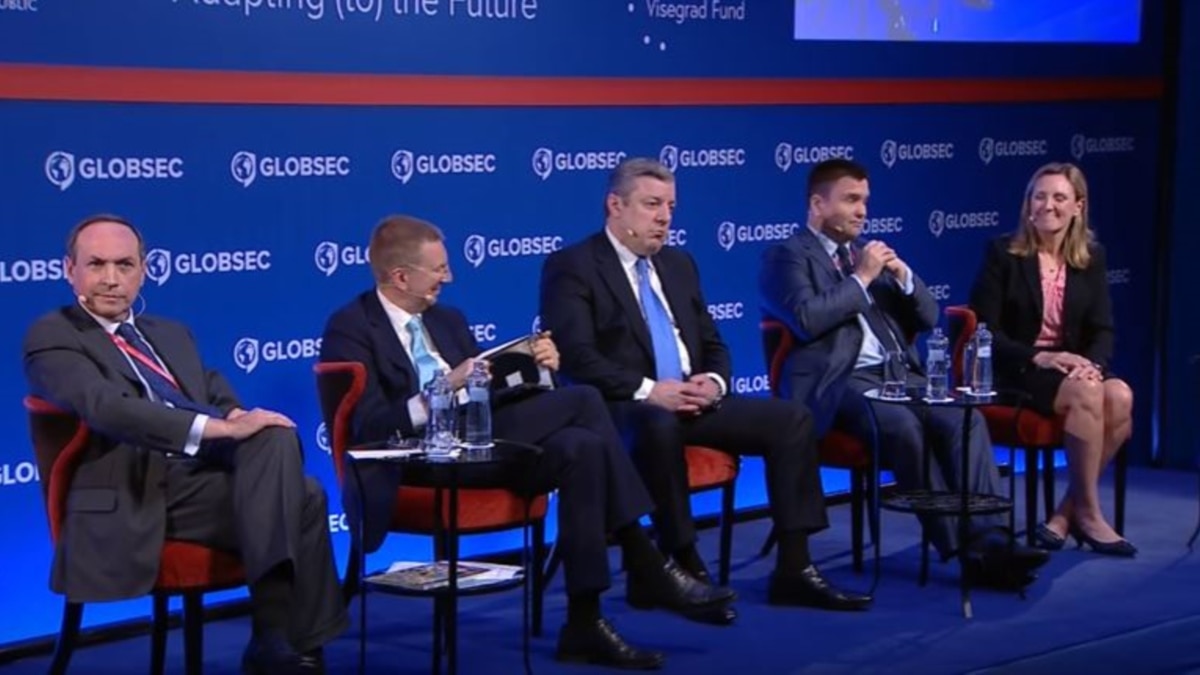
Recently, the quiet hum of that machine has been punctuated by a sharp, discordant note from Tehran. Kamal Kharrazi, a man whose words carry the weight of the Iranian leadership’s inner circle, sat before cameras and did something more dangerous than shouting. He spoke with a chilling, academic calm about the end of the world as we know it. He spoke about the "Nuclear Doctrine."
To most, a doctrine is a dry document stored in a climate-controlled basement. To the sailors on those tankers, and to the billions of people who rely on the energy they carry, it is the thin membrane between a functioning global economy and a descent into something much darker.
The Mathematics of Survival
Iran has long maintained a stated policy: we do not want the bomb. They point to a religious fatwa, a moral line in the sand. But Kharrazi’s latest dispatch was a subtle, surgical strike against that certainty. He suggested that if the "existence" of the Iranian state is threatened, the doctrine is not a suicide pact. It is a variable.
Imagine a man backed into a corner of a burning room. He has a fire extinguisher in his hand, but he has promised never to use it because the chemicals inside are toxic. As the flames lick at his boots, he looks at the extinguisher. He doesn't pull the pin yet. He just lets you see his finger resting on the metal. That is the current state of Iranian nuclear rhetoric. It is a psychological game played with the highest possible stakes.
The technical reality is even more pressing. International monitors have watched as the centrifuges in facilities buried deep under mountains spin faster and longer. The purity of the uranium grows. It is no longer about "if" the capability exists; it is about the final, political decision to cross the threshold. When a nation says its doctrine is "unlikely" to change, the word "unlikely" does all the heavy lifting. It is a door left unlocked. A crack of light in a dark room.
The Chokepoint and the Protocol
While the nuclear talk occupies the headlines, the immediate danger lies in the water. The Strait of Hormuz is a narrow throat. One-fifth of the world’s total oil consumption passes through this single, precarious gap.
Kharrazi hinted at a "new protocol" for the Strait. In the language of international diplomacy, "new protocol" usually means "new restrictions." For a global economy already shivering from inflation and supply chain fractures, this is the equivalent of a hand tightening around a neck.
Consider a small business owner in a suburb of Ohio or a taxi driver in Mumbai. They have likely never heard of Kamal Kharrazi. They couldn't point to the Musandam Peninsula on a map. Yet, their ability to feed their families depends entirely on the "protocol" of a waterway thousands of miles away. If the Strait narrows—if the flow of tankers slows to a trickle due to new Iranian "security measures"—the price of everything, from the plastic in a child’s toy to the bread on the table, spikes.
This isn't just about geopolitics. It is about the fragility of the threads that connect us. We have built a world of maximum efficiency and zero redundancy. We are all passengers on those tankers.
The Ghost of 1979 and the Weight of History
To understand why Tehran is playing this hand now, you have to look past the spreadsheets and the satellite imagery. You have to look at the memory of a nation that feels it has been under siege for forty years.
The Iranian perspective is built on a foundation of perceived betrayal. They look at the 2015 nuclear deal—the JCPOA—as a bridge that was burned while they were still standing on it. When the United States exited the deal, the hardliners in Tehran didn't just say "I told you so." They took the steering wheel.
Now, the rhetoric has shifted from cooperation to "deterrence." In their eyes, the only way to ensure the survival of the state is to make the cost of an attack unthinkable. This is the logic of the Cold War reborn in the Persian Gulf. It is the grim realization that in a world of giants, the only way to avoid being stepped on is to become sharp enough to draw blood.
The Silent Ticking
There is a specific kind of silence that precedes a storm. It’s the silence of a laboratory where a technician checks a digital readout on a gas centrifuge. It’s the silence of a command center where a finger hovers over a screen.
The Iranian leadership knows that a formal shift to a nuclear weapons policy would trigger a cascade of consequences they might not be able to control. It would likely invite a pre-emptive strike from Israel, a nation that views an Iranian bomb as an existential ending. It would force the hand of a hesitant Washington. It would turn allies into ghosts.
Yet, they continue to flirt with the boundary. By suggesting the doctrine is "unlikely" to change—rather than "will never" change—they are keeping their enemies in a state of perpetual, grinding anxiety. It is a form of power that doesn't require a single explosion. The threat of the act is often more effective than the act itself.
The Human Cost of High Stakes
We often talk about these events as if they are a game of chess played by grandmasters. But in this game, the pawns are real people.
Think of the young engineer in Isfahan, working in a facility he knows is a target. Think of the sailor on a Liberian-flagged tanker, wondering if the "new protocol" means his ship will be boarded by fast-moving commandos in the middle of the night. Think of the families in Tehran, watching the value of their currency evaporate as the shadow of conflict grows longer.
The "invisible stakes" are the dreams of ordinary people caught in the gears of a regional power struggle. Every time a headline flashes about "nuclear doctrines," a million small plans—to start a business, to get married, to travel—are put on hold. Uncertainty is a slow-acting poison.
The New Reality of the Strait
If Tehran follows through on a new protocol for the Hormuz Strait, we are looking at the end of the era of "freedom of navigation" as we understood it. The Strait would no longer be an international highway; it would be a gated community where the gatekeeper is angry and armed.
This isn't a problem that can be solved with a simple "yes" or "no" at a negotiating table. It is a deep-seated friction between a rising regional power and a global order that is increasingly unwilling or unable to police the world’s chokepoints.
The tankers keep moving, for now. The centrifuges keep spinning, for now. But the tension is no longer a dull ache; it is a sharp, localized pain. The Iranian leadership is betting that the world’s need for oil and its fear of a mushroom cloud will outweigh its desire to impose its will.
It is a gamble played with the lives of people who will never see the cards.
The horizon off Qeshm Island remains crowded with ships. But the lights on those ships look a little more like targets than they did yesterday. The doctrine hasn't changed, they say. Not yet. But the ink is wet, and the pen is moving.
Would you like me to look into the specific historical parallels between the 1967 closure of the Suez Canal and the current threats to the Hormuz Strait?