Elena wakes up at 4:30 AM to the sound of a city she technically doesn't belong to. She lives in a small apartment in Boyle Heights, where the smell of diesel from the nearby freeways mingles with the scent of corn masa from the bakery downstairs. For twenty-two years, she has scrubbed the marble floors of high-rises in Century City. She has paid into Social Security for a retirement she might never see. She has raised three children who speak English with the flat, sun-drenched vowels of native Californians.
She pays her taxes. She follows the laws. She knows the name of every pothole on her street and exactly which streetlight has been flickering for three months, casting a jittery shadow over the sidewalk where her kids walk home from school.
But when it comes to the people who decide how those streets are paved or how those schools are funded, Elena is a ghost.
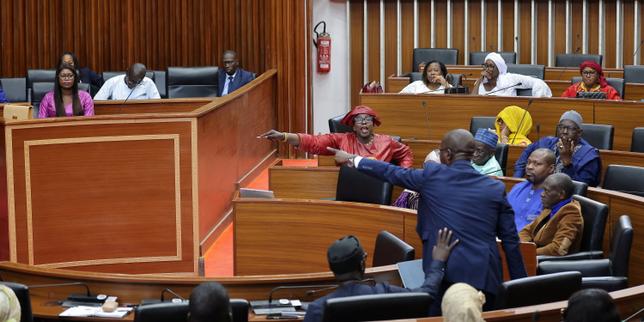
A new movement within the Los Angeles City Council aims to change that. Councilmember Eunisses Hernandez recently introduced a motion that would begin the process of allowing noncitizen residents—people like Elena—to vote in local municipal elections. It is a proposal that touches the very third rail of American identity. It asks a question that makes many people uncomfortable: If you live here, work here, and contribute to the collective life of a city, do you deserve a seat at the table?
The Paper Wall
The debate over noncitizen voting is often framed in the abstract, discussed in the sterile halls of government buildings or shouted over in cable news segments. We talk about "legal frameworks" and "jurisdictional boundaries." We forget the human reality of a city where one out of every ten residents is a noncitizen.
Los Angeles is a machine powered by people who exist in a political vacuum. They are the cooks, the landscapers, the tech entrepreneurs, and the caregivers. They are deeply invested in the granular details of their neighborhoods. They care about trash collection. They care about police response times. They care about the price of a bus pass.
Yet, when Election Day arrives, a silence falls over massive swaths of the city.
The proposal isn't about the presidency or the composition of Congress. It focuses strictly on the local level—the decisions that happen in the "Room 340s" of the world, where zoning permits are signed and park budgets are slashed. The logic is simple: the person living next door has a greater stake in the safety of your street than a citizen living three hundred miles away in Sacramento.
A History Written in Erasure
To understand why this feels so radical, we have to acknowledge our collective amnesia. We treat the concept of "citizen-only voting" as if it were carved into the bedrock of the continent by the Founders themselves. It wasn't.
For the first 150 years of American history, noncitizen voting was actually quite common. In many states and territories, "declarant aliens"—those who had expressed an intent to become citizens—were encouraged to vote. It was seen as a way to integrate them into the civic fabric, a sort of apprenticeship for full citizenship. It was only during the hyper-nationalism of the World War I era that these laws were systematically dismantled.
Now, Los Angeles is looking backward to move forward. The city is considering joining a small but growing list of municipalities, including several in Maryland and Vermont, that have returned to this older tradition. San Francisco already allows noncitizen parents to vote in school board elections, though that path has been fraught with legal challenges.
The legal hurdles are significant. The California Constitution states that a "citizen of the United States" who is a resident of the state may vote. Opponents argue this is an exclusive definition. Proponents, however, point to the "home rule" power of charter cities like Los Angeles, suggesting that the city has the right to determine its own qualifications for its local contests.
The Anxiety of the Ballot Box
The pushback is visceral. You can hear it in the town halls and read it in the comments sections. There is a fear that broadening the electorate dilutes the value of citizenship. It feels, to some, like a betrayal of the traditional path—the years of waiting, the tests, the ceremonies.
"If anyone can vote," the argument goes, "then what was the point of my struggle to get here legally?"
It is a fair question. It deserves an answer that isn't dismissive. But perhaps we are looking at the "value" of citizenship through the wrong lens. If citizenship is a prize to be hoarded, then yes, sharing the ballot feels like a loss. But if the goal of a city is to function effectively, to represent the reality of its people, and to ensure that those who are governed have a hand in their governance, then the current system is a failure of logic.
Consider the hypothetical case of a small business owner on Vermont Avenue. Let's call him Marcus. He arrived from Canada on a professional visa a decade ago. He employs twelve people. He pays tens of thousands of dollars in local business taxes. He is currently barred from voting on a local measure that would change the parking regulations on his block—regulations that could literally make or break his livelihood.
Does Marcus’s lack of a blue passport make his understanding of that street any less valid? Does it make his stake in the community any less real?
The Mechanics of Belonging
If the City Council moves forward, the "how" becomes as important as the "why."
Creating a two-tiered voting system is a logistical nightmare. You have to ensure that noncitizens receive ballots containing only local races—the Mayor, the City Council, the School Board—while keeping them away from federal and state contests. Mistakenly voting in a federal election is a deportable offense. The stakes for the individual are not just political; they are existential.
There is also the shadow of the census. Los Angeles receives federal funding based on its population count, which includes every soul living within the city limits, regardless of status. We are happy to count these residents when it brings in money for highways and hospitals. We are less enthusiastic about counting them when it comes to power.
This tension creates a strange, hollowed-out version of democracy. We have districts where the "representative" is chosen by a tiny fraction of the people they actually represent, simply because the rest of the neighborhood is ineligible to participate. When the electorate doesn't look like the population, the policies don't reflect the needs of the people.
The Invisible Stakes
We often talk about voting as a right, but it is also a responsibility. It forces a resident to look at their city not as a collection of services they consume, but as a project they are helping to build.
When you tell a person they cannot vote, you are telling them they are a guest. Guests don't fix the roof. Guests don't plant trees they won't live to see grow. Guests don't stay when things get difficult.
By keeping millions of people in a state of permanent "guest-hood," we are sabotaging our own stability. We are creating a class of residents who are highly invested in the economy but have no recourse against the systemic issues that plague their daily lives.
The motion introduced by Hernandez asks the city's attorneys to explore the feasibility of a charter amendment. It is the beginning of a long, bruising fight. There will be lawsuits. There will be protests. There will be accusations of "voter subversion" and "political power grabs."
But beneath the noise, the core of the issue remains as quiet as Elena’s 4:30 AM alarm.
Elena doesn't want to overthrow the government. She doesn't want to change the national anthem. She wants the trash picked up on Tuesdays. She wants the park where her grandson plays to be well-lit and free of broken glass. She wants to know that if she goes to a council meeting to complain about a predatory landlord, her voice carries the weight of a potential vote.
The Texture of a City
A city is not a legal fiction. It is a physical place made of breath, sweat, and shared space.
If you walk through the night markets of the San Gabriel Valley or the tech hubs of Silicon Beach, you are seeing the future of the American experiment. It is a future that is increasingly global and local all at once. The lines we drew a century ago to define who belongs are beginning to blur under the weight of modern reality.
The proposal in Los Angeles is an admission that our current definitions are fraying. It is a recognition that the person who cleans the office, the person who codes the app, and the person who owns the home are all part of the same ecosystem.
Whether the plan succeeds or fails in the courts, the conversation itself is a mirror. It forces us to look at the people we see every day but rarely truly "see." It asks us to decide if our democracy is a gated community or a public square.
The sun begins to rise over the San Gabriel Mountains, hitting the glass of the skyscrapers Elena just finished cleaning. She catches the bus home, passing thousands of people who are just starting their day. They will sit in the same traffic. They will breathe the same air. They will pay the same sales tax on their morning coffee.
In a few hours, the city will be fully awake, humming with the energy of four million people. Most of them will go about their lives assuming that the person standing next to them has the same basic rights they do. They are wrong. For now, the city is run by a conversation that millions are allowed to hear, but none are allowed to join.
The silence is loud if you know how to listen.