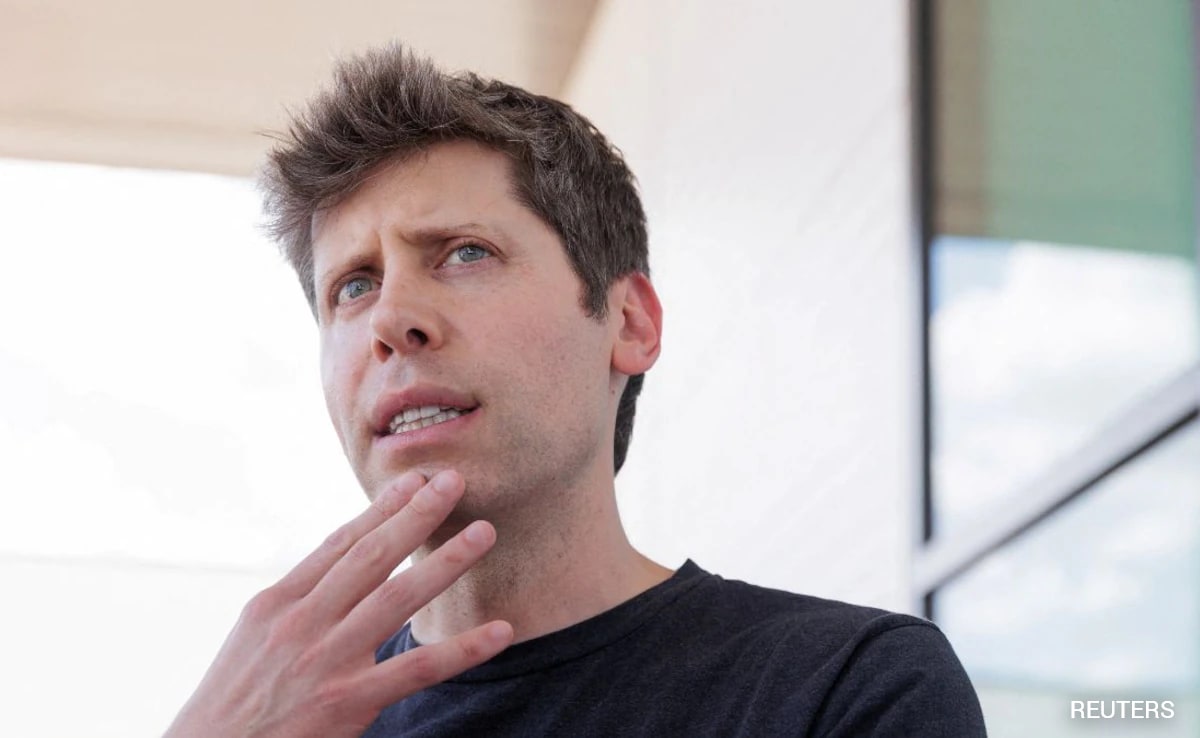
A quiet tension usually hangs over the all-hands meetings at OpenAI. It is the kind of silence found in a room full of people who realize they are no longer just building software, but are instead sketching the blueprints for how the future will function. Recently, Sam Altman stood before that room to address a ghost that has been haunting the hallways of the San Francisco headquarters: the specter of the machine of war.
The news was specific. It was dry. It was technical. OpenAI had officially removed the blanket ban on "military and warfare" applications from its usage policies. To a casual observer, it looked like a door swinging open. To the engineers sitting in that room—the ones who spent their nights worrying about the alignment of artificial intelligence with human values—it felt like a tectonic shift.
Altman’s message to his staff was a study in clinical boundary-setting. He told them, in no uncertain terms, that OpenAI has no seat at the table when it comes to the Pentagon’s final decisions. The company provides the engine. The Department of Defense decides where the vehicle drives.
It is a clean distinction. It is also an agonizing one.
The Architect and the General
To understand the weight of this moment, we have to look past the press releases and into the messy reality of how power actually shifts. Consider a hypothetical engineer named Elena. She joined OpenAI because she believed that large language models could eventually cure cancer or solve the climate crisis. She spends her days fine-tuning weights and biases, ensuring the model doesn't hallucinate or provide instructions for a pipe bomb.
Then, the contract arrives.
The Pentagon doesn’t want OpenAI to pull the trigger on a drone. At least, not yet. They want the "unsexy" stuff. They want a model that can parse thousands of pages of logistical data to ensure that a shipment of medical supplies reaches a base in a conflict zone. They want a tool that can translate intercepted communications in real-time with nuance that previous software lacked. They want to use the API to summarize grueling reports for colonels who haven't slept in forty-eight hours.
On paper, this is harmless. It is efficiency. But in the reality of the military-industrial complex, efficiency is a force multiplier. If a general can process information 10% faster, they can act 10% sooner. That speed is the difference between life and death. Elena is no longer just a coder; she is a gear in a global apparatus that she cannot control and, according to her CEO, should not expect to influence.
OpenAI is positioning itself as a utility. Like the company that provides the electricity to a military base or the firm that manufactures the steel for a tank, they are claiming a form of neutral ground. The argument is simple: the tool is agnostic. The intent belongs to the user.
The Vanishing Veto
The core of the internal debate at OpenAI isn't about whether the military should have access to technology. It’s about the loss of the veto.
When OpenAI was a small, idealistic non-profit, the idea was that the creators would have a "hand on the dial." If the technology started to head in a direction that felt predatory or dangerous, they could simply turn it off. They were the guardians of the fire.
But as the company scaled, and as the partnership with Microsoft deepened, the dial became harder to reach. The Pentagon is the ultimate customer. It has requirements, it has budgets, and it has a mandate for national security. When Altman tells his staff that OpenAI has "no say" over how the Department of Defense uses the technology once it’s in their hands, he is acknowledging a hard truth of the 21st century.
Innovation eventually outpaces its creators.
Once you release a model that is capable of reasoning, you cannot dictate the context of that reasoning forever. If the US military uses GPT-5 to simulate battleground scenarios or to optimize the flight paths of autonomous aircraft, OpenAI is no longer the pilot. They are the ones who paved the runway.
This creates a psychological rift. The people building the most powerful technology in human history are being told that their moral responsibility ends at the API key. It is a comforting thought for a legal department. it is a terrifying thought for a human being.
The Illusion of Control
We often talk about AI as if it is a singular, sentient entity. We give it names. We fear its "awakening." But the danger isn't that the AI will suddenly decide to start a war. The danger is that humans will use the AI to make war more palatable by making it more precise.
The Pentagon’s interest in OpenAI isn't about creating a "Terminator." It’s about the "boring" middle. It’s about cybersecurity. It’s about vetting code. It’s about the administrative backbone of a multi-billion dollar organization.
Yet, there is no such thing as a "non-combat" role in a war machine. Every spreadsheet, every translated document, and every optimized supply chain leads toward the same conclusion. By removing the ban on military use, OpenAI didn't just change a few lines of text in a PDF. They accepted a role in the defense of the state.
Altman’s stance—that the company provides the tech but doesn't dictate the policy—is a classic Silicon Valley maneuver. It’s the "platform vs. publisher" debate, but with nuclear stakes. It assumes that the technology is a tool, like a hammer. If you use a hammer to build a house, that’s good. If you use it to break a window, that’s on you. The hardware store isn't responsible.
But a large language model isn't a hammer. It is a reflection of human thought. It is a predictive engine that shapes how we see the world. When that engine is plugged into the most powerful military on earth, the line between "utility" and "weapon" begins to blur until it disappears entirely.
The Weight of the Silence
In the weeks following Altman's comments, the atmosphere inside the tech world has shifted. There is a sense of inevitability. The era of the "pure" AI startup—the one that exists only for the benefit of humanity without getting its hands dirty in the business of geopolitics—is over.
Silicon Valley and the Pentagon are in the middle of a shotgun wedding. The defense establishment realized it can't build software as fast as the private sector. The private sector realized it needs the massive datasets and the massive funding that only the government can provide.
OpenAI is the center of this collision. By telling his staff they have no say, Altman was perhaps trying to relieve them of a burden. He was telling them, Don’t worry about the ethics of the battlefield. That’s not your job.
But for the people who spent years building these models, that's not a relief. It’s a dismissal. It’s the realization that they have built something so powerful that they are no longer allowed to be the ones who decide what it’s for.
The stakes are invisible because they are hidden in the code. They are hidden in the way a model chooses one word over another. They are hidden in the "alignment" process that tries to make a machine "good" while it is being used to make a military "better."
The real question isn't whether OpenAI will help the Pentagon. They already are. The question is what happens when the Pentagon asks the AI to do something that violates the very principles OpenAI was founded on. If the company has "no say," then the principles are just suggestions.
We are entering a phase where the creators of the future are becoming the spectators of their own inventions. We watch the screen. We wait for the output. We hope that the people holding the controls have the same values as the people who built the machine.
But as the silence in that all-hands meeting suggests, hope is not a strategy. It is just what we’re left with when the power to say "no" has been signed away in a contract.
The machine is running. The runway is paved. And the pilot is someone we’ve never met.